


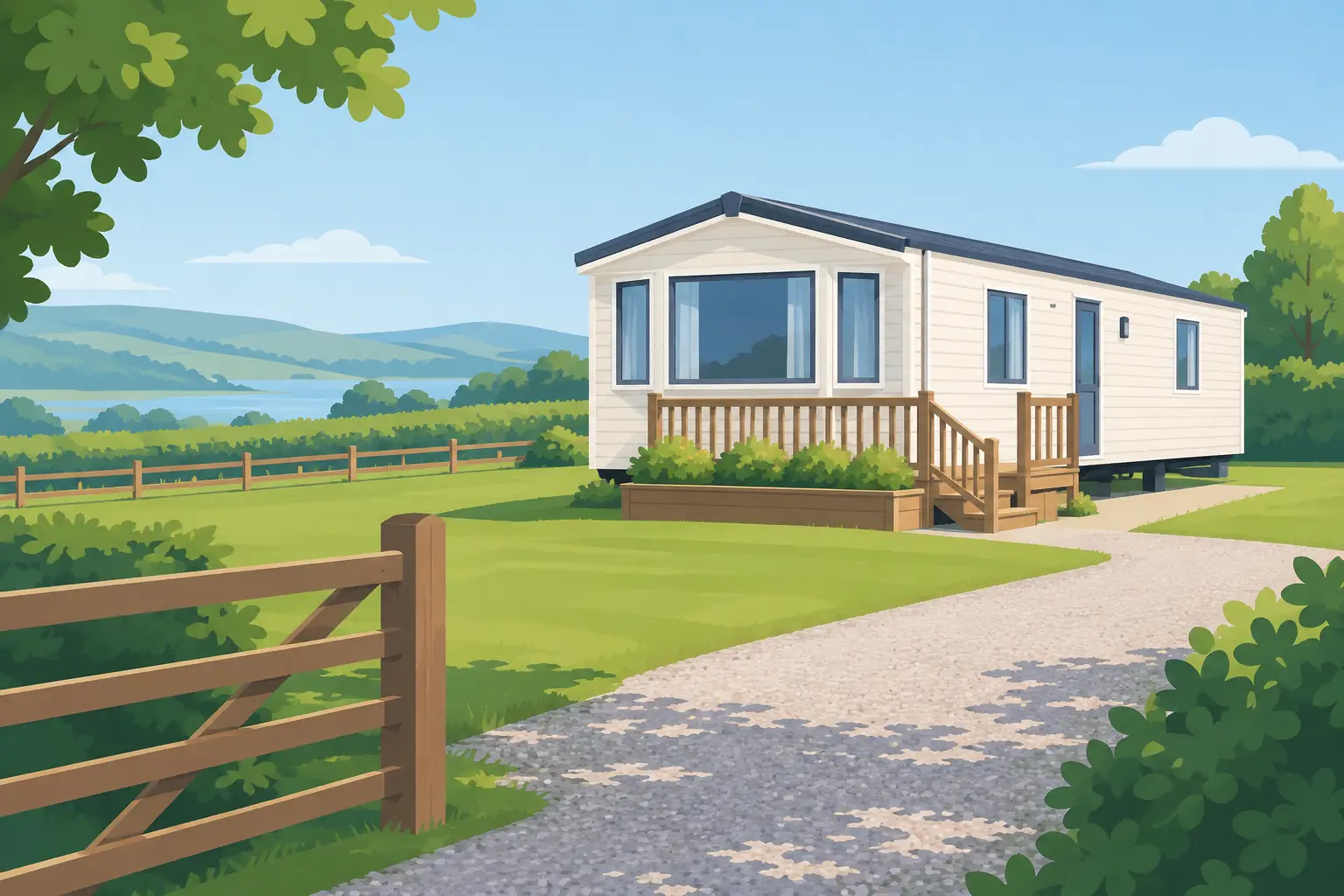
A static caravan can look like a straightforward answer when you need extra space on land you already own. But can you put a static caravan on private land? Sometimes, yes – but owning the land does not automatically give you the right to site or live in one. The deciding factors are how the caravan will be used, how long it will stay there, local planning rules and whether the site can be accessed and serviced safely.
For buyers arranging an off-site caravan purchase, these checks need to be completed before transport is booked. A caravan that suits the plot in size and specification is only part of the job. Permission, access and ground preparation matter just as much.
Can you put a static caravan on private land legally?
In most cases, placing a static caravan on private land is not simply a matter of delivery and siting. If it is used as living accommodation, whether permanently or for holidays, planning permission may be required. The relevant local planning authority will consider the use of the land, the effect on the surrounding area, access, drainage and whether the proposal amounts to a new residential or holiday use.
The fact that a static caravan is technically movable does not necessarily remove the need for planning consent. A unit connected to services, positioned on a prepared base and used continuously can be treated as a material change of use of the land. The more permanent the arrangement appears, the more likely it is that formal permission will be needed.
Planning rules vary across England, Wales, Scotland and Northern Ireland, and individual council policies can differ considerably. Land within a national park, conservation area, flood-risk zone, green belt or area with agricultural restrictions will usually need particularly careful consideration. Obtain advice from your local planning authority or a suitably qualified planning professional before committing to a purchase or arranging delivery.
The intended use makes the difference
There is no single answer for every private plot. Start by being clear about exactly how you plan to use the caravan.
A caravan positioned within the grounds of an existing home for incidental use can be treated differently from one used as an independent dwelling. Incidental use means it supports the main house, such as a hobby room, home office, occasional overflow sleeping space or family room. It should not operate as a separate self-contained residence with its own independent occupation.
Using a static caravan as a home for a relative, letting it to holiday guests, housing staff, or creating a separate address is more likely to require planning permission. Even a caravan used only at weekends may require consent if it introduces holiday accommodation onto land that does not already have permission for that purpose.
Agricultural land is another common area of confusion. Keeping a caravan on farmland for storage may be one question; using it as accommodation is another. A genuine and properly justified agricultural worker’s dwelling may be considered by a planning authority, but it is not an automatic right. Temporary accommodation can sometimes be part of an approved agricultural proposal, yet the details and evidence are critical.
A touring caravan is not always treated the same way
A touring caravan that is moved regularly and kept for occasional private use can present a different planning position from a large static caravan installed for years. However, the use of the land still matters. Repeated residential occupation or holiday letting can need permission regardless of wheels, tow bar or mobility.
A static caravan is also subject to practical constraints that make it more visibly permanent. It may require a substantial base, utility connections, decking, steps and landscaping. These works can themselves raise planning or building control questions.
Check permissions before choosing the caravan
Before viewing units, establish the planning status of the land. Check any existing planning permissions, conditions, legal agreements and title restrictions. If the property has a planning history, read the wording carefully rather than relying on a verbal understanding of what previous owners did.
Your local authority’s planning department can usually advise whether you need to submit a planning application, apply for a lawful development certificate, or seek pre-application guidance. Written advice is preferable where possible, particularly when significant money will be spent on a new residential-specification lodge or on site works.
If the land is rented, jointly owned, mortgaged or subject to estate covenants, there may be further permissions to obtain. A lender, freeholder, landowner or management company may have conditions separate from planning law. Do not assume approval from one party covers all the others.
For a holiday caravan, check whether a caravan site licence is required. Where multiple units are being operated as a commercial site, licensing, fire safety, drainage and holiday occupancy requirements can all apply. A single private unit and a developing holiday park are very different propositions in the eyes of a council.
Choose a caravan that suits the approved use
Once the legal position is clear, select the unit around the plot and the intended occupancy. A compact two-bedroom used static caravan may be practical for occasional family use, while a larger lodge with central heating, double glazing and stronger insulation may suit an approved year-round arrangement.
Residential-specification models can offer better insulation, heating performance and construction for regular use. That does not mean they create a legal residence by themselves. The caravan specification and planning permission are separate matters, although matching the unit to the approved use is sensible.
Measure the available area accurately. Include room for the caravan’s full length and width, external walls, required access, siting clearances, steps or decking, and space for maintenance. A quoted caravan size is normally the main body dimension, so allow for roof overhangs and any features that extend beyond it.
Do not choose solely on the internal layout. A well-priced caravan is only good value if it can be delivered, positioned and used as intended. At Premier Caravans, off-site buyers are encouraged to discuss dimensions, transport and siting requirements before delivery is arranged, particularly where access is tight or ground conditions are uncertain.
Delivery access can decide whether the job is possible
Static caravan transport is specialist work. The route to site must accommodate the lorry, the unit’s width and length, overhead clearance, turning space and a safe unloading position. Narrow lanes, low branches, weak bridges, sharp bends, parked vehicles and overhead cables can all prevent a delivery from being completed.
The final approach matters as much as the main road. A field entrance may need widening, gates may need removing temporarily and soft ground may not support heavy transport equipment. On sloping or restricted sites, a crane or specialist handling arrangement may be required. These requirements should be assessed early, not after a deposit has been paid.
A good site plan includes the route from road to pitch, the caravan’s final orientation and the equipment needed to place it. Photographs, measurements and a clear description of access help a transport provider identify likely issues before the day of delivery.
Prepare the pitch and services properly
A static caravan needs stable, level support. The exact foundation arrangement depends on the ground, the manufacturer’s guidance and the intended use, but it commonly involves a suitable hardstanding or prepared base with correctly positioned supports. Poor preparation can lead to doors and windows sticking, uneven floors, drainage problems and damage over time.
You will also need to plan water, electricity, foul drainage and surface-water drainage. Connections should be installed by competent people and comply with the relevant regulations. For gas appliances, use an appropriately qualified Gas Safe engineer. If you are using bottled LPG, allow for a safe, accessible cylinder location and the correct pipework.
Think about the everyday details too: where deliveries will turn, where bins will go, whether there is safe lighting, how the caravan will be secured and where rainwater will drain during a wet winter. These are practical issues, but they have a direct effect on how usable the caravan will be.
Do not rely on assumptions about time limits
Buyers sometimes hear that a caravan can be kept on land for a certain number of days without planning permission. This is often misunderstood. Some permitted development rights and temporary-use provisions exist in limited circumstances, but they do not provide a blanket right to site a static caravan for residential use. They can also be restricted by planning conditions or by the location of the land.
If the caravan is intended for anything beyond very limited or incidental use, seek site-specific advice. A short conversation with the planning authority before delivery is far cheaper than dealing with enforcement action, a removal notice or an unusable caravan afterwards.
Buy with the site in mind
Private-land caravan projects work best when the order is right: confirm the permitted use, assess the plot and access, prepare the base and services, then choose a caravan that fits the job. This approach gives you a much clearer choice between an affordable used static caravan, a fully central-heated and double-glazed holiday home, or a larger residential-specification lodge.
The right unit should suit your budget, the approved use and the realities of the site. Get those three points checked before transport is booked, and you can move ahead with far more confidence.