Posted on — Leave a comment

New Static Caravans Off Site Buying Guide

New Static Caravans Off Site Buying Guide

A brand-new caravan can look exactly right on paper – until the delivery lorry reaches a narrow lane, the park requires a specific model year, or the pitch turns out to be too short. Buying new static caravans off site gives you far more choice than purchasing only from the stock on one holiday park, but it also means checking the practical details before committing.

For buyers who know where their caravan is going, an off-site purchase can be a straightforward way to secure the make, layout, size and specification they want at a competitive price. The key is to treat the caravan, transport and siting as one purchase decision, rather than three separate jobs.

What does off-site mean when buying a new static caravan?

An off-site static caravan is sold independently of a particular caravan park. You buy the unit itself, then arrange for it to be delivered and sited at your chosen holiday park or on suitable private land.

This differs from buying directly from a park, where the caravan is normally already positioned on a pitch and the choice of manufacturer, layout and price is limited to that park’s available stock. Buying off site allows you to compare new models from manufacturers such as ABI, Delta, Victory and Willerby, without being tied to one location’s selection.

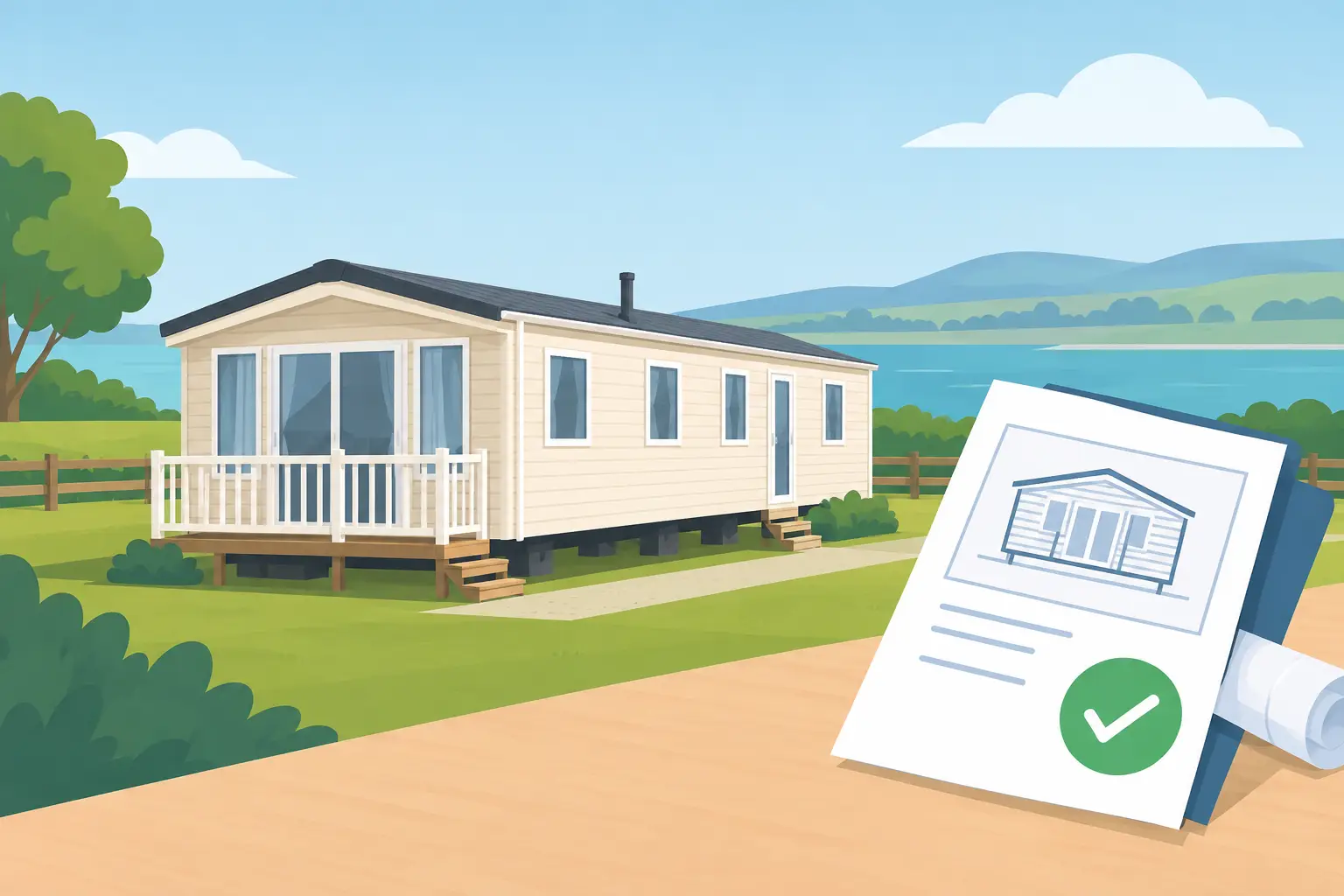
It does not remove the need for the destination to approve the caravan. A holiday park may have rules on the maximum age of units, exterior finish, size, manufacturer, roof type or permitted specification. Private land brings separate planning, licensing and use considerations. Always obtain approval from the park owner or relevant authority before ordering a unit for delivery.

Check the destination before choosing the caravan

The most attractive caravan is not necessarily the right caravan for the pitch. Start with the available space and access, then narrow down your preferred layouts and features.

Pitch dimensions and orientation

Ask for the pitch length and width, and establish where the entrance, parking space, decking, services and neighbouring units sit. A caravan’s published size refers to the main unit, but the practical footprint can be larger once siting clearances and decking are included.

A 40ft x 13ft model may suit a spacious plot well, while a 35ft or 36ft x 12ft caravan can be a more realistic option where the pitch is tighter. Bedrooms, lounge windows and patio doors should also work with the position of the sun and the view from the plot. There is little value in paying for front patio doors if they open towards a boundary fence or service area.

Delivery access

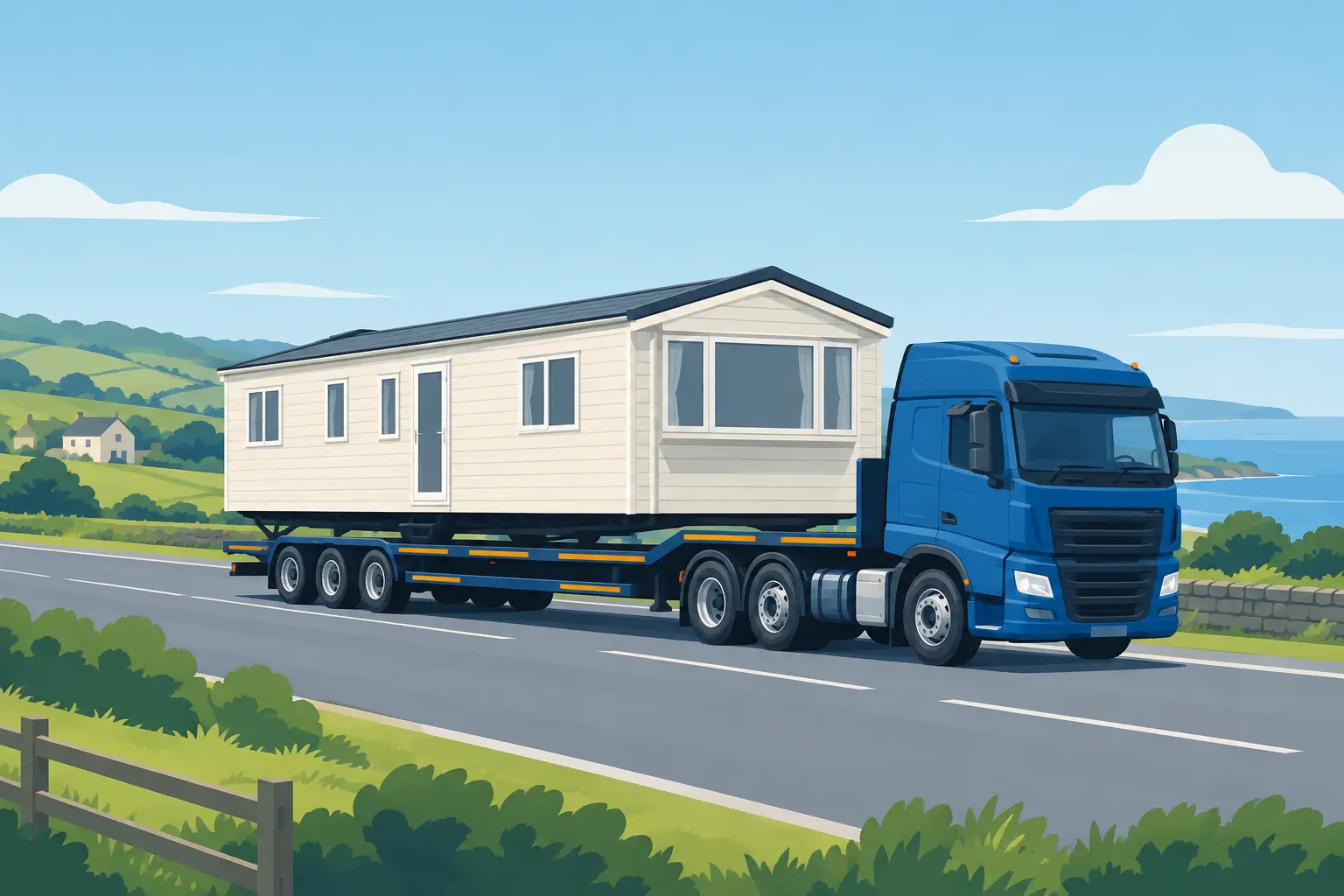
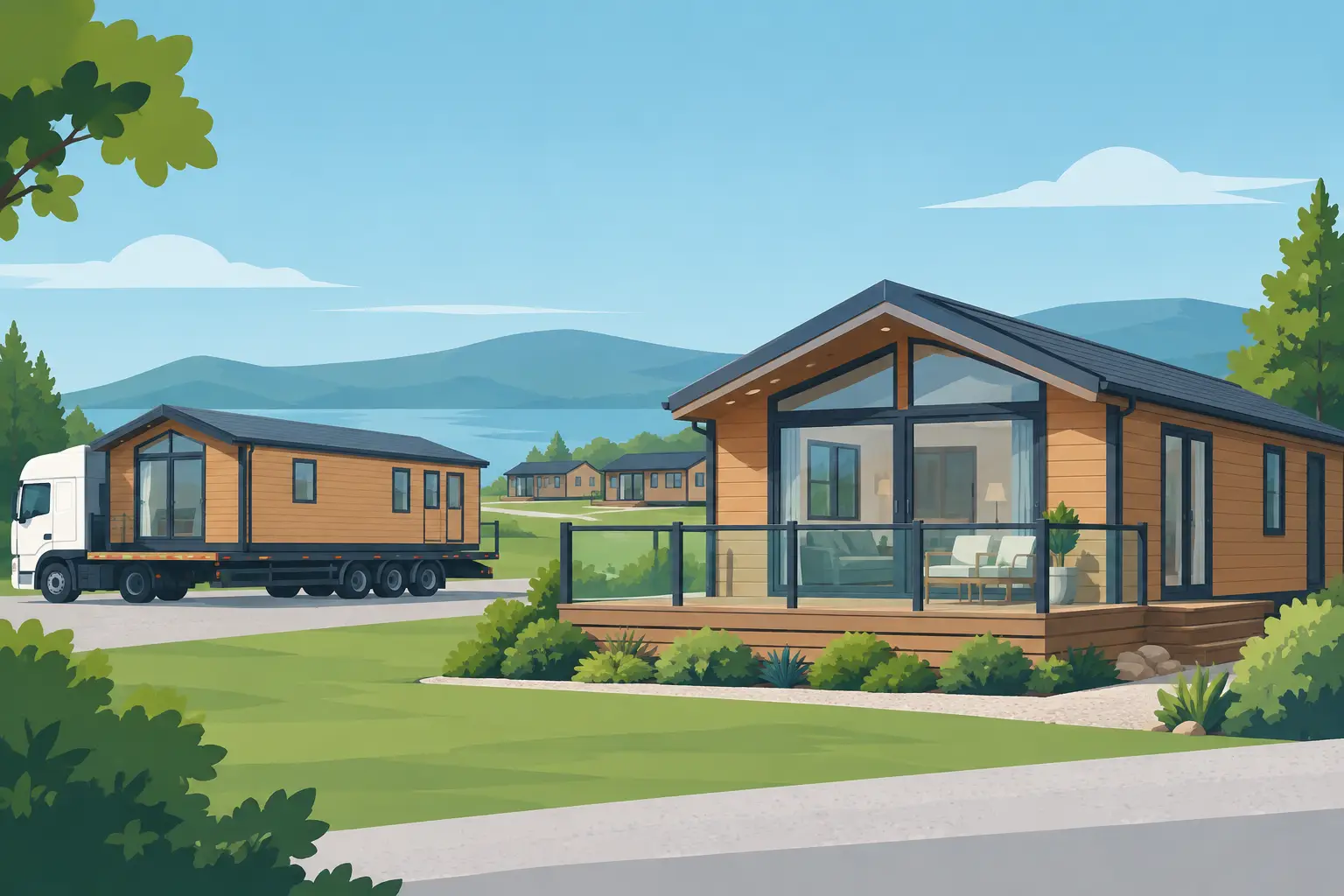
Transport access is one of the first things to confirm. Static caravans are moved on specialist equipment and need sufficient road width, turning room, overhead clearance and a workable route into the final position. Tight corners, low branches, parked vehicles, narrow gateways and soft ground can all affect delivery.

A proper transport assessment avoids last-minute complications. Photographs, measurements and a clear postcode are useful, but site knowledge matters too. If the route includes difficult access, it may affect the type of transport needed, the timing of delivery and the overall cost.

Park acceptance and services

Get the park’s approval in writing where possible. Confirm not only that a new caravan is permitted, but that the proposed make, dimensions and exterior meet its rules. Ask whether siting, connection and commissioning must be carried out by the park’s own contractors.

You should also establish what is included at the destination. Water, drainage, electricity, gas, steps, skirting and decking are often separate from the caravan sale and transport. The same applies to annual pitch fees, park rates and insurance. Clear answers at this stage make it easier to compare the real cost of different options.

Choose a specification that suits how you will use it

A new static caravan should be selected for its intended use, not simply its brochure appearance. A couple using it mainly in spring and summer may prioritise a generous lounge and a well-equipped kitchen. A family spending school holidays there will usually place more value on bedroom numbers, storage, a second toilet and durable seating.

For regular use through colder months, fully central heated and double glazed models are often the sensible starting point. Central heating provides more even warmth than portable heaters, while double glazing helps reduce heat loss and condensation. These features can also make the caravan more attractive should you sell it later, subject to the rules of the park where it is sited.

Residential specification is worth discussing if the caravan will be used extensively or located on private land where a higher build standard is required. However, residential specification does not automatically give permission for permanent residential occupation. Planning conditions, site licensing and the legal status of the land still apply.

Layout matters more than the bedroom count

Two caravans with the same number of bedrooms can feel very different. Check the length of beds, wardrobe space, shower size, kitchen worktop area and whether there is room to move around the dining table when it is in use.

A three-bedroom layout is useful for larger families, but it may mean smaller bedrooms and less lounge space. A two-bedroom model with an en-suite WC, pull-out bed in the lounge and stronger storage can be the better fit for couples who host occasional visitors. Viewing by appointment lets you assess those practical points properly rather than relying on photographs alone.

Budget for the complete off-site purchase

The advertised price of the caravan is central, but it is not the full figure to plan for. New static caravans off site are commonly priced as the unit supplied from the retailer’s storage yard, with delivery and site-related work calculated according to the destination.

Your overall budget should allow for the caravan, transport, siting, connection to services, steps or decking, gas bottles or supply arrangements, skirting and insurance. If you are replacing an existing caravan, there may also be costs associated with disconnection, removal or part exchange.

There is no single delivery figure that applies across Great Britain. Distance is one factor, but access and site requirements are equally relevant. A straightforward delivery to a well-laid-out park can be very different from a move onto private land reached by narrow country roads.

It is also worth comparing specification fairly. A lower-priced unit without central heating, double glazing or the bathroom arrangement you need may not represent the best value once upgrades and compromises are considered. Conversely, paying for a premium residential-grade model may not be necessary for a seasonal holiday pitch with limited winter use.

Ask for the details before you pay a deposit

A good listing should make it easy to identify the important facts: manufacturer, model, year, dimensions, number of bedrooms and bathrooms, heating and glazing provision, condition and price. For a brand-new caravan, ask what is included in the supplied specification and whether the pictured unit is available now.

Before paying a deposit, confirm the expected delivery timescale, the payment stages, transport arrangements and who is responsible for siting and final connections. If you need an old caravan removed or are considering selling one, raise this early. It can simplify the changeover and help you avoid having two units on site at once.

Premier Caravans Ltd has 24 years of experience supplying units for off-site delivery, with appointment-based viewings at its Kinmel Bay storage yard. Seeing the caravan in person gives you the chance to inspect the layout, finish and practical features while discussing access, transport and your intended destination.

A practical order of decisions

The simplest way to buy is to secure the destination first, then choose the caravan. Confirm the park or land requirements, measure the pitch and check delivery access before selecting a model that fits. Once you have shortlisted suitable units, compare the supplied specifications and request a clear cost for delivery and siting work.

That order protects your budget and prevents avoidable delays. It also gives you the freedom to buy based on the caravan that genuinely suits your family, your plot and the way you plan to use it – not just the unit that happened to be standing on the park when you first visited.

Posted on — Leave a comment

Static Caravan Insurance UK: What to Check

Static Caravan Insurance UK: What to Check

A static caravan can represent a sizeable purchase, whether it is a used two-bedroom holiday home, a new centrally heated model or a residential-specification lodge on private land. Static caravan insurance policies in the UK are designed for risks that ordinary home or touring caravan insurance may not address, but the right cover depends heavily on where the unit is sited, how it is used and what your park or landowner requires.

The cheapest quote is not always the best value. A policy that looks competitive can have a high excess, a low sum insured or exclusions that matter for a caravan on an exposed coastal or rural site. Check the wording before arranging cover, particularly if you are buying off-site and organising transport and siting separately.

What static caravan insurance UK cover usually includes

Static caravan insurance is generally intended to protect a fixed holiday home or lodge against accidental loss or damage. The policy may include storm, flood, fire, theft, vandalism and escape of water, subject to its terms and exclusions. Many insurers also offer cover for contents, public liability and alternative accommodation following an insured event.

Buildings cover is usually the central part of the policy. For a static caravan, this can include the structure itself, fixed furniture, fitted kitchen units, bathrooms, glazing, heating equipment and decking where it is declared and accepted by the insurer. The definition varies, so do not assume every external item is automatically included.

Contents cover applies to removable belongings inside the caravan, such as televisions, furniture, bedding, kitchen equipment and personal effects. A basic used caravan with little left inside may need a lower contents limit than a fully equipped family holiday home. Equally, an under-declared contents value could leave you short if there is a major claim.

Public liability cover is worth checking where family, friends, guests or tradespeople visit the caravan. It may help if someone is injured or their property is damaged and you are legally liable. Holiday parks often set a minimum liability requirement as part of their licence agreement, while private land can present its own considerations.

Start with the site, not the quote

The first insurance question is where the caravan will be kept. A unit on a managed holiday park, a private plot, agricultural land or a residential site may each need different cover. Insurers will commonly ask for the postcode, park details, security arrangements, occupancy period and whether the caravan is near water or in an area with a known flood history.

Park rules matter. Some parks include limited cover in their annual fees, some require owners to arrange their own policy, and others insist on using or approving particular insurers. Included cover may only protect the park’s interest or provide limited structural insurance, so ask for the policy schedule and confirm what remains your responsibility.

If the caravan is on private land, be clear about its permitted use. A holiday unit used occasionally by the owner is different from a caravan used as accommodation for paying guests, staff or long-term residents. Insurers need accurate information, and using the caravan outside the declared terms can affect a claim.

Holiday use, letting and residential occupation

Most standard policies distinguish between holiday use and permanent occupation. If the caravan is let to holidaymakers, you may need a policy that specifically permits letting, includes public liability at an appropriate level and covers periods when guests are in residence. You may also need to meet park rules on safety checks, gas appliances and smoke alarms.

A residential-specification lodge is not automatically insured as a conventional house. Its construction, location, council tax position and occupancy arrangements all affect the type of policy required. Tell the insurer if the caravan is your main home or if it will be occupied for extended periods. Do not rely on the words residential specification alone when choosing cover.

Set the right insured value

The sum insured should reflect the cost of replacing the caravan with an equivalent unit, including reasonable delivery, siting and connection costs where the policy provides for them. It is not always the same as the price you paid, particularly for an older caravan, a unit bought at a favourable off-site price or a model with added decking and site works.

Some policies use market value, while others offer new-for-old or agreed-value options. These are not interchangeable. Market value can take age and condition into account; new-for-old cover may be more useful for a newer unit but can cost more and have eligibility criteria. Ask exactly how settlement is calculated after a total loss.

Keep a copy of the sales invoice, specification, photographs and serial or chassis number. If you have paid for upgrades such as double glazing, central heating, a new boiler, decking, ramps, skirting or an alarm, retain the invoices. These records make it easier to evidence both ownership and value.

Read the exclusions that affect caravan owners

Every policy has exclusions, and this is where apparent like-for-like cover can differ. Storm damage may be covered, for example, but gradual deterioration, poor maintenance or wear and tear normally will not be. A leaking roof caused by a named storm could be treated differently from water ingress that has developed over several seasons.

Check requirements for winterisation and inspections. Some insurers expect the water system to be drained down when the caravan is left unoccupied in freezing weather. Others apply conditions if the unit is vacant beyond a stated number of days. Failing to meet these conditions can create problems if there is frozen-pipe damage, escape of water or an undiscovered break-in.

Also ask about:

  • the excess payable for storm, flood, escape of water and theft claims;
  • flood restrictions, especially for coastal, riverside or low-lying parks;
  • cover for awnings, decking, sheds, outdoor furniture and equipment stores;
  • theft conditions, including alarms, door locks and security marking; and
  • limits for valuables, bicycles, electronics and items left in outside storage.

These details are more useful than a headline price. A lower premium with a large storm excess may be unsuitable if your caravan is on an exposed site where high winds are a regular concern.

Transport and siting need separate attention

Insurance for a sited static caravan does not necessarily cover it while it is being moved. Delivery is a specialist job involving a suitable lorry, route planning, access checks, escort requirements where needed and careful siting at the destination. Confirm who is responsible for the caravan at each stage, from collection through transport to final positioning on the pitch or plot.

Ask the transport provider about their goods-in-transit and liability insurance, and check whether your own policy starts only once the caravan has arrived and been sited. Damage can occur during lifting, towing, unloading or manoeuvring into a tight park entrance, so this is not a detail to leave unclear.

Before delivery, make sure the site is ready. Width restrictions, low branches, soft ground, overhead cables and unsuitable access can delay the job or add cost. If the caravan is going to a park, obtain its written approval for the make, dimensions and age of the unit before arranging transport.

A practical checklist before you commit

Request the full policy wording and insurance product information document, not just a quote screen. Confirm the caravan’s dimensions, age, manufacturer, construction type, heating arrangement and replacement value. Declare any previous claims, flood history, security features, letting plans and periods when the caravan will be unoccupied.

It is sensible to compare the excess and exclusions alongside the premium. Check whether debris removal, re-siting, emergency repairs and alternative accommodation are included, and whether there are separate limits for contents and external additions. If a park has specific insurance conditions, provide them to the insurer rather than assuming the policy will comply.

For buyers arranging an off-site purchase, obtain insurance information early in the process, not on the day of delivery. At Premier Caravans, practical planning around the caravan, delivery route and final site is part of buying with confidence. Insurance should sit alongside those arrangements, with the policy in place when the unit is where it needs to be.

A well-chosen policy will not prevent a storm, a burst pipe or an unexpected accident, but it can prevent a difficult situation becoming a costly one. Match the cover to the caravan you are buying, the place it will stand and the way you genuinely plan to use it.

Posted on — Leave a comment

ABI vs Willerby Static Caravans Compared

ABI vs Willerby Static Caravans Compared

A static caravan can look excellent on a sales listing, yet still be wrong for the way you plan to use it. When comparing ABI vs Willerby static caravans, the practical differences are usually found in the layout, age, heating system, insulation level and the condition of the particular unit – not simply the badge on the front.

Both manufacturers have long-standing reputations in the UK holiday-home market. Both build models across a wide range of sizes, specifications and price points. A well-maintained used ABI may be a better buy than a tired Willerby of a similar age, while a higher-specification Willerby may be the sensible choice for regular use on a longer-season park or private land.

The right comparison starts with your intended siting location, budget and must-have features.

ABI vs Willerby static caravans: the main differences

ABI and Willerby both produce entry-level holiday caravans, family models and more premium holiday homes. Across either range, you will find two- and three-bedroom layouts, occasional larger models, different lounge arrangements, separate dining areas and varying levels of heating and glazing.

ABI is often recognised for practical, family-friendly layouts. Many models make good use of the available floor space, with open-plan living areas and straightforward bedroom arrangements. Depending on the model and year, this can make an ABI a strong option for buyers who want a usable holiday caravan without paying for finishes or features they do not need.

Willerby has a similarly broad range, with many models aimed at buyers looking for a more refined interior feel or a higher level of standard specification. That does not mean every Willerby is automatically more upmarket than every ABI. Older or entry-level models can be very different from newer, premium examples. The individual caravan always matters more than the manufacturer name alone.

For off-site buyers, dimensions are particularly important. Check the full external size, including width and length, before committing to a model. A 12ft-wide caravan may provide noticeably more lounge and kitchen room than a 10ft-wide unit, but it can also affect transport costs, access requirements and whether it is acceptable on your chosen park or plot.

Layout matters more than the brochure

A good layout should work on an ordinary wet weekend, not just during a viewing. Think about where coats, shoes and bags will go, how many people will use the lounge, and whether the bedrooms offer enough storage for regular stays.

ABI layouts often suit buyers who prioritise clear, unfussy living space. A front lounge with fixed seating can be ideal for families, while a side dining area can make mealtimes easier when the caravan is occupied by several people. In older examples, look carefully at seating wear, flooring, cupboard hinges and the condition of the shower room, as these areas reveal how the caravan has been used.

Willerby models frequently offer layouts with stronger separation between kitchen, dining and lounge areas, particularly in larger units. Some buyers prefer this because the caravan feels less crowded during longer stays. Others would rather have the most open-plan layout possible, especially where the caravan will mainly be used in summer.

Bedroom configuration is another point where assumptions can lead to disappointment. A three-bedroom caravan gives more sleeping space, but the smaller bedrooms may have limited room around the beds and less wardrobe storage. A two-bedroom model can be a better fit for couples, small families or buyers who want a larger main bedroom and more generous living space.

Heating, glazing and year-round use

If you expect to use your caravan early and late in the season, specification should take priority over decorative finish. The key question is whether the unit is suitable for the months you actually intend to use it.

Many newer ABI and Willerby static caravans are available fully centrally heated and double-glazed. This is generally the most practical specification for owners who want more comfortable use in cooler weather. Central heating provides more consistent warmth across the bedrooms and living area than a single gas fire, while double glazing helps reduce heat loss and condensation.

However, not every caravan has the same standard. Older units may have single glazing, electric heaters or a gas fire only. These can still be suitable for summer holidays, occasional guest accommodation or a lower-cost purchase, but buyers should be realistic about cold-weather comfort and ongoing heating costs.

Residential specification is a separate consideration. A residential-specification lodge or caravan is built to a higher standard of insulation and construction than a typical holiday caravan. It may be the right choice for a private plot where permitted, or for a park with an extended season, but it is not necessary for every buyer. Planning permission, site licence conditions and park rules must always be checked before purchase and siting.

Build quality and condition on used caravans

Neither ABI nor Willerby can be judged fairly without considering age and condition. A clean, dry caravan with sound flooring, a serviced boiler and working appliances is generally a more secure purchase than a newer-looking unit with signs of water ingress or neglected maintenance.

During a viewing, inspect the caravan methodically. Look around windows, roofline joints, ceiling panels, external cladding and wallboard for staining, softness, swelling or musty smells. Check that doors and windows open properly, cupboards are secure and floors feel firm underfoot. Test the heating, hot water, cooker, shower and electrical fittings where possible.

It is also worth checking the chassis and exterior condition, particularly on a caravan that will need transporting. Cosmetic marks can often be dealt with, but structural issues, significant damp or damaged cladding can affect both value and the cost of preparing the caravan for delivery.

A detailed listing should state the year, dimensions, bedroom and bathroom count, heating and glazing provision, and whether the caravan is available for sale off-site. These details let you compare like for like rather than making a decision from photographs alone.

Which offers better value?

There is no fixed answer to whether ABI or Willerby offers better value. Value comes from matching the caravan to the job it needs to do, without paying for unsuitable specification or facing avoidable transport and siting costs later.

An entry-level used ABI can represent excellent value for a family wanting a straightforward holiday base, especially where the park has a shorter season and a modest pitch size. A well-specified Willerby may justify a higher price where you want central heating, double glazing, a wider footprint or a more premium interior for frequent use.

For buyers replacing an existing caravan, check your park’s rules before selecting a model. Parks can set limits on caravan age, size, appearance and permitted manufacturers. They may also require their own siting approval, even if you purchase the caravan independently. Private-land buyers need the same practical checks on access, ground preparation, services and the permissions required for their intended use.

The delivered price matters as much as the purchase price. A caravan sold off-site may need transport, crane or siting arrangements, connection to services and potentially decking or steps. A lower-priced caravan can stop being the cheaper option if it is difficult to move to your chosen location.

Choosing between an ABI and a Willerby

Start by choosing the specification, then compare available ABI and Willerby models in that bracket. Decide your maximum budget, the dimensions your site can accept, the number of bedrooms you genuinely need and whether central heating and double glazing are essential.

For a first-time buyer, a clean used model with clear specifications and manageable delivery arrangements is often a better decision than stretching for a larger or newer caravan. For regular users, paying more for double glazing, central heating and a layout that works for your household can make ownership more enjoyable over several seasons.

At Premier Caravans, appointment-based viewings allow buyers to assess the actual space, condition and specification before arranging transport to a park or private land. That is particularly useful when comparing two caravans that appear similar online but feel very different once you are inside.

Before placing a deposit, have the site details ready: access width, delivery route, plot dimensions, park approval requirements and the services available. With those practical points confirmed, the best ABI or Willerby is simply the caravan that arrives ready to suit your site, your budget and the way you plan to use it.

Posted on — Leave a comment

How to Sell My Static Caravan for a Fair Price

How to Sell My Static Caravan for a Fair Price

A static caravan can be worth considerably more than an owner expects when its condition, specification and removal arrangements are clear from the outset. If you are asking, “how do I sell my static caravan?”, the strongest starting point is to treat it as a practical asset: establish exactly what you are selling, what it will cost to move and whether it can be removed from its current pitch.

Unlike selling a touring caravan, a static caravan sale is rarely just about the unit itself. Buyers and dealers will consider its age, make, dimensions, heating, glazing, internal condition, site access and the paperwork that supports a safe collection. Getting those details together before requesting a valuation makes the process quicker and helps avoid a price being revised later.

Start with an honest picture of the caravan

A clean, well-presented caravan is easier to value and easier to sell, but cosmetic appearance is only one part of the assessment. Start with the manufacturer, model, year, width and length. A 12 ft wide caravan with central heating and double glazing will generally appeal to a different buyer than an older 10 ft wide model with electric heating and single glazing.

Be clear about the layout too. State the number of bedrooms and bathrooms, whether it has an en-suite, and whether beds, furniture and appliances are included. Built-in kitchen appliances, freestanding furniture and decking may have value, but only if they are in usable condition and are included in the agreed sale.

Buyers will also want to know whether the caravan is standard holiday specification or built to a higher residential standard. Features such as fully central heated and double glazed construction, thicker insulation, upgraded windows and a larger boiler can affect demand, particularly for caravans going onto private land or a year-round holiday park.

Do not hide faults in the hope they will not be noticed. Water ingress, soft floor areas, damaged cladding, failed double-glazed units, roof issues and heating faults all affect value. They do not necessarily prevent a sale, especially where the unit is priced correctly, but an accurate description gives everyone a more realistic basis for agreeing a figure.

What affects the price when you sell my static caravan?

The make and age matter, but market value is not set by a manufacturer badge alone. An older, well-kept ABI, Delta, Victory or Willerby caravan may be more desirable than a newer unit that needs repairs or cannot be moved easily. Equally, a popular layout with two or three bedrooms may have a wider resale market than an unusual layout.

Condition has a direct effect on price. Clean upholstery, sound flooring, dry walls, working appliances and presentable bathrooms all help. A thorough clean, removal of personal items and a check that lights, taps, heating and cooker are operating can make a meaningful difference to first impressions. Major refurbishment is not always worthwhile before selling. It depends on the likely return, the caravan’s age and whether the buyer is likely to refurbish it for their own site.

Location and access can be just as significant. A caravan that is ready for collection, with suitable lorry access and room to manoeuvre, is more straightforward to buy than one behind narrow roads, low branches, tight gates or other caravans. If lifting equipment, tree cutting, fence removal or extra labour is required, those costs need to be allowed for.

The current market also matters. Demand for affordable off-site caravans can be strong, but value still depends on the total cost to the buyer once transport, siting and any repairs have been considered. A sensible asking price based on the caravan’s actual specification and collection requirements usually attracts more serious interest than an optimistic figure with limited information.

Check whether the caravan can leave the park

Before agreeing a sale, check the terms of your holiday park licence agreement. Some parks have rules covering the age of caravans allowed on site, the approved removal contractor, notice periods, outstanding site fees and disconnection of services. A caravan may be owned by you, but the park can still require its own process to be followed before it leaves the pitch.

Ask the park for clear confirmation of what is needed for removal. This should include whether the caravan must be disconnected by approved contractors, whether decking and steps must be removed, and whether there are particular collection days or times. It is better to establish these points before accepting an offer than to find that removal cannot take place on the proposed date.

If the caravan is on private land, confirm access from the public road to the unit and consider whether there are overhead cables, sharp bends, soft ground or gates that could affect collection. Take photographs of the route where possible. Accurate access information helps a transport provider plan the right vehicle and avoids unnecessary delays.

Prepare the paperwork and key details

Static caravans do not have a V5C registration document like a car, but supporting information still gives a buyer confidence. Keep together any original sales invoice, manufacturer information, service records, manuals, receipts for repairs and evidence of recent upgrades. If you have paperwork for a boiler service, new tyres or axle work, replacement windows, new upholstery or roof repairs, include it.

You should also confirm whether there is any finance outstanding against the caravan. A buyer will expect clear title and will not want to take responsibility for an unpaid agreement. If finance has been settled, retain confirmation where available.

Photographs should show the caravan as it is now, not how it looked when it was new. Take clear images of the exterior, lounge, kitchen, bedrooms, bathrooms, boiler or heating controls, chassis where accessible and any visible defects. Include the data plate if it can be photographed safely. Dimensions, model year and specification should match the information you provide in writing.

Decide between a private sale and a trade purchase

A private sale may achieve a higher headline price, particularly for a well-specified caravan with a strong location. However, it also means arranging adverts, responding to enquiries, managing viewings, negotiating, checking payment and coordinating collection. A buyer may also expect you to deal with the park, arrange disconnection or hold the caravan while they organise transport.

Selling to a specialist dealer can be more straightforward where speed, certainty and removal support are the priority. The trade offer will reflect the dealer’s collection costs, preparation work, resale risk and transport requirements, so it may be lower than a private asking price. In return, a serious dealer can assess the unit on the basis of its actual condition and provide practical guidance on removal.

For many owners, the right route depends on the caravan’s value and urgency. A newer, residential-specification model in excellent condition may justify the time involved in a private sale. An older caravan, a unit requiring removal from a holiday park, or one that needs work may be better suited to a dealer purchase. Premier Caravans Ltd can provide purchasing support for owners selling an existing static caravan, with transport arrangements considered as part of the process.

Make removal part of the agreement

Do not treat transport as an afterthought. Agree who is responsible for disconnection, removal of decking and steps, loading, haulage, insurance and any site charges. If the caravan is being sold off site, the buyer should understand whether collection is included in the agreed price or priced separately.

A static caravan needs to be moved by a suitable specialist vehicle and prepared correctly for the road. Loose internal items should be secured, services isolated and external fittings removed where necessary. Depending on the route and width of the unit, escort arrangements or permits may be required. These practicalities are why dimensions and access details matter from the first conversation.

It is also sensible to agree the handover point. Payment should be cleared on the terms agreed before the caravan is released, and both parties should have a written record of the unit, price, collection date and any items included. If the caravan remains on the pitch after payment, clarify who is responsible for damage, site fees and insurance until it is removed.

Avoid the delays that reduce a sale’s value

The most common hold-ups are missing dimensions, unclear ownership, undisclosed faults and lack of removal permission. None are difficult to address when dealt with early. Have the make, model, year, size, layout, heating and glazing details ready, alongside recent photographs and a direct answer on site access.

A fair sale is not simply the highest number mentioned at the beginning. It is an agreed price that reflects the caravan’s real condition and specification, with a collection plan that can actually be completed. Get those essentials in order and you will be in a much stronger position to sell with confidence.

Posted on — Leave a comment

Static Caravan Transport UK: What to Expect

Static Caravan Transport UK: What to Expect

A static caravan may be sold as an off-site unit, but it is not simply a matter of booking a lorry and choosing a delivery date. Width, overall length, route access, park rules and the condition of the destination pitch all affect the job. Arranging static caravan transport UK properly at the buying stage avoids avoidable delays, extra costs and the risk of a unit arriving before the site is ready.

For a used caravan moving from one park to another, or a new holiday home going onto private land, the most useful approach is to treat transport and siting as part of the purchase. Confirm the dimensions of the caravan, establish exactly where it is going and check who is responsible for each part of the move before a deposit is paid.

Static caravan transport UK starts with accurate dimensions

Static caravans are moved on their own chassis by specialist transport operators. The actual size of the unit matters far more than an approximate description such as “a 3-bedroom caravan”. A 35ft x 12ft model, for example, presents a very different access requirement from a 42ft x 14ft holiday home or a larger residential-specification lodge.

The transporter will need the full external dimensions, including the length, width and height where available. They will also need to know whether the caravan has an A-frame and wheels in usable condition, whether it is a single unit or a twin section, and whether there are any additions attached to it. Decking, steps, skirting, satellite dishes and loose exterior fittings normally need to be removed before collection.

Do not rely solely on the nominal model size. Roof profiles, chimney flues, air-conditioning units and raised ground can all affect clearance. A professional transport quote should be based on the specific caravan and the actual collection and delivery addresses, not just a broad mileage estimate.

Access can decide whether a move is possible

The most common transport problem is not the distance between sites. It is the final approach. Tight park roads, sharp bends, narrow gateways, overhanging trees, low cables and soft verges can stop a caravan from reaching the intended pitch.

Before booking, check the route from the main road through to the final location. Photographs and measurements are useful, particularly at entrances, bends and points where the road narrows. If the caravan is going onto a holiday park, ask the park office whether there are delivery restrictions, designated arrival times or a preferred route for abnormal loads.

Private land needs the same level of attention. A field entrance that is sufficient for a car or agricultural vehicle may not allow a wide caravan to turn in. Ground conditions also matter. A loaded transporter and caravan need firm access, particularly after prolonged rain. If work is required to improve access, it is better completed before the transport date is fixed.

What affects the cost of caravan transport?

There is no single nationwide rate for static caravan transport. Mileage is one part of the cost, but it is not the only one. The size and weight of the caravan, collection and delivery access, required route planning, escort arrangements where applicable, and the need for siting equipment can all affect the price.

A straightforward move between accessible locations is usually simpler to price than a collection from a tightly packed holiday park or delivery onto undeveloped private land. If a crane, specialist lifting equipment or additional labour is needed to position the caravan, this should be agreed separately rather than assumed to be included in the haulage figure.

Ask for a clear breakdown of what the quotation covers. It should establish collection, transport, delivery, basic positioning where offered, and any charges for escorts, waiting time, difficult access or aborted delivery. The lowest initial figure is not always the best value if key elements have been left out.

Timing can make a difference too. Parks can be busy during changeover periods and may restrict large deliveries in peak holiday weeks. A buyer who confirms the pitch, access and site availability early has more choice over transport dates.

Get park approval and permissions in writing

If the caravan is being delivered to a holiday park, approval from the park is essential before arranging collection. Many parks have rules on caravan age, manufacturer, external appearance, size, siting standards and approved suppliers. A caravan can be the right layout and price for the buyer but still be unsuitable for the chosen park.

Confirm that the park has accepted the exact make, model, year and dimensions of the unit. Ask whether it needs to be inspected before delivery and whether the park will carry out the final connection work. Water, drainage, electricity and gas arrangements vary between sites, and they are not automatically part of caravan transport.

For private land, buyers should establish that they are permitted to site and use a caravan as intended. Transporting a caravan onto land does not create planning consent, a residential licence or utility connections. This is particularly relevant for residential-specification lodges, where the intended use may be different from occasional holiday accommodation.

Prepare the caravan before collection

A caravan should be empty, secure and ready to travel before the transporter arrives. Internal furniture is generally designed to remain in place, but personal belongings, crockery, televisions, freestanding appliances and any loose items should be removed or properly secured. Cupboards, internal doors and windows need to be closed and fastened.

Disconnecting services is also a separate task that must be completed safely. Gas bottles should be removed or dealt with by an appropriate professional. Water, electric and drainage connections must be disconnected before the caravan is moved, while any external pipes, cables, steps and awnings should be cleared from the pitch.

The unit should be checked for obvious damage before it leaves. Take dated photographs of the exterior, roofline where practical, windows and chassis, as well as the interior. This provides a useful record of condition, particularly when purchasing a pre-owned caravan that has been standing on another site.

If the caravan has been unoccupied for some time, check tyres, brakes, towing equipment and the general condition of the chassis. The transport operator will advise on anything that needs attention before the move. It is better to identify a problem in advance than on the day of collection.

Delivery, positioning and final siting

Arrival at the destination is only one stage of the work. The caravan must be positioned accurately on a prepared pitch or base, then levelled and supported correctly. Access for the transporter must be maintained until positioning is complete, so avoid placing vehicles, materials or landscaping features in the route.

The final orientation should be agreed before the caravan arrives. Consider the location of doors, views, parking space, service points and decking. Moving a caravan a short distance after it has been levelled and connected can mean additional expense, so it pays to mark out the intended position beforehand.

Once in place, the caravan will normally require proper supports and levelling before services and skirting are installed. A park may have its own siting team and requirements. On private land, use suitably qualified trades for utility connections and ensure the work suits the manufacturer’s guidance and the site conditions.

Buying off-site without losing control of the process

Off-site purchase gives buyers a wider choice than buying only from stock already sited on one park. It can also offer better value, particularly when comparing clearly specified used caravans, brand-new holiday homes and residential-specification lodges. The trade-off is that the buyer needs to establish delivery, acceptance and siting arrangements early.

That is where experience makes a practical difference. Premier Caravans can support customers purchasing a caravan for delivery anywhere in Great Britain, helping to coordinate the move around the unit’s dimensions, destination and siting requirements. For anyone replacing an existing caravan, arranging the sale or removal of the outgoing unit should be considered at the same time, especially where pitch space is limited.

A well-planned move protects the caravan, the delivery schedule and the budget. Before committing to a unit, make sure the destination can receive it, the site has approved it and the transport quotation reflects the real work involved. That preparation gives you the best chance of seeing your caravan arrive where it belongs, ready for the next stage of siting and connection.

Posted on — Leave a comment

How to Winterise a Static Caravan Properly

How to Winterise a Static Caravan Properly

A burst pipe can cause far more trouble than a few hours of preparation in autumn. Knowing how to winterise a static caravan properly protects the water system, interior and external fittings through freezing temperatures, driving rain and periods when the caravan is left empty. The exact work depends on whether your caravan remains in use over winter, but any unit that may be unoccupied in a cold spell needs a clear plan.

For an older holiday home without central heating, draining down is usually the sensible option. A newer, fully central heated and double glazed static caravan may be kept on a low frost setting where the supply is reliable and the park permits winter occupation. Do not assume that heating alone removes every risk. A power cut, empty gas bottle or boiler fault can quickly leave pipework exposed.

Start with the caravan park, warranty and insurance

Before switching anything off, check the terms set by your caravan park, insurer and manufacturer. Some parks require caravans to be drained down by a set date, particularly if they close for the season. Insurers may also expect reasonable frost precautions and may ask for evidence that the caravan was checked periodically.

If your caravan is on private land, the same principle applies. Confirm who is responsible for the external water supply, stopcock and any pipework below ground. It is easy to drain the caravan itself while leaving an exposed supply pipe or outside tap full of water.

Keep a note of what you have done, take photographs if useful, and make a date to inspect the caravan after a severe freeze or storm. This is particularly worthwhile for an off-site static caravan where you may not be close enough to call in at short notice.

How to winterise a static caravan water system

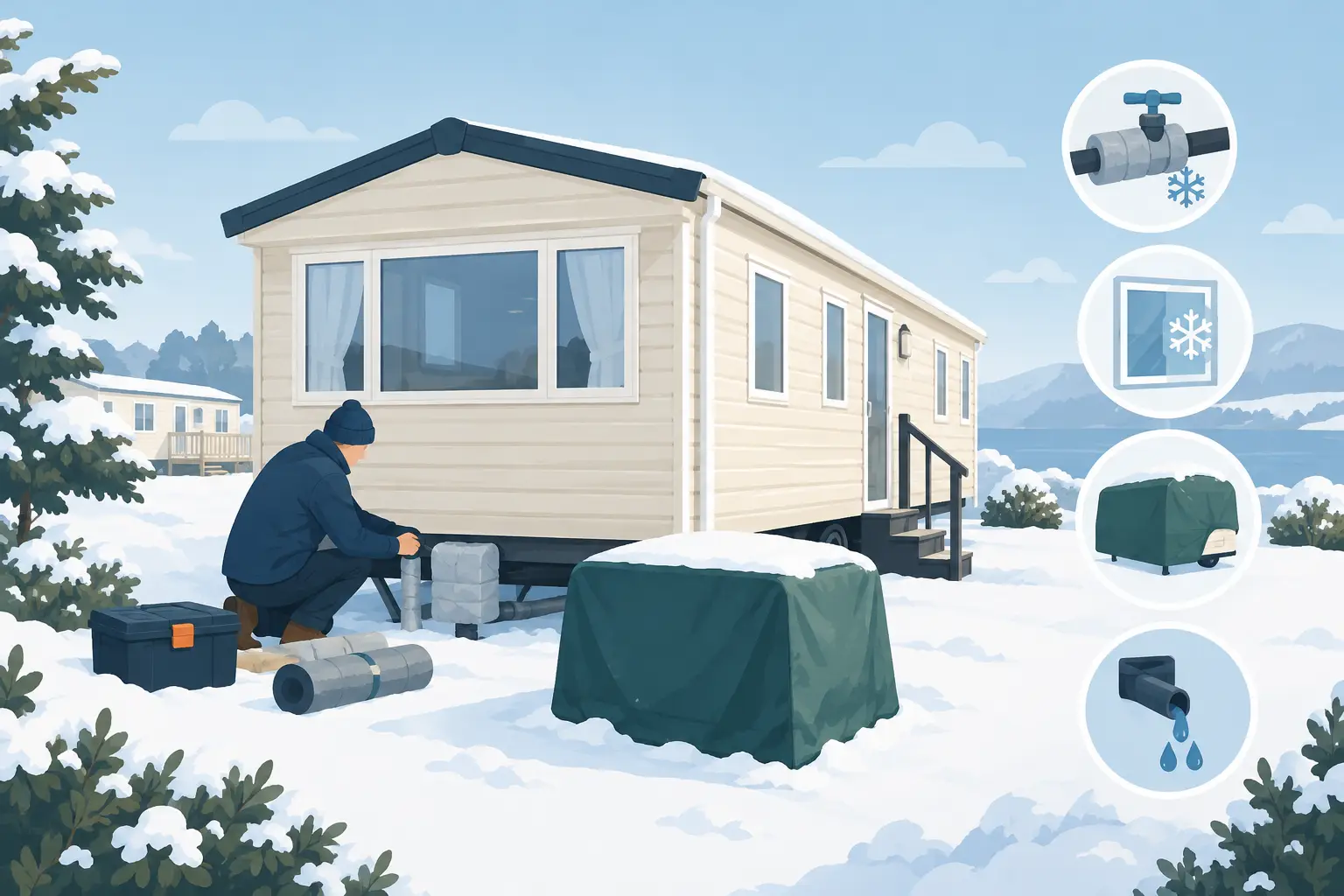
Water left in pipework is the main winter risk. When it freezes it expands, potentially splitting pipes, fittings, taps, shower valves, toilet components and the water heater. A proper drain-down is more than turning off the incoming water.

First, turn off the water at the caravan’s internal stopcock or external isolation valve. If there is a separate supply valve on the pitch, close that too. Open all hot and cold taps, including the kitchen tap, basin taps and shower, and leave them open while the system drains. Flush the toilet until the cistern no longer refills.

Most static caravans have drain-down valves at low points in the plumbing system. Open these in line with the manufacturer’s instructions. You may need to open taps in sequence to release trapped water and allow air into the system. Do not forget any outdoor tap, washing machine connection or dishwasher connection if fitted.

The boiler or water heater needs particular care. Switch off its power or gas supply before draining it and follow the appliance manual. Modern combi boilers, older instantaneous water heaters and separate hot-water cylinders all drain differently. For a central-heated caravan, ask a Gas Safe registered engineer if you are uncertain. Draining the domestic water system is not the same as draining the sealed central-heating circuit.

Once drained, leave the taps in the open position. This gives any remaining water room to expand rather than forcing pressure against a closed fitting. A short blast of air through the system can help remove residual water, but it must be done at a controlled pressure by someone who understands the plumbing arrangement. Excess pressure can damage fittings.

Pour a suitable non-toxic plumbing antifreeze into sink, shower and bath traps, and into the toilet bowl where appropriate. This protects the water held in the traps, which can freeze even after the main pipes have been drained. Do not use ordinary car antifreeze, and do not put any antifreeze into drinking-water pipes unless it is specifically approved for that use.

If you plan to keep the heating on

Some owners of residential-specification lodges and winter-use caravans choose to maintain a low internal temperature rather than drain down. This can work well if the unit is fully central heated, properly insulated, occupied or checked regularly, and connected to a dependable electricity and gas supply.

Set the heating to a low frost-protection level rather than relying on a timer alone. Keep internal doors open so warmth can circulate around kitchens, bathrooms and pipe runs. Cupboards containing pipework may also need their doors left slightly ajar.

There is still a trade-off. Leaving heating on costs money and offers no guarantee during a power outage or equipment failure. If the caravan will be empty for extended periods, a full drain-down remains the lower-risk option for many owners.

Prepare gas, electricity and appliances

Turn off the gas at the cylinder or external isolation point if the caravan is being closed down. Check that the cylinder is secure and that flexible hoses show no signs of cracking or damage. Do not store spare cylinders inside the caravan or beneath it.

Unplug non-essential electrical items. A fridge-freezer should be emptied, defrosted, cleaned and dried, then left with its door slightly open to prevent mould and unpleasant smells. Empty cupboards of food that could attract rodents or perish in changing temperatures.

If your caravan has a boiler, carbon monoxide alarm or smoke alarms, test them before leaving. Replace batteries where needed. A working carbon monoxide alarm is especially important if the heating or gas supply will remain in use at any point over winter.

Protect the interior without sealing it up

A static caravan needs ventilation in winter. Condensation builds up quickly in a closed holiday home, particularly where temperatures rise and fall between day and night. Shutting every vent to keep cold air out can create damp, mould and a stale interior.

Leave purpose-made fixed vents clear and avoid blocking air bricks beneath the caravan. Open curtains and blinds enough to allow air around windows, but close them where privacy or direct sun fading is a concern. Remove or lift loose rugs if they tend to hold moisture, and make sure mattresses and soft furnishings are dry before locking up.

Moisture absorbers can be useful in smaller spaces, but they are not a substitute for ventilation or fixing a leak. If you have had condensation around windows, inspect seals and roof vents before winter rather than hoping a dehumidifier tub will solve it.

Check the roof, gutters and outside fittings

Winter weather finds small maintenance issues quickly. Clear leaves, moss and debris from gutters and downpipes so water can run freely away from the caravan. Check for damaged gutter brackets, loose flashing, split sealant and signs of water staining inside near ceilings or window frames.

Inspect the roof only from a safe position. Static caravan roofs are not designed to be walked on unless the manufacturer confirms otherwise and suitable access equipment is used. If you can see loose edging, storm damage or pooling water, arrange for a competent caravan maintenance professional to inspect it.

Secure any outdoor furniture, steps and loose items. Drain and disconnect hoses. If your caravan has external pipe lagging, check that it is intact and dry, as wet or damaged insulation gives limited frost protection. Skirting can reduce draughts beneath the caravan, but ventilation must remain adequate to avoid damp under the floor.

Look underneath for signs of animal activity, loose insulation or damaged waste pipes. Rodents often seek warmth in quiet caravans over winter, so remove food, seal obvious gaps around services where practical and use appropriate pest control if there is evidence of activity.

Carry out a final shut-down check

Before leaving, walk through the caravan in a set order. Check that the water is off, drain valves are open, taps are open and the toilet has been dealt with. Confirm the gas position, heating setting or boiler status, electrical items, fridge door, windows, rooflights and external doors.

Lock windows securely, but do not force catches that are already misaligned. A damaged window lock is both a security issue and a route for wind-driven rain. Make sure the caravan is level and that steps, handrails and decking gates are secure, especially if the site is exposed.

Premier Caravans regularly sees the difference that straightforward seasonal care makes when owners come to sell, move or upgrade a unit. A dry, well-maintained caravan is easier to inspect, simpler to transport and more likely to retain its value.

If you are unsure about the plumbing, boiler or gas arrangement in your particular model, arrange help before the first hard frost rather than after it. A planned visit from the right engineer is usually far less costly than repairing a frozen water system in January.

Posted on — Leave a comment

Static Caravan Dimensions Guide for UK Buyers

Static Caravan Dimensions Guide for UK Buyers

A static caravan that looks ideal on paper can still be wrong for the pitch, access road or intended use. This static caravan dimensions guide explains the measurements that matter before you commit to a caravan, holiday home or lodge for delivery anywhere in Great Britain.

A stated size such as 36 x 12 ft is a useful starting point, but it does not tell the whole story. Buyers also need to consider bedroom layout, wall thickness, roof height, chassis size, door position, transport access and the available clearance on site. For a holiday park, the park’s own pitch rules will usually be the deciding factor. For private land, site access and any permissions needed should be checked before purchase.

How static caravan dimensions are shown

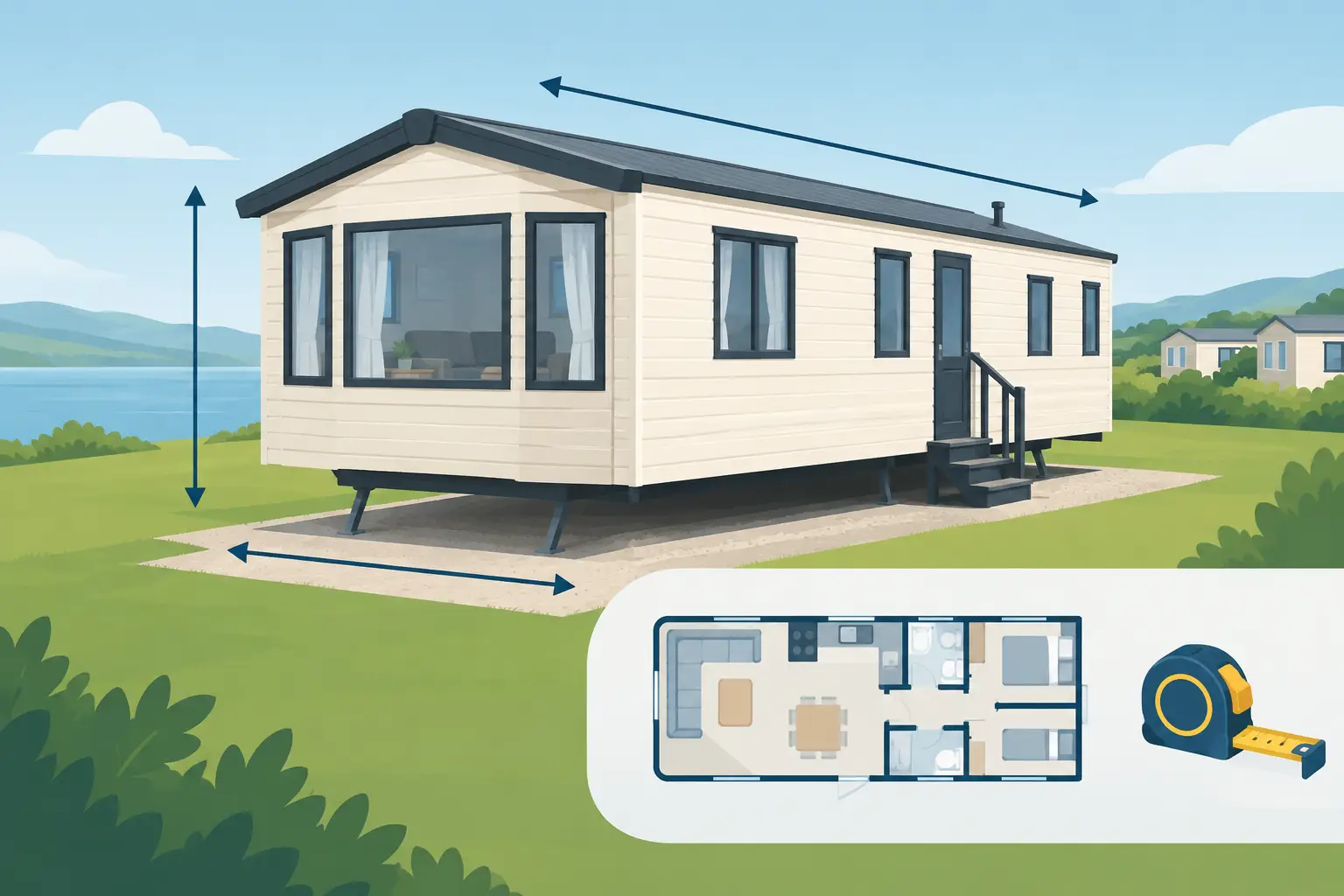
Static caravans are normally described by their body length and width in feet. A 36 x 12 ft model is approximately 36 feet long by 12 feet wide, excluding any separate decking, steps and, in most cases, the drawbar. The quoted size should always be confirmed against the individual caravan specification, particularly on pre-owned stock where manufacturers’ layouts can vary by model year.

Length runs from the front to the rear of the main body. Width is measured across the caravan body and has the greatest effect on interior space. Two caravans of the same length can feel very different if one is 10 ft wide and the other is 12 ft or 14 ft wide.

Height is less often included in sale titles, but it is essential for delivery planning. Low bridges, tree branches, narrow gateways and overhead cables can all affect whether a unit can reach its final position. The transport team will need accurate access information before a delivery date is confirmed.

Common static caravan sizes in the UK

There is no single standard size, but most holiday caravans fall within a familiar range. Older and entry-level models tend to be narrower, while newer holiday homes and residential-specification lodges are generally wider and longer.

| Typical size | Common use | What to expect | |—|—|—| | 26-30 x 10 ft | Compact holiday caravan | Often one or two bedrooms, practical for smaller pitches and tighter budgets. | | 28-35 x 12 ft | Popular family holiday home | Usually two or three bedrooms, a usable lounge and a more generous kitchen-dining area. | | 36-40 x 12 ft | Larger holiday home | Better bedroom proportions, more storage and layouts suited to longer stays. | | 38-42 x 13 ft or 14 ft | Premium holiday home or lodge | Wider living areas, larger bathrooms and a more residential feel. | | 40 ft plus, often 20 ft wide | Twin-unit lodge | A large-format option delivered in sections and joined on site. |

A 10 ft wide caravan may be the sensible choice where access is restricted or the available pitch is narrow. It can also offer good value for a first purchase. The trade-off is that the central corridor, bedrooms and shower room will be more compact.

At 12 ft wide, there is usually enough room for a comfortable family layout without moving into lodge-level transport and siting requirements. This is why 12 ft wide caravans remain one of the most common choices for holiday parks and private plots. A 13 ft or 14 ft model gives a noticeable improvement in lounge width and bedroom space, but it needs a larger pitch and may not be accepted on every park.

Static caravan dimensions guide: choosing by layout

Do not choose on external measurements alone. Ask for the bedroom count, bathroom arrangement and floorplan, then consider how the caravan will actually be used.

For weekends and school holidays, a two-bedroom 32 x 12 ft caravan can work well for a couple or small family. In many layouts, one bedroom is a double and the other contains twin beds. A three-bedroom caravan of a similar overall size is possible, but the bedrooms will be smaller and storage will be limited. If children will be staying regularly, extra length can be more useful than simply adding another bedroom.

A 36 x 12 ft or 38 x 12 ft model often gives better separation between the lounge and sleeping areas. It may also provide an en-suite WC, a larger shower room or a fitted dining area. Those details matter for longer holidays and for buyers who want accommodation that feels less temporary.

For private land, guest accommodation or extended family use, look carefully at the lounge seating, dining capacity and kitchen worktop space as well as sleeping numbers. A caravan advertised as sleeping six can do so, but it may not seat six comfortably for meals on a wet afternoon. Wider models are particularly beneficial here because they allow furniture to be positioned without narrowing walkways.

Residential-specification caravans and lodges are another step up. Their dimensions are often paired with improved insulation, fully central heating and double glazing. They are designed for more regular use, but suitability for year-round occupation depends on the site licence, local planning position and the individual product specification. The construction standard does not automatically grant permission to live on land permanently.

Check the pitch before buying

A caravan needs more space than its stated body dimensions. There must be room for the unit itself, safe access around it, steps, and any required separation from neighbouring caravans or structures. Holiday parks set their own rules on acceptable length, width, age and siting clearances, so obtain written confirmation before arranging delivery.

Measure the usable pitch, not just the area shown on a plan. Allow for fencing, hedges, utility boxes, gas bottles, drainage points and the direction of any opening doors. If you plan to add decking, establish whether the park permits it and how much ground it will occupy. A caravan that technically fits may still leave no practical space for access or outdoor seating.

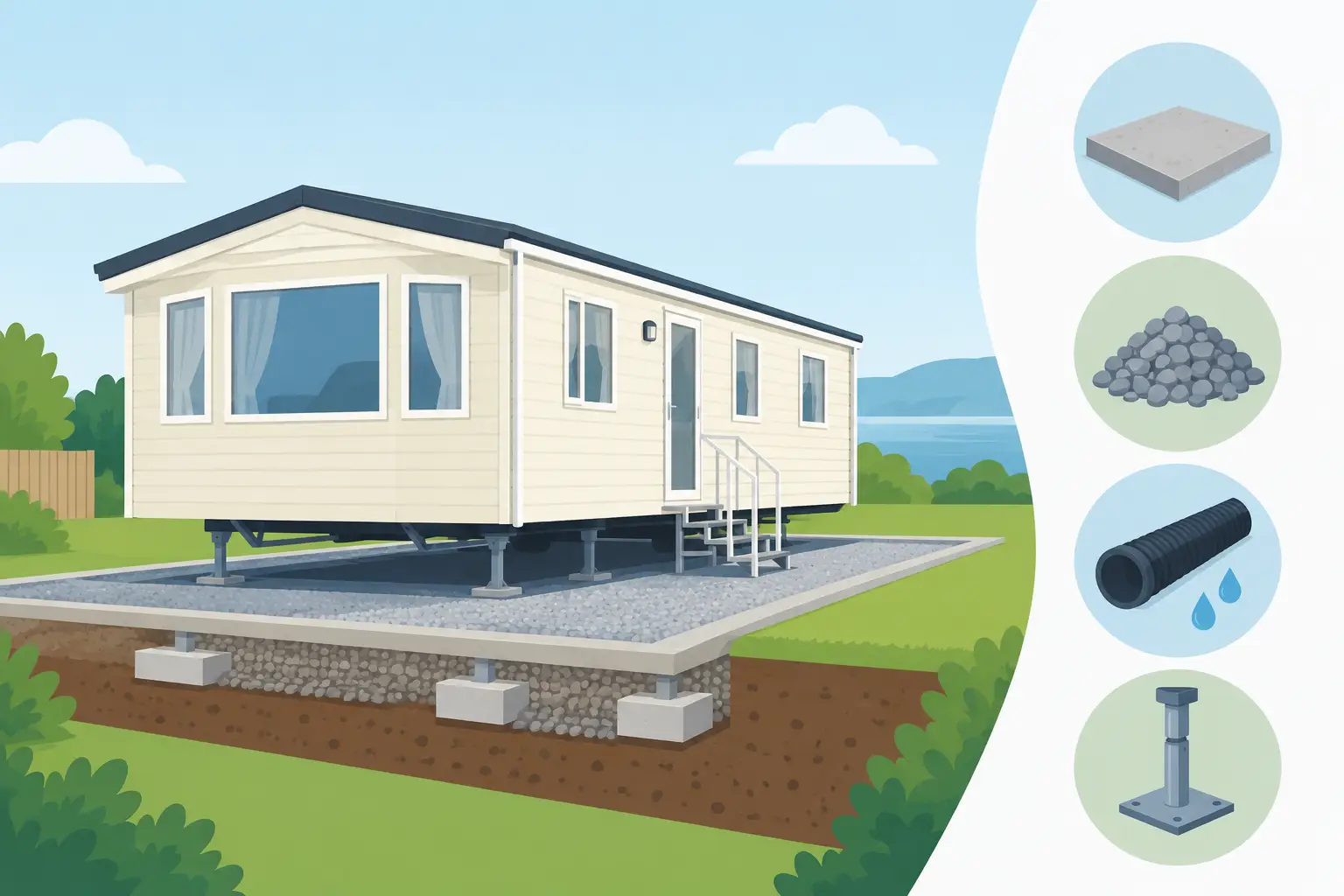
On private land, assess the final position as well as the route to it. Sloping ground may require preparation, levelling or suitable supports. The chassis must sit correctly, and services such as electricity, water and drainage need to be planned by competent installers. Before buying, take advice on planning requirements and intended use from the relevant local authority.

Delivery access can limit your choice

The largest caravan that fits the pitch is not always the largest caravan that can be delivered there. A 14 ft wide holiday home may be suitable on site but impractical if the route includes a narrow lane, sharp turn, weak bridge or low tree canopy.

Provide clear photographs and measurements of entrances, gateways, lanes and the final turning area. Include the width between fixed objects, not just an estimate of the road width. Tell the transport provider about low cables, parked vehicles, tight corners and gradients. Where access is difficult, a site visit or more detailed assessment may be needed before transport is booked.

Remember that the caravan will arrive on specialist transport, with room needed to manoeuvre and unload it. A gateway that is only marginally wider than the caravan body may not allow enough clearance for a safe approach. Removing a gate, trimming overhanging branches or arranging temporary vehicle restrictions can sometimes solve an issue, but these arrangements should be agreed well in advance.

Measurements to confirm on every caravan

Before placing an order, confirm the stated length and width, the number and size of bedrooms, overall height for access planning, and the location of external doors. Check whether the dimensions include any bay window or feature projection. Ask where the utility connections sit and whether the caravan is supplied with steps, as these affect the final siting plan.

For a used caravan, condition matters alongside size. A competitively priced 35 x 12 ft unit may offer excellent family space, but inspect the flooring, roof, windows, heating, chassis and furnishings so that the full cost of ownership is clear. For a new caravan, compare the standard specification carefully. Central heating, double glazing, upgraded insulation and integrated appliances can make one similarly sized model better suited to your requirements.

Premier Caravans Ltd can help buyers match the available pitch and access route to suitable off-site stock, then arrange practical delivery support once the right unit has been chosen.

The best purchase is not simply the biggest caravan within budget. It is the model that fits the site properly, reaches it without difficulty and gives the right amount of usable space for the people who will enjoy it.

Posted on — Leave a comment

Central Heated Double Glazed Static Caravans

Central Heated Double Glazed Static Caravans

A static caravan can look right on a sales listing and still be wrong for the way you intend to use it. If you will visit outside the peak summer months, central heated double glazed static caravans deserve serious consideration. They are designed to hold warmth more effectively, reduce cold spots around windows and make spring, autumn and winter stays far more comfortable.

For buyers choosing an off-site caravan for a holiday park or private land, heating and glazing are not just desirable extras. They affect running costs, the condition of the interior, the type of park that may accept the unit and how often you can realistically use it. The right specification depends on the caravan’s age, construction, intended location and whether it is for occasional holidays or more regular use.

What central heating and double glazing provide

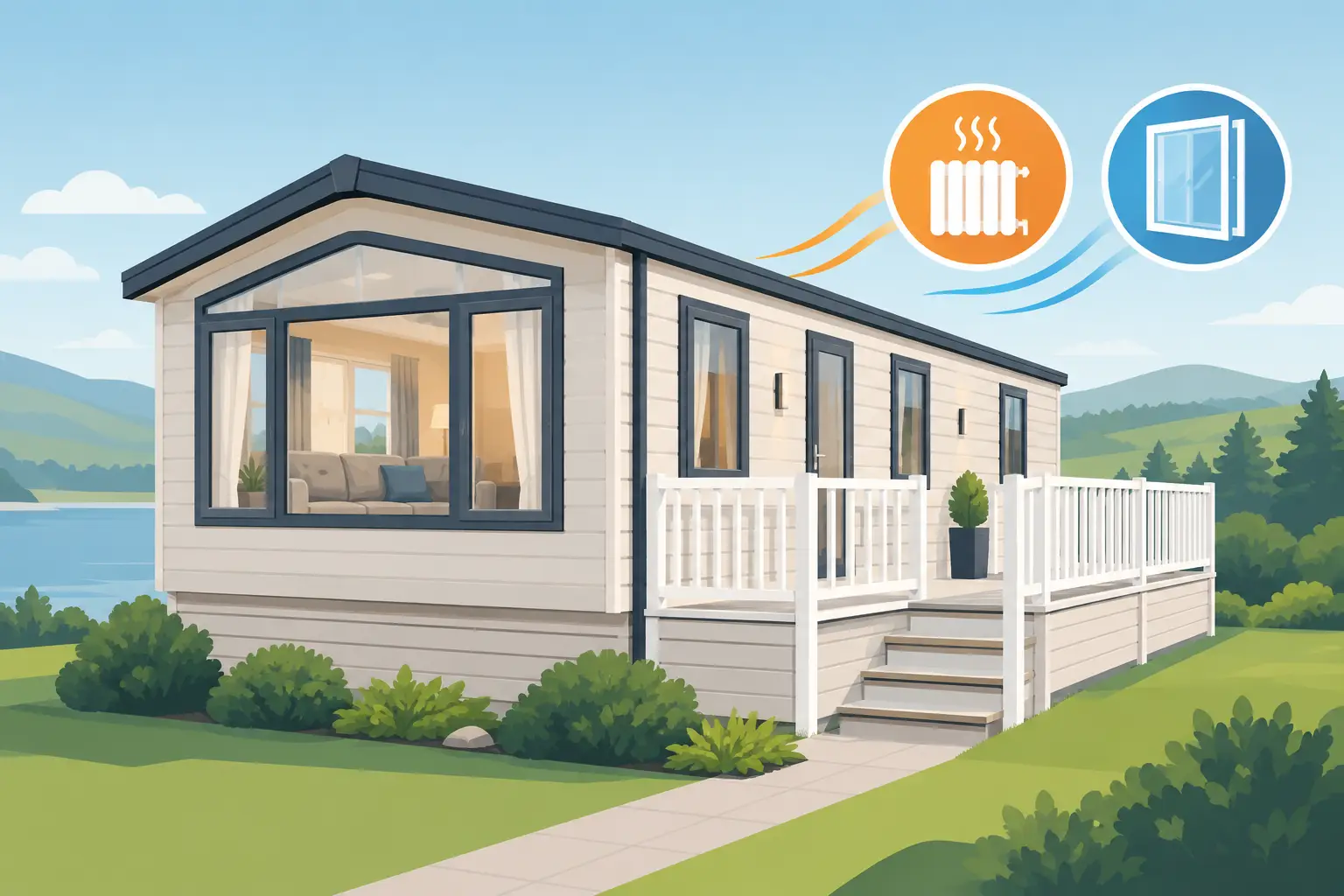
A fully central-heated static caravan normally has a gas boiler feeding radiators throughout the accommodation, with hot water supplied through the same system or a separate arrangement. This differs from a caravan with only electric panel heaters, convector heaters or a gas fire in the lounge. Radiators provide more even heat in bedrooms, hallways and bathrooms, rather than concentrating warmth in one room.

Double glazing uses two panes of glass with a sealed gap between them. It reduces heat loss through windows and doors, helps limit condensation and cuts some outside noise. On a windy coastal park or exposed rural plot, that makes a noticeable difference. It also makes the caravan more pleasant in the mornings, when single-glazed windows and cold frames can make bedrooms feel particularly chilly.

Together, these features make a caravan more usable across a longer season. They do not turn every unit into a residential lodge, however. A holiday-home specification caravan with central heating and double glazing is not automatically suitable for permanent living. Construction standard, insulation, floor thickness, pipework protection and the rules of the receiving park or local authority must all be checked separately.

When central heated double glazed static caravans make sense

This specification is often the sensible choice for families who use their caravan in school holidays and at weekends from early spring into late autumn. It suits couples who prefer quieter, off-season breaks, as well as buyers replacing an older unit that has become expensive to heat or uncomfortable during cooler weather.

It is also worth considering if the caravan will be sited in North Wales, the coast, higher ground or anywhere exposed to rain and wind. A well-heated, double-glazed model will not remove the need for sensible winter care, but it gives you a much better starting point than a basic summer-use caravan.

There is a price difference. A newer caravan with full central heating and double glazing generally costs more than a similar-sized single-glazed model with basic heating. The additional outlay can be justified where comfort, condition and resale appeal matter. For a caravan used only for a few summer weekends, a lower-priced unit may still be the better value purchase. The key is to buy for actual use, not a specification you may never need.

Check the wording on the individual listing

Heating descriptions can sound similar while meaning different things. “Central heated and double glazed” should indicate a boiler and radiators, plus double-glazed windows, but buyers should still review the individual specification carefully. Ask what heating system is fitted, whether the boiler has been tested, how many radiators are installed and whether there is an electric fire or additional heating in the lounge.

With used static caravans, condition matters as much as the feature itself. Check the boiler age where known, visible radiator condition, controls, window seals and door alignment. Mist between double-glazed panes, stiff window handles or water staining around frames may point to repairs that should be allowed for in your budget.

It is equally useful to look at the practical layout. A 36ft x 12ft two-bedroom caravan may offer a spacious lounge and kitchen but have less wardrobe space than a 38ft x 12ft three-bedroom model. If you will be heating the caravan regularly, consider the number of bedrooms, ceiling height and open-plan areas. Larger units can be very comfortable, but naturally require more energy to keep warm.

Do not confuse this with residential specification

Residential-specification lodges and caravans are built to a higher standard intended for year-round use, commonly with enhanced insulation and more substantial construction. They are often described as meeting BS 3632 residential standard. That is different from a standard holiday caravan that has central heating and double glazing.

If you are buying for a park with a long season, central heating and double glazing may be exactly what is required. If the unit is intended as accommodation on private land or for continuous occupation, obtain clear advice on planning, licensing and the specification needed before committing to a purchase. The landowner’s permission alone does not settle these points.

Match the caravan to the site before buying

An off-site purchase gives you more choice than buying solely from a park’s available stock, but it also means the receiving site must approve the caravan. Contact the park before purchase and confirm its rules on age, manufacturer, size, external finish and delivery access. Some parks have an age limit for incoming caravans, while others only accept units bought through their own sales office.

Private land brings a different set of checks. Establish whether a static caravan can be sited there, what it can be used for and whether planning permission or a site licence is relevant. Check access from the road, turning space for the delivery lorry and whether gates, trees, overhead cables or tight bends could prevent delivery.

Measure the pitch or prepared base as well. The published dimensions are important, but the delivery team also needs enough space to manoeuvre, position and level the unit. Allow for exterior access, steps, gas bottles, drainage connections and any decking you plan to add. A caravan that fits on paper can become costly to site if access has not been assessed properly.

Budget beyond the sale price

The advertised price is the starting point, not the whole cost of ownership. Delivery, siting, levelling, connections, gas certification, insurance and park charges need to be accounted for. Depending on the unit and destination, you may also need steps, skirting, a water connection, electric hook-up work or drainage arrangements.

Heating running costs will vary by location, use and tariff. A caravan left heated all winter will cost more than one warmed up for weekend visits. Setting sensible temperatures, using a timer where appropriate and keeping ventilation unobstructed can help control bills and reduce condensation. In very cold weather, follow the manufacturer’s and park’s guidance on frost protection and draining down if the caravan will be empty.

A transparent, itemised approach is useful here. You should know what is included with the caravan, what is subject to inspection, and which transport and siting services are priced separately. That prevents a low headline price from becoming less competitive once essential work is added.

Choosing between used and new models

A pre-owned central-heated, double-glazed caravan can offer excellent value, particularly for buyers who want a larger model, more bedrooms or a recognised manufacturer within a fixed budget. Focus on condition, service history where available and the suitability of the specification for your site. A well-kept used unit can be a practical purchase when it has been accurately described and inspected in person.

A brand-new caravan offers current styling, unused appliances and manufacturer warranty cover, with modern layouts from makers such as ABI, Delta, Victory and Willerby. It can be the right route where park rules are strict or where you want the reassurance of a new boiler, windows and fittings. The trade-off is a higher purchase price and, in some cases, a longer lead time than buying stock already available for delivery.

At Premier Caravans Ltd, appointment-led viewing allows buyers to inspect available off-site stock, compare layouts and discuss transport to their chosen location before making a decision. This is particularly useful when dimensions, access or park acceptance need confirming before delivery is booked.

View with a practical checklist in mind

When viewing, turn the heating on if possible and check how the caravan feels away from the lounge. Look inside cupboards near external walls, around windows and beneath sinks for signs of moisture. Open and close windows and exterior doors, test taps and flush toilets where services permit, and inspect the underside and chassis as part of a full condition assessment.

Ask about what remains with the caravan. Loose furniture, inventory, gas bottles, steps and appliances are not always included. Confirm the exact model, year, dimensions and bedroom count, rather than relying solely on photographs. These details affect both transport planning and whether the caravan meets your park’s conditions.

A central-heated, double-glazed static caravan is a sensible purchase when it matches your intended season of use, your site rules and your total budget. Get those three points right before arranging delivery, and you will be choosing a holiday home that is comfortable when you want to use it, not only when the weather happens to cooperate.

Posted on — Leave a comment

Static Caravan Running Costs UK Explained

Static Caravan Running Costs UK Explained

A static caravan can be an excellent-value holiday home or a practical extra living space on private land, but the purchase price is only one part of the decision. Static caravan running costs UK buyers need to allow for depend on where the unit will be sited, how often it is used and the specification of the caravan itself. A used, single-glazed model on a seasonal park has different costs to a fully central heated and double-glazed holiday home used through the colder months.

The right budget starts with separating one-off costs from annual running costs. Ask the park or landowner for written charges before committing to a caravan, then compare those figures alongside insurance, utilities, maintenance and transport. That gives a far more realistic view of ownership than looking at pitch fees alone.

Static caravan running costs UK buyers should budget for

For a caravan on a holiday park, annual pitch fees are usually the largest regular outgoing. These vary significantly by location, park facilities, season length and pitch position. A straightforward family park may charge a few thousand pounds a year, while premium coastal parks or sites with extensive facilities can cost considerably more. Some park agreements also include rates, water, drainage or a proportion of utility charges, while others bill these separately.

If the caravan is going onto private land, there may be no pitch fee, but that does not automatically make it a lower-cost option. You will need to consider access, groundwork, utility connections, drainage arrangements and any planning or licensing requirements. A caravan intended for accommodation must be sited lawfully and appropriately. Private-land buyers should establish this before arranging delivery, rather than after a unit has arrived.

Most owners should expect to budget for the following ongoing items:

  • pitch or site fees, where applicable
  • gas, electricity, water and drainage charges
  • insurance
  • routine servicing and repairs
  • winterisation, cleaning and seasonal checks
  • transport or re-siting costs if the caravan is moved in future

Not every item will apply in every case. The important point is that park charges are only one part of the annual figure.

Park fees, season dates and site rules

Park fees are not simply a charge for the ground beneath the caravan. They can reflect the park’s opening period, security, road maintenance, refuse collection, landscaping and facilities. Before purchasing an off-site caravan for a particular park, ask exactly what is included, when the payment is due and whether there are separate administration or connection charges.

The park’s season dates matter just as much as the fee. Many holiday parks close for part of the winter, even where the caravan is fully central heated and double glazed. A residential-specification lodge may be built to a higher standard, but it does not override a park’s holiday-use licence or its occupation rules.

It is also worth checking the park’s age policy. Some parks limit the age of caravans they will accept or set a date by which a unit must be replaced. This can affect the value of an older used caravan and should be factored into the buying decision. Ask whether the park will accept the exact make, model, dimensions and year you are considering before placing an order.

Utility bills: specification makes a real difference

Electricity is commonly metered on holiday parks and can become a noticeable cost if the caravan is used regularly in colder weather. Electric panel heaters, fan heaters and immersion heaters use power quickly. A caravan with efficient central heating, double glazing and good insulation is normally more economical to run than an older basic unit, although the higher purchase price needs to be weighed against likely use.

Gas may be supplied through bottles or a piped system, depending on the site. Bottled LPG can be particularly expensive if used heavily for heating, hot water and cooking during winter. Check whether gas bottles must be purchased from the park, whether delivery is included and where cylinders can be stored safely.

Water and drainage arrangements vary. They may be included in the pitch fee, billed as a fixed annual amount or charged by meter. A static caravan on private land may need a suitable water connection and lawful foul-water disposal. These are siting costs as well as running-cost considerations, and they should be assessed before choosing the pitch.

For buyers who will mainly use the caravan from spring to autumn, utility spending can be modest. For frequent users or those wanting extended-season comfort, choosing a newer model with central heating and double glazing is often the more practical long-term option.

Insurance, safety checks and maintenance

Static caravan insurance is a sensible annual cost to include from the outset. Cover can protect against events such as fire, storm damage, theft, escape of water and public liability, depending on the policy. Insurers will want accurate information about the caravan, its location, security arrangements and whether it is on a holiday park or private land. Do not assume a normal home policy covers a caravan.

Maintenance is usually manageable when it is dealt with early. External sealant, gutters, chassis condition, roof joints, door locks and ventilation all benefit from regular checking. Damp caused by a failed seal or blocked gutter is far cheaper to prevent than to repair. A caravan that is not used for long periods should still be visited and aired where possible.

Gas appliances should be checked by an appropriately qualified engineer, particularly if the caravan is let, used by guests or occupied frequently. Carbon monoxide alarms and smoke alarms should be tested regularly. These are small costs compared with the protection they provide.

A sensible maintenance allowance is better than waiting for a fault. Older units may need more attention, but a well-kept used caravan can remain a sound purchase. The condition of the roof, chassis, windows, boiler, flooring and exterior panels matters more than age alone.

One-off costs that are easy to miss

Delivery and siting are often the first additional costs after purchase. The price depends on the collection point, distance, route access, unit width, escorts where required, crane or HIAB requirements, and the work needed to position the caravan on the pitch. A route that looks straightforward on a map may have tight turns, low branches, restricted entrances or soft ground that need addressing first.

Ground preparation can include a suitable base, supports, levelling, steps, skirting and connections to utilities. On a holiday park, some of this may be handled by the site team, usually for a charge. On private land, the buyer will need to organise each part and ensure the proposed position is accessible to a transport lorry.

Furnishings are another variable. Many static caravans are sold with fitted furniture and kitchen appliances, but stock is individual. Check the itemised specification rather than assuming that televisions, bedding, patio furniture, gas bottles or external steps are included. A clear inventory prevents avoidable spending after delivery.

How to keep ownership costs under control

The cheapest caravan is not always the lowest-cost caravan to own. A bargain older model may suit occasional summer use, but it can require more heating, repairs and upgrades than a newer fully central heated and double-glazed model. Conversely, there is little benefit in paying for residential specification if the caravan will only be used for a few warm-weather weekends each year.

Match the caravan to the intended use. Families needing regular school-holiday breaks may prioritise bedrooms, storage and durable upholstery. Couples using the caravan well into autumn may place greater value on insulation, central heating and double glazing. Private-land buyers may need to focus first on dimensions, access and connection requirements.

When comparing units, request the key details: external dimensions, year, bedroom and bathroom layout, heating type, glazing, condition, included appliances and delivery options. Premier Caravans can help buyers consider these practical points before transport is arranged, particularly where an off-site unit needs to be delivered to a specific park or private location.

A realistic ownership budget gives you more choice, not less. Once the ongoing costs are clear, you can select a caravan and pitch that suit how you actually plan to use it, rather than finding out later that the site fees, winter heating or delivery arrangements do not fit the plan.

Posted on — Leave a comment

Static Caravan Base Requirements Explained

Static Caravan Base Requirements Explained

A static caravan can be excellent value when bought off site, but the purchase price is only one part of the job. Getting the base right before transport is booked avoids the most expensive problems: a unit that cannot be levelled, a lorry that cannot gain access, or a caravan positioned where water gathers beneath it. These static caravan base requirements are the practical checks to complete before your new or pre-owned holiday home arrives.

What a Static Caravan Base Must Do

A caravan base is not simply a flat patch of ground. It must carry the weight of the unit evenly, allow the caravan to be levelled accurately and keep the underside clear of standing water. It also needs enough surrounding space for siting equipment, connections, future maintenance and, where applicable, park compliance.

The exact requirement depends on the caravan dimensions, chassis layout, ground conditions and whether it is being placed on a holiday park or private land. A 28ft x 10ft used static caravan has different practical demands from a 40ft x 20ft residential-specification lodge. Wider and longer models have more support points and are generally less forgiving of uneven ground.

Do not assume an existing hardstanding is suitable because another caravan has stood there previously. Check its condition, its dimensions and whether it matches the support arrangement of the incoming unit. Older bases can settle, crack or drain poorly, particularly if they have not been used for several seasons.

Common Static Caravan Base Requirements

For most off-site static caravans, a prepared concrete base or properly designed concrete pad system is the preferred option. The surface should be firm, level and capable of supporting the unit through its specified chassis support points. The caravan is normally set on substantial concrete blocks, pads or purpose-made supports, then levelled using the chassis and axle arrangement. The wheels are not intended to carry the caravan permanently.

A full concrete slab is often a sensible choice for private land because it provides a clean, stable working area beneath the caravan. It can also make it easier to manage drainage and access around the unit. However, it needs to be accurately formed and sized to suit the caravan, rather than being poured to a rough estimate.

Concrete pads may be appropriate where the ground is sound and the support positions have been planned carefully. This can reduce the amount of concrete required, but the pads must sit on properly prepared sub-base and correspond with the chassis bearers. A poor pad layout can place uneven loading on the chassis and lead to doors or windows binding as the caravan settles.

Compacted stone can work as part of the groundwork or beneath a purpose-designed support system, but loose gravel alone is not normally a satisfactory permanent base. It can move under load, hold water and make accurate levelling difficult. Timber sleepers, loose blocks, paving slabs laid directly on soil and improvised supports may look acceptable on delivery day, but are rarely a sound long-term solution.

Level does not mean perfectly flat ground

The ground around a caravan should fall away enough to shed surface water, while the caravan itself must be level once sited. These are separate matters. A level concrete platform in a low spot may leave water sitting around or beneath the chassis after heavy rain.

A small fall across the finished surrounding ground is useful, directing water away from the base and towards suitable drainage. On sloping land, the site may need retaining work, engineered foundations or a different location altogether. It is better to establish this before ordering a larger caravan than to find that substantial groundworks are required after delivery.

Measure the Caravan, the Base and the Working Space

Use the advertised external dimensions of the caravan as a starting point, then allow room around it. The stated size, such as 36ft x 12ft, describes the main body of the caravan, not necessarily every projection, step, external flue or future deck.

The base should accommodate all required chassis supports and leave safe access for installation and maintenance. There should also be enough clear ground for siting crews to work without having to place equipment on soft verges, flower beds or unstable ground. If the caravan is going onto a holiday park, the park operator will usually specify pitch dimensions, spacing and orientation.

Think ahead before finalising the position. Allow for entrance steps, gas bottle storage, boiler servicing, external drainage connections and access to doors and windows. If decking is planned later, establish where it will sit and whether it could obstruct under-caravan ventilation or access panels.

Drainage and Ground Conditions Matter More Than Appearance

A neat hardstanding can still fail if rainwater has nowhere to go. Standing water beneath a static caravan increases damp risk, encourages corrosion and makes routine inspections unpleasant. It can also soften the ground around the base, affecting steps, decking supports and access routes.

Before siting, look at the land after prolonged rain. Identify where water naturally runs, whether there are low areas, and whether existing drains are clear. Depending on the site, suitable drainage may involve a perimeter channel, land drain, soakaway or connection designed by a qualified contractor. The right option depends on soil type, gradients and local restrictions.

Ground conditions deserve the same attention. Made-up ground, soft clay, peat, former ponds and recently disturbed soil can all require more than a standard concrete pour. Where the ground is questionable, obtain advice from a competent groundwork contractor or structural engineer. Spending money on assessment is usually cheaper than correcting settlement after the caravan has been delivered and connected.

Services Should Be Planned Before Delivery

A caravan base is easier to complete when water, electricity, drainage and gas arrangements have been considered at the same time. Running services afterwards can mean lifting sections of a new base, digging around the caravan or leaving exposed pipework where it is vulnerable to frost and accidental damage.

Electrical work should be completed by a suitably qualified electrician and designed for the caravan’s intended load. A modern fully central heated and double glazed caravan may require more consideration than an older, simpler holiday unit, especially where electric heating, appliances or a lodge-style specification are involved. The supply, consumer unit, earthing and isolation arrangements must be suitable for the installation.

Water pipes need frost protection and a sensible route to the caravan connection. Waste water should drain correctly without relying on unsuitable flexible pipe runs across the ground. Gas installations must be carried out and tested by an appropriately qualified professional. If bottles are used, they need a safe, accessible location away from doors, vents and ignition sources.

For park pitches, the park will commonly identify the service points and connection standards. On private land, establish what is legally and practically available before selecting the caravan. A low purchase price does not compensate for an expensive or impractical service connection.

Delivery Access Is Part of the Base Preparation

The best base in the world will not help if the transport vehicle cannot reach it. A static caravan is delivered on a specialist trailer, and siting may involve a towing vehicle, winch, skates or lifting equipment. The access route needs to be checked from the public road to the final position.

Measure gates, track widths, tight bends, overhead cables, low branches and changes in gradient. Soft ground at the entrance or beside the base can prevent a lorry from manoeuvring even when the route appears wide enough. Consider parked vehicles, street furniture, stone walls and neighbouring access as well.

Before confirming transport, be ready to provide clear information on:

  • caravan make, model, length and width;
  • photographs of the approach, entrance and prepared base;
  • gate widths, narrow points and overhead obstructions;
  • the surface and gradient of tracks or driveways; and
  • whether a crane, towing vehicle or other siting equipment may be required.

This is particularly relevant with 12ft-wide caravans and larger lodges. A route that suits a touring caravan or small delivery van may be unsuitable for a 40ft holiday home. Early checks allow the transport plan to be priced properly and reduce the risk of aborted delivery.

Park Rules, Private Land and Permissions

If the caravan is going to a holiday park, speak to the park before buying. Many parks have rules on approved manufacturers, maximum age, size, external finish, siting method and transport arrangements. They may also require their own team to carry out the final connection or positioning.

Private land involves a different set of questions. Whether planning permission, a caravan site licence, building regulations input or other approval is needed depends on the intended use, location and circumstances. A caravan used incidentally to a main dwelling is not the same as a unit used as separate permanent accommodation or for commercial letting. Do not rely on what a neighbour has done or on verbal assumptions. Check with the relevant local planning authority and take professional advice where needed.

Residential-specification construction, central heating and double glazing make a caravan more comfortable for extended use, but they do not by themselves determine what use is permitted on the land. Permission and site compliance should be resolved before delivery, not after the unit is on the base.

A Practical Check Before You Buy

The right caravan and the right base should be planned together. Confirm the model dimensions, inspect or photograph the proposed site, establish access and obtain an informed view of the groundwork before committing to transport. This is especially worthwhile when comparing a cheaper used caravan against a newer, larger model that needs more preparation.

Premier Caravans can help buyers discuss the practical delivery and siting points alongside the available off-site stock. A clear plan for the base, access and services means your caravan can be delivered, positioned and enjoyed without the avoidable cost of putting the groundwork right afterwards.

Posted on — Leave a comment

Static Caravan Age Limit Holiday Parks Explained

Static Caravan Age Limit Holiday Parks Explained

A static caravan age limit holiday parks policy can decide whether a caravan is suitable for a particular pitch before price, layout or condition are even considered. A well-kept used holiday home may offer excellent value, but if the park will not accept it or its agreement is close to ending, it is not the right purchase for that location. Check the park’s written rules first, then buy the caravan that fits them.

Is there a legal age limit for static caravans?

There is no single UK law setting one maximum age for every static caravan on every holiday park. Age limits are generally set by the individual park operator and are normally written into the pitch licence agreement, park rules or sales documentation.

One park may accept caravans up to 15 years old, another may allow 20 years, and another may assess each unit on condition. Some parks state an end date for the agreement rather than an age limit. For example, a caravan may be permitted to remain on its pitch until a stated year, regardless of the age printed on its serial plate.

This distinction matters. A 2015 caravan could be acceptable on a park with a 20-year policy, yet have only a few seasons remaining if it sits on a pitch agreement due to end soon. Equally, a slightly older caravan in excellent condition may be accepted by a park that reviews models individually. Never rely on what another owner says is allowed. Ask the park directly and request confirmation in writing before committing to an off-site purchase.

Why holiday parks set caravan age limits

Holiday park age policies are usually about maintaining the overall standard, safety and appearance of the site. Operators invest in grounds, facilities and infrastructure, and they want holiday homes on the park to remain presentable, weather-tight and practical to maintain.

Age is a simple rule to administer, but it is not always a perfect measure of quality. A fully centrally heated and double-glazed caravan that has been carefully maintained can be more suitable than a newer unit with water ingress, damaged cladding or neglected gas and electrical systems. Nevertheless, a park is entitled to apply its own entry and replacement criteria under the terms of its agreements.

There is also a commercial element. Some parks operate their own sales department and may restrict the age, make, specification or supplier of caravans brought onto site. Others welcome privately purchased units, subject to inspection and transport approval. This is why an off-site buyer should establish the park’s policy before viewing stock, not after paying a deposit.

Age limit, pitch agreement and condition are separate checks

Treat these as three separate questions. First, what is the newest or oldest model year the park will accept? Second, how long will the pitch agreement run once the caravan is sited? Third, does the actual caravan meet the park’s expected condition and specification?

Ask whether the park requires an inspection before delivery. It may want photographs, the manufacturer, model, year, dimensions, exterior finish and proof of gas or electrical work. A park may also have practical restrictions on width, roof profile, cladding colour, bedroom numbers or lodge specification. These details are particularly relevant where access roads are narrow or pitches have defined base sizes.

Questions to ask before buying a used static caravan

A used caravan can be a sensible route to ownership, especially where you want a specified budget, a practical two or three-bedroom layout, or a model that can be delivered promptly. The key is matching the unit to the site requirements and the remaining term you expect to enjoy.

Before you buy, ask the park for its current written policy on incoming caravans. Confirm the maximum accepted age, whether the rule is based on model year or manufacture date, and whether there are exceptions for higher-specification or particularly well-maintained units. Ask whether there is a minimum size, a requirement for double glazing or central heating, and whether the exterior must be vinyl, aluminium or another approved finish.

You should also establish the costs beyond the caravan price. These can include transport, crane or siting charges, connection fees, annual pitch fees, insurance, gas, electricity and any park administration charge for approving an incoming caravan. A low purchase price is only good value when the total cost of getting the unit operational is clear.

Finally, ask what happens at the end of the pitch agreement. Will the park offer a replacement pitch agreement, require the caravan to be removed, or give you an option to trade in or sell? The answer affects the resale value of the caravan on that particular park.

Choosing the right age and specification

For a caravan intended for a holiday park, the best choice is rarely just the newest one you can afford. It is the unit that meets the park’s written criteria, suits your family or letting plans, and gives you a sensible period of use for the money.

If your chosen park has a strict 15-year maximum, a model that is already 13 or 14 years old may be inexpensive but may offer limited time on site. That can still work for a buyer who wants a short-term holiday base at the right price. For a longer ownership plan, a newer pre-owned model or a brand-new unit may provide more flexibility and stronger resale prospects.

Specification should be considered alongside age. Centrally heated and double-glazed models are generally more comfortable in the shoulder seasons and can be more attractive to parks and future buyers. Layout remains just as important: check bedroom size, storage, shower arrangements, seating capacity and whether the caravan’s dimensions suit the allocated pitch. A 38ft x 12ft caravan may be ideal for one site but too large for another.

Residential specification lodges are a separate category. They may offer stronger insulation, upgraded construction and a more substantial finish, but they are not automatically permitted on every holiday park. Confirm that the park accepts the exact type, size and specification before arranging transport.

Static caravan age limit holiday parks and private land

Age limits are mainly a holiday park issue. If you are buying for privately owned land, there is no park operator imposing a caravan-age policy. However, that does not mean a caravan can be placed and occupied without checks.

Planning permission, permitted use, access, drainage, utilities and the intended occupancy all need to be considered. A caravan used as incidental accommodation may be treated differently from one used as an independent dwelling or holiday let. The condition and safety of the caravan still matter, particularly for gas installations, electrics, steps, decking and transport.

For private land buyers, an older caravan can represent particularly good value if it is dry, structurally sound and fit for the intended purpose. Inspect carefully for signs of water ingress around windows, roof joints, vents, corners and floor edges. Check the chassis, tyres and towing equipment as well, even if the caravan will be moved professionally rather than towed on the road.

Buying off-site without creating a transport problem

Off-site purchasing gives you more choice than buying only from the stock on one park. You can compare manufacturers, years, dimensions, bedroom layouts, heating provision and prices, then select a caravan that meets the park’s approval requirements.

The order of events is important. Obtain the park’s acceptance first, agree the pitch and access arrangements, then confirm the caravan dimensions and delivery route. Transport may involve lifting, loading, a specialist lorry, site access restrictions and final siting on the prepared base. The park may need to approve the delivery date and may have requirements for connection by its own contractors.

At Premier Caravans, buyers can view available new and pre-owned stock by appointment and discuss the practical points that affect an off-site purchase, including delivery and siting. Having the exact park rules, pitch measurements and delivery postcode available makes that conversation far more useful.

When replacement is better than repair

If your existing caravan is approaching the park’s age limit, do not wait until the final weeks of the agreement to explore options. Selling or replacing earlier usually gives you more choice and time to organise transport, park approval and a suitable replacement model.

Repair can be worthwhile where the caravan has years remaining on its agreement and the work addresses a contained issue. It becomes harder to justify major spending on a caravan that the park will require you to remove shortly, particularly if there are signs of damp, floor deterioration or repeated maintenance needs. The right decision depends on the remaining pitch term, the condition of the caravan and the value the park places on it.

A clear park policy is not an obstacle – it is a buying filter. Get the rules in writing, match the caravan’s year and specification to them, and you can buy with a much better view of the cost, lifespan and practical next step.

Posted on — Leave a comment

Do Static Caravans Need Planning Permission?

Do Static Caravans Need Planning Permission?

A static caravan may arrive on a low-loader rather than be built brick by brick, but that does not automatically place it outside planning control. The key question is not simply whether the unit has wheels. It is how it will be used, where it will be sited and whether placing it there changes the use of the land.

For buyers arranging an off-site caravan purchase, planning is best dealt with before transport is booked. A caravan that is the right size, specification and price still needs a lawful pitch, suitable access and the right services. The cost of moving a unit twice because a site has not been approved is easily avoided with a few early checks.

Do static caravans need planning permission?

Sometimes, yes. A static caravan used as a separate home, holiday let, business accommodation or additional holiday pitch will often require planning permission. A caravan placed within the grounds of an existing home for a purpose genuinely incidental to that home may not, but this is a narrow area and the facts matter.

Planning permission usually relates to the use of the land rather than ownership of the caravan itself. Calling a unit a ‘temporary structure’, keeping its wheels attached or using a removable skirt does not by itself remove the need for permission. Councils will look at the reality of the arrangement: who stays there, how long for, whether it has its own entrance, parking, utilities, post and facilities, and whether it functions independently from the main property.

Rules and local planning policies vary across Great Britain. England and Wales have similar principles in many cases, but each local planning authority makes decisions against its own development plan and site circumstances. Scotland and Northern Ireland have their own planning systems. Where there is any doubt, ask the relevant council for written guidance or apply for a lawful development certificate before committing to a purchase or delivery date.

A caravan in a garden or private land

This is the situation that causes most confusion. A static caravan can sometimes be kept in the garden or curtilage of a house without planning permission where its use is incidental to the enjoyment of the main dwelling. That might include occasional daytime use as a hobby room, storage space or an extra room for family use, provided it does not become a separate residence.

The position changes quickly if someone sleeps there as their main home, cooks and washes there independently, receives separate post, or if the caravan is rented out. Even occupation by a family member can need permission if the unit operates as self-contained accommodation. A separate access, boundary treatment, metered services or advertising can all point towards a separate planning use.

Land that is not part of a residential garden is more likely to require planning permission. A field, paddock, farmyard or woodland does not gain residential caravan rights simply because it is owned with a house. Siting a holiday home on agricultural land, for example, may amount to a material change of use and can also raise access, drainage, ecology and landscape issues.

Do not rely on a neighbour’s caravan, an old verbal conversation or the fact that a unit has been on land for many years. Those circumstances may be different, may have a consent attached, or may not be lawful. Check the planning history of the specific address and any conditions on the property title or original planning consent.

Temporary use is not a blanket exemption

Buyers sometimes assume that a caravan is permitted if it is only needed while a house is being renovated or built. There can be scope for temporary accommodation in particular circumstances, but it is not an automatic right. The council may expect an application, may limit the period of occupation, or may require evidence that building work is actively progressing.

A caravan cannot normally be used as a permanent shortcut around a refused dwelling application. If the real intention is to create an additional home on the land, it is better to obtain clear planning advice at the outset.

Holiday parks and authorised caravan sites

If you are buying a static caravan for a holiday park, the park operator will normally hold planning permission for the site and a site licence where required. That does not mean every caravan can be placed anywhere on the park. There may be limits on the number of pitches, the seasons when units can be occupied, the approved layout, the type of accommodation and whether a particular pitch is for holiday rather than residential use.

Before arranging delivery, ask the park to confirm that it will accept an off-site purchase. Some parks have rules around approved manufacturers, caravan age, dimensions, exterior finish, transport arrangements and connection works. A 40ft x 12ft holiday home may be suitable in one location but too large for a park with restricted access or specific pitch conditions.

Also confirm the licence agreement. A caravan sold as a holiday home is not automatically suitable for permanent residential occupation, even where it is fully centrally heated and double glazed. Holiday park planning conditions often restrict occupation to holiday use and may prevent use as a main residence. A residential-specification lodge can offer a higher construction standard, but planning permission and the park’s occupation rules still decide how it may be used.

What councils consider when assessing an application

Where an application is needed, the council will assess more than the caravan model. A well-specified unit can be part of a good application, but it will not overcome an unsuitable location. The most common considerations include:

  • the proposed use – family accommodation, holiday use, staff accommodation or letting;
  • the location, including countryside policies, green belt, flood risk and protected landscapes;
  • access for residents, visitors and delivery vehicles, including visibility and road safety;
  • drainage, water supply, electrical connections and the treatment of foul waste;
  • the effect on neighbours through privacy, noise, overlooking and visual appearance; and
  • whether the unit is genuinely a caravan in legal terms or is better treated as a building.

For larger twin-unit lodges, dimensions should be checked carefully. A unit that falls outside the legal definition of a caravan may be assessed as an operational development rather than a caravan, with different planning and building control implications. Manufacturer dimensions, transport split details and floor plans are useful documents to retain.

Planning permission is not the only check

Planning is one part of the decision. Depending on the use and location, there may also be caravan site licensing, building regulations, environmental health requirements, drainage approvals, highways matters and restrictive covenants. A listed building, conservation area, national park or flood-risk area can add further constraints.

For a private pitch, establish where the caravan will sit before choosing its size. Measure the available space, turning area and approach road. Check overhead cables, tight gateways, low bridges and soft ground. A 12ft-wide caravan needs more than a 12ft-wide gap once transport, manoeuvring and safe clearance are considered.

Services deserve the same attention. Decide whether the unit will need mains electricity, water, a compliant drainage connection and gas provision. A fully centrally heated caravan or lodge is practical only when the proposed utilities can safely support it. It is far easier to plan service routes and a level base before delivery than after the caravan is in position.

A practical order before you buy

Start by being clear about the intended use. Is the caravan for approved holiday use on a park, occasional ancillary use in a garden, a permitted temporary arrangement, or accommodation that will require a full planning application? That answer should guide the model, size and specification you choose.

Then speak to the landowner or park operator and check the council’s planning records. If the position is unclear, seek written confirmation from the local planning authority. A formal lawful development certificate can provide more certainty than an informal conversation, although it requires an application and supporting evidence.

Once the pitch is confirmed, select a caravan that suits both the site and the budget. Bedroom count, overall dimensions, heating, glazing, age and condition all matter, but so do delivery access and the practical work needed to site it. An experienced transport provider can assess the route, but planning approval remains the buyer’s responsibility.

Premier Caravans can help buyers match an off-site caravan or lodge to their required dimensions and arrange transport to an approved location. Having the pitch, access and permissions in place first keeps the process straightforward and avoids delays once the right unit becomes available.

A static caravan can be an excellent extra space, holiday base or replacement holiday home, but it should be bought for a site that is ready for it. Confirm the permitted use first, keep written evidence with the property paperwork, and arrange delivery only when the practical and planning details are settled.

Posted on — Leave a comment

Can You Put a Static Caravan on Private Land?

Can You Put a Static Caravan on Private Land?

A static caravan can look like a straightforward answer when you need extra space on land you already own. But can you put a static caravan on private land? Sometimes, yes – but owning the land does not automatically give you the right to site or live in one. The deciding factors are how the caravan will be used, how long it will stay there, local planning rules and whether the site can be accessed and serviced safely.

For buyers arranging an off-site caravan purchase, these checks need to be completed before transport is booked. A caravan that suits the plot in size and specification is only part of the job. Permission, access and ground preparation matter just as much.

Can you put a static caravan on private land legally?

In most cases, placing a static caravan on private land is not simply a matter of delivery and siting. If it is used as living accommodation, whether permanently or for holidays, planning permission may be required. The relevant local planning authority will consider the use of the land, the effect on the surrounding area, access, drainage and whether the proposal amounts to a new residential or holiday use.

The fact that a static caravan is technically movable does not necessarily remove the need for planning consent. A unit connected to services, positioned on a prepared base and used continuously can be treated as a material change of use of the land. The more permanent the arrangement appears, the more likely it is that formal permission will be needed.

Planning rules vary across England, Wales, Scotland and Northern Ireland, and individual council policies can differ considerably. Land within a national park, conservation area, flood-risk zone, green belt or area with agricultural restrictions will usually need particularly careful consideration. Obtain advice from your local planning authority or a suitably qualified planning professional before committing to a purchase or arranging delivery.

The intended use makes the difference

There is no single answer for every private plot. Start by being clear about exactly how you plan to use the caravan.

A caravan positioned within the grounds of an existing home for incidental use can be treated differently from one used as an independent dwelling. Incidental use means it supports the main house, such as a hobby room, home office, occasional overflow sleeping space or family room. It should not operate as a separate self-contained residence with its own independent occupation.

Using a static caravan as a home for a relative, letting it to holiday guests, housing staff, or creating a separate address is more likely to require planning permission. Even a caravan used only at weekends may require consent if it introduces holiday accommodation onto land that does not already have permission for that purpose.

Agricultural land is another common area of confusion. Keeping a caravan on farmland for storage may be one question; using it as accommodation is another. A genuine and properly justified agricultural worker’s dwelling may be considered by a planning authority, but it is not an automatic right. Temporary accommodation can sometimes be part of an approved agricultural proposal, yet the details and evidence are critical.

A touring caravan is not always treated the same way

A touring caravan that is moved regularly and kept for occasional private use can present a different planning position from a large static caravan installed for years. However, the use of the land still matters. Repeated residential occupation or holiday letting can need permission regardless of wheels, tow bar or mobility.

A static caravan is also subject to practical constraints that make it more visibly permanent. It may require a substantial base, utility connections, decking, steps and landscaping. These works can themselves raise planning or building control questions.

Check permissions before choosing the caravan

Before viewing units, establish the planning status of the land. Check any existing planning permissions, conditions, legal agreements and title restrictions. If the property has a planning history, read the wording carefully rather than relying on a verbal understanding of what previous owners did.

Your local authority’s planning department can usually advise whether you need to submit a planning application, apply for a lawful development certificate, or seek pre-application guidance. Written advice is preferable where possible, particularly when significant money will be spent on a new residential-specification lodge or on site works.

If the land is rented, jointly owned, mortgaged or subject to estate covenants, there may be further permissions to obtain. A lender, freeholder, landowner or management company may have conditions separate from planning law. Do not assume approval from one party covers all the others.

For a holiday caravan, check whether a caravan site licence is required. Where multiple units are being operated as a commercial site, licensing, fire safety, drainage and holiday occupancy requirements can all apply. A single private unit and a developing holiday park are very different propositions in the eyes of a council.

Choose a caravan that suits the approved use

Once the legal position is clear, select the unit around the plot and the intended occupancy. A compact two-bedroom used static caravan may be practical for occasional family use, while a larger lodge with central heating, double glazing and stronger insulation may suit an approved year-round arrangement.

Residential-specification models can offer better insulation, heating performance and construction for regular use. That does not mean they create a legal residence by themselves. The caravan specification and planning permission are separate matters, although matching the unit to the approved use is sensible.

Measure the available area accurately. Include room for the caravan’s full length and width, external walls, required access, siting clearances, steps or decking, and space for maintenance. A quoted caravan size is normally the main body dimension, so allow for roof overhangs and any features that extend beyond it.

Do not choose solely on the internal layout. A well-priced caravan is only good value if it can be delivered, positioned and used as intended. At Premier Caravans, off-site buyers are encouraged to discuss dimensions, transport and siting requirements before delivery is arranged, particularly where access is tight or ground conditions are uncertain.

Delivery access can decide whether the job is possible

Static caravan transport is specialist work. The route to site must accommodate the lorry, the unit’s width and length, overhead clearance, turning space and a safe unloading position. Narrow lanes, low branches, weak bridges, sharp bends, parked vehicles and overhead cables can all prevent a delivery from being completed.

The final approach matters as much as the main road. A field entrance may need widening, gates may need removing temporarily and soft ground may not support heavy transport equipment. On sloping or restricted sites, a crane or specialist handling arrangement may be required. These requirements should be assessed early, not after a deposit has been paid.

A good site plan includes the route from road to pitch, the caravan’s final orientation and the equipment needed to place it. Photographs, measurements and a clear description of access help a transport provider identify likely issues before the day of delivery.

Prepare the pitch and services properly

A static caravan needs stable, level support. The exact foundation arrangement depends on the ground, the manufacturer’s guidance and the intended use, but it commonly involves a suitable hardstanding or prepared base with correctly positioned supports. Poor preparation can lead to doors and windows sticking, uneven floors, drainage problems and damage over time.

You will also need to plan water, electricity, foul drainage and surface-water drainage. Connections should be installed by competent people and comply with the relevant regulations. For gas appliances, use an appropriately qualified Gas Safe engineer. If you are using bottled LPG, allow for a safe, accessible cylinder location and the correct pipework.

Think about the everyday details too: where deliveries will turn, where bins will go, whether there is safe lighting, how the caravan will be secured and where rainwater will drain during a wet winter. These are practical issues, but they have a direct effect on how usable the caravan will be.

Do not rely on assumptions about time limits

Buyers sometimes hear that a caravan can be kept on land for a certain number of days without planning permission. This is often misunderstood. Some permitted development rights and temporary-use provisions exist in limited circumstances, but they do not provide a blanket right to site a static caravan for residential use. They can also be restricted by planning conditions or by the location of the land.

If the caravan is intended for anything beyond very limited or incidental use, seek site-specific advice. A short conversation with the planning authority before delivery is far cheaper than dealing with enforcement action, a removal notice or an unusable caravan afterwards.

Buy with the site in mind

Private-land caravan projects work best when the order is right: confirm the permitted use, assess the plot and access, prepare the base and services, then choose a caravan that fits the job. This approach gives you a much clearer choice between an affordable used static caravan, a fully central-heated and double-glazed holiday home, or a larger residential-specification lodge.

The right unit should suit your budget, the approved use and the realities of the site. Get those three points checked before transport is booked, and you can move ahead with far more confidence.

Posted on

Residential Spec Lodges for Sale Off Site

Residential Spec Lodges for Sale Off Site

Buying a lodge away from a park operator gives you more control over the unit, the location and the budget. Residential spec lodges for sale off site are purchased separately from their final pitch, so the practical work starts before delivery: choosing the right specification, confirming where it can go and arranging transport and siting properly.

For some buyers, that means replacing an older unit on an established holiday park. For others, it means providing accommodation on private land or selecting a lodge for a plot on a park that permits independently sourced homes. The lodge itself may be high-specification, but suitability always depends on the site as much as the model.

What residential specification means in practice

A residential-specification lodge is designed for more demanding, year-round use than a basic seasonal holiday caravan. The term is often used for models built to BS 3632, the British Standard for residential park homes. This normally brings improved insulation, stronger construction, better glazing and a heating system intended to maintain comfortable internal temperatures through colder months.

That does not mean every lodge described as residential specification is identical. Construction methods, wall and roof insulation, floor insulation, boiler type, radiator layout, windows and external finishes all vary by manufacturer and model year. Ask for the precise specification of the unit rather than relying on a headline alone.

Fully central heated and double glazed models are particularly popular with buyers who plan to use a lodge regularly outside the main summer season. A proper central-heating system, good thermal performance and practical storage make a material difference when the weather changes. However, a lodge with residential-grade construction still needs a suitable, correctly prepared base and compliant service connections to perform as intended.

Why buy a lodge off site?

An off-site purchase lets you select the lodge before committing to a particular park’s stock or package. It can also be a sensible route if you already own a pitch, have private land with the necessary permissions, or want to replace an existing caravan without being limited to one operator’s range.

Price is another reason. Buying through an independent specialist can give access to new and pre-owned stock at trade-focused prices, across a wider spread of makes, sizes and layouts. A two-bedroom lodge may be right for a couple, while a three-bedroom arrangement with an en-suite and a separate family bathroom can work better for a family or visiting guests. There is no advantage in paying for extra length or bedrooms that will not be used, particularly when transport, access and pitch dimensions also need to be considered.

The trade-off is that the buyer is responsible for checking the full project cost. The advertised lodge price may not include transport, crane work, siting, commissioning, decking, utility connections or park fees. A clear itemised quotation is more useful than an attractive starting figure with important costs left until later.

Check the location before choosing the lodge

The first question is not simply, “Which lodge do we like?” It is, “What can our site accept?” This applies whether the intended destination is a holiday park, residential park or privately owned land.

A park will usually have rules covering age, make, width, exterior finish, roof style and the standard required for incoming units. It may also have a maximum size, set pitch dimensions and restrictions on delivery dates. Ask the park for written approval before placing an order. Confirm whether it accepts lodges bought from an outside supplier and whether it requires a particular transport or siting contractor.

For private land, planning and licensing must be dealt with before a lodge is delivered. Owning land does not automatically permit a static caravan or lodge to be used as a separate dwelling. Rules differ according to the land, intended use and local authority. A residential-specification lodge does not remove the need for the correct permissions.

Access is equally important. Measure gateways, internal roads, tight corners, overhanging trees and overhead cables. A lodge that looks suitable on paper may be too wide or too long for a difficult approach. Its transport route, turning space and final position all need checking in advance. This is where early discussion with an experienced transport team can prevent a costly aborted delivery.

Choosing the right size and layout

Dimensions should be treated as a buying decision, not a technical detail. A 40ft x 20ft lodge provides a very different living arrangement from a 42ft x 14ft unit, even when both have two bedrooms. Wider models can offer larger lounges, better kitchen space and more generous bedrooms, but they can be harder to deliver and may not suit every pitch.

Start with how the lodge will actually be used. Regular weekend use may place more value on an open-plan living area and low-maintenance finishes. Longer stays can make utility space, wardrobe storage, a dishwasher, a bath or an en-suite more worthwhile. If children or guests will use the lodge, check bed sizes and bedroom circulation rather than counting bedrooms alone.

Also inspect the practical items that are easy to overlook in photographs: the condition of the boiler, radiators, double-glazed units, roof, gutters, flooring, kitchen appliances and shower seals. In a pre-owned lodge, condition and history can matter more than the badge on the front. In a new lodge, the exact factory specification and warranty terms should be confirmed before purchase.

Residential spec lodges for sale off site: costs to plan for

The lodge price is the starting point, not the finished cost on your plot. Delivery is priced according to the unit’s size, collection point, destination and route. A straightforward delivery to an accessible park is different from moving a wide lodge through narrow rural lanes or over uneven ground.

Siting can include positioning the lodge, supporting and levelling it on the prepared base, joining sections where applicable and fitting external items. Services may include electricity, water, drainage, gas or LPG connection, testing and commissioning. Depending on the site, you may also need steps, handrails, skirting, decking and landscaping.

Request costs in stages so you can compare like with like. It is sensible to separate the purchase price, delivery, siting, connection work and optional extras. That approach helps avoid a low headline price being compared with a package that includes considerably more work.

Viewing and asking the right questions

Viewing in person remains the best way to assess a lodge. Photographs can show décor and layout, but they cannot tell you how a floor feels underfoot, whether the bedroom is practical, how much natural light reaches the lounge or whether the furniture arrangement suits you.

At an appointment, take the dimensions of your proposed pitch and a list of questions about heating, glazing, year of manufacture, overall condition and what is included in the sale. Ask whether the unit is available immediately, whether any work is being completed before collection and what support is available with transport. A specialist supplier such as Premier Caravans can also advise on the practical route from purchase to delivery, rather than leaving the buyer to arrange every stage alone.

Do not rush a decision because a layout is attractive. A well-bought lodge is one that suits the site, arrives safely, can be properly connected and remains comfortable for the way you plan to use it. Start with the plot and access, then choose the residential specification, dimensions and layout that make sense for the long term.

Posted on

New Static Caravans for Sale Off Site UK Now

New Static Caravans for Sale Off Site UK Now

Buying through a holiday park is not the only route to a new holiday home. New static caravans for sale off-site in the UK give you the freedom to choose the unit first, then arrange delivery to an approved holiday park or suitable private land. That can mean better choice on layout, specification and budget, particularly when the caravan is priced for off-site sale rather than tied to one park’s stock.

For many buyers, the caravan itself is only half the decision. The other half is whether it can be transported, sited and connected correctly at its destination. Getting those points clear before placing an order avoids expensive surprises and helps make sure the model you choose is right for the pitch, the family and the way you intend to use it.

Why buy a new static caravan off site?

An off-site purchase separates the caravan purchase from the pitch purchase. Instead of selecting only from the models a particular park has available, you can compare manufacturers, sizes, bedroom numbers and levels of insulation across the wider market. This is particularly useful for buyers replacing an older caravan on an existing pitch, or those who have already secured a park location and simply need the right replacement unit.

It also gives you a clearer view of the price of the caravan itself. A good listing should state the manufacturer, model, dimensions, bedroom and bathroom count, year, heating and glazing provision, and whether the unit is available for immediate sale. These details matter more than glossy photographs. A 38ft x 12ft two-bedroom model and a 40ft x 13ft three-bedroom model may look similar at first glance, but they have very different transport, siting and living-space implications.

Buying off site does not remove the need to work with the park. Most holiday parks have rules on maximum caravan age, permitted dimensions, exterior appearance, access routes and approved installers. Ask for these requirements in writing before committing to a model. If the park has a replacement policy, check whether it applies to the age of the caravan at the point of siting and whether there are restrictions on the manufacturer or specification.

New static caravans for sale off site UK: choosing the right specification

The best caravan is not always the largest or the highest-priced model. It is the one that suits the intended use, fits the pitch and meets the park or landowner’s requirements.

Start with dimensions and layout

Length and width should be confirmed early. Standard-width caravans are often 12ft wide, while larger models may be 13ft wide. The extra foot can make a noticeable difference in the lounge, kitchen and bedrooms, but it can also affect whether the caravan can be delivered through the park entrance or along internal roads.

Bedroom count needs a practical assessment too. A two-bedroom caravan usually provides a main bedroom and one twin room, making it suitable for couples, smaller families or buyers who value a larger lounge. Three-bedroom layouts provide more sleeping capacity but may have smaller bedrooms and less cupboard space. Consider who will use the caravan most often rather than buying solely for occasional peak-season guests.

Look closely at the lounge arrangement. Fixed seating, free-standing furniture, pull-out beds and dining layouts all affect day-to-day use. If the caravan will be used for longer stays, kitchen storage, worktop space and a full-size integrated fridge freezer can matter as much as the number of berths.

Heating, glazing and insulation are not optional details

A new static caravan with full central heating and double glazing is generally the sensible choice for owners who expect to use it in spring, autumn and cooler periods. It improves comfort, reduces condensation risk and gives more flexibility when the weather changes. It does not make every caravan suitable for permanent residential use, however.

Residential-specification models are built to a higher standard and may include upgraded insulation, construction and heating arrangements. They are often a strong option for private land where lawful use and planning permission are already in place, or for parks that operate for much of the year. But the specification must match the intended location. A residential-specification caravan is not permission to live on land permanently, and a holiday park licence will still govern how the unit may be used.

Ask exactly what is included: boiler or combi boiler, radiators, double glazing, external doors, integrated appliances, freestanding furniture and connection points. Brand-new does not always mean identical specification across every model. Manufacturers such as ABI, Delta, Victory and Willerby offer ranges at different price points, from straightforward holiday caravans to high-specification lodges.

Know the difference between a caravan and a lodge

A lodge can offer more space, a more substantial build and a higher level of finish. It may be better suited to a larger private plot or a premium holiday development. It will also usually involve higher purchase, transport and siting costs. Access is especially important, as wider or heavier units can require more planning and specialist handling.

For buyers replacing an existing caravan, a new static caravan may be the more direct option. It can provide modern heating, improved glazing and an updated interior without changing the footprint or creating access problems on an established pitch.

Delivery, siting and connections

Transport is a planned operation, not an afterthought. The delivery team needs the caravan dimensions, collection and delivery postcodes, site access details, entrance width, overhead obstructions, road conditions and final pitch position. A caravan may physically fit on a pitch but still be difficult to move into place if there are tight bends, trees, parked vehicles or soft ground.

Before delivery, check that the pitch base is suitable and level. The caravan must be properly supported and sited to allow doors and windows to operate correctly, water to drain away and services to be connected safely. The park or landowner may arrange some of this work, but the responsibilities should be clear before the lorry is booked.

You should also establish who is handling gas, electricity, water and drainage connections. These are separate from transporting the caravan. Qualified engineers should complete the relevant work, and any park-specific connection rules must be followed. If decking, steps or skirting are required, confirm whether they are included in the quote or will be arranged locally after siting.

A proper delivery quotation reflects the actual job. The lowest initial transport figure is not always the best value if it excludes escorts, difficult access, crane work, siting equipment or return visits. Supplying accurate information at the outset helps produce a realistic price and reduces the risk of delays on delivery day.

Buying for a holiday park or private land

Holiday park buyers should first check the park’s written rules. Confirm the maximum permitted size, acceptable age, required safety documentation, delivery arrangements and whether the park charges siting or connection fees. Some parks may also require the sale to be handled through their own office, even where an owner is permitted to source a replacement caravan independently.

For private land, planning and lawful use are the starting point. A static caravan cannot simply be placed on land and used as a separate dwelling without considering planning rules. The position may differ where it is ancillary accommodation connected to an existing home, temporary accommodation during building work or a unit used within an established holiday business. Each case depends on the site and local authority position.

The practical point is straightforward: establish permission before delivery. A new caravan is a significant purchase, and it is far easier to select the correct model once you know what the land can lawfully accommodate. Access, foundations, drainage and utilities should be considered alongside planning, not afterwards.

What should be included in the price?

When comparing new caravans, compare like for like. The advertised price may be for the caravan only, or it may include selected furniture and appliances. Delivery, siting, commissioning, utility connections, steps, decking, skirting and park fees are commonly separate costs.

A transparent seller will set out what is included and identify the additional work that needs a site-specific quotation. This allows you to budget properly rather than assuming that a caravan is ready to use the moment it arrives. It is also worth asking about lead times, availability status and whether the displayed unit is the actual caravan for sale or a representative model.

If you have an existing caravan to sell, its removal or part-exchange value can influence the overall changeover cost. Age, condition, dimensions, site location and whether it can be moved again all affect what it may be worth. Providing clear photographs and full details makes that conversation more productive.

Viewing before you decide

Photographs and floorplans are useful, but they cannot show how a caravan feels to walk through. Viewing allows you to check ceiling height, bedroom access, seating comfort, cupboard space, finish quality and the real scale of the kitchen. It is also the opportunity to ask direct questions about delivery, siting and what happens after purchase.

At Premier Caravans, appointment-based viewings at the Kinmel Bay storage yard allow buyers to inspect available stock properly and discuss nationwide transport requirements before proceeding. After 24 years in the trade, the focus remains practical: matching the caravan to the destination and making sure the plan works before it is on the road.

Choose the unit that fits the pitch, the permission and the people using it. Once those three points are settled, a brand-new caravan becomes a straightforward purchase rather than a costly compromise.

Posted on

Static Caravans and VAT

If you’re paying for something it’s nice to know exactly what it is you’re paying for, and holiday caravans are no exception to this rule. Recent taxation reforms in relation to VAT have caused some confusion in the static caravan world.

What tax rate applies to static caravan sales? What about site fees? Should I be paying council tax? These are all questions which require definitive answers; definitive answers that aren’t always easy to find. We aim to provide them.

Static Caravan Sales

Right now, the tax rate on static caravan sales is 0%. However, this is set to change. After much political wrangling this summer, the static caravan industry and the government were finally able to agree on a negotiated tax rate of 5% applied to static caravan sales. This rate will come into force in April 2013.

The government had originally announced plans to apply the standard VAT rate of 20% to sales of static caravans, starting in October 2012. However, these plans were met with outrage by representatives of the static caravan manufacturing industry, who claimed that the proposed rate of tax would cripple business and severely damage sales.

Caravan manufacturers projected that this jump in tax would result in a 30% dip in profits as well as a loss of 1,000 jobs in the manufacturing sector alone. They vowed to fight the tax increase every step of the way, eventually succeeding in reducing the increase to just a quarter of what was proposed, as well as delaying it by six months to give the industry time to adjust.

Site Fees

Site fees are nice and easy. You pay a standard rate of 20% VAT on site fees. However, the VAT rates on the water, sewerage and utility bills that affect your pitch make things slightly more complex.

If the water supply and sewerage services to the pitch are individually metered then you will pay no VAT at all on either service. If the services are delivered to you via a central source, shared by the rest of the caravan site and not metered individually, then you will pay standard VAT rates on the charges.

If your caravan is used as a holiday home and individually metered, VAT on utilities such as gas and electricity will be charged at 5%; if these utilities are not individually metered the VAT will be charged at the current standard rate of 20%.

Council Tax

Working out the council tax on your holiday caravan is similarly straightforward. Council tax does not apply to your static caravan if you use it simply as a holiday home.

Hopefully this guide has helped you answer any tricky questions you may have had relating to VAT and taxation on your holiday caravan.

Posted on

Static Caravan Security

A static caravan holiday home is your property, in the same way that your home is. While you are likely to – and, in fact, encouraged to – remove all valuable items from the unit when you vacate the caravan, prevention of theft and trespass will still be high up you list of priorities.

By taking a few basic precautions, you can greatly improve the security of your holiday caravan, both when it is and when it is not in use.

Security Locks

Locks are an integral part of the security of your caravan. The most common forms of caravan lock are ellipse turn clamp locks and cube locks. The former use a central cylinder, into which a key is inserted to turn the locking mechanism, while the latter takes the form of a sliding block.

Whichever lock you choose, ensure that they are fitted to all points of entry on your caravan, and that they are all engaged when you vacate the unit for any length of time. Never leave a spare key hidden anywhere on your plot; it simply isn’t worth the risk. It’s a far better idea to simply carry a second key.

You may also want to have a security chain fitted to your caravan. This screws directly into the back of the caravan door and provides an extra level of security when you need to answer your caravan door to an unknown caller.

Security Alarms

It may seem somewhat extreme, but having alarms fitted to your caravan is relatively easy and inexpensive when compared to the benefit they can bring.

The easiest way to alarm your caravan is to attach motion sensors to all external doors and windows. When armed, these devices will sound should anyone attempt to gain access to the caravan unit. Don’t worry about leaving them visible in the window; this merely increases the deterrent. The ideal scenario is for the would-be trespasser to be put off and not attempt to access the caravan at all.

Many parks operate a more sophisticated radio alarm system. Attempting to enter the caravan unit while this alarm system is armed will result in the park’s central control room being alerted, ensuring that your caravan remains secure.

To enquire about whether your park operates such a system, simply visit your park manager.

Basic Practices

As mentioned in the first paragraph, removing all valuables from your unit is advisable when you leave your static caravan unit, but this isn’t always possible, particularly when you’re only popping out for the day or a couple of hours.

Instead, make sure that no valuables are left near windows or in full view from the outside. Such items are like a red flag to would-be thieves, and these kinds of temptation can be easily avoided.

If you do need to leave valuables in your caravan, investing in a safe unit and then hiding it from view is one way to add an extra level of security to your caravan. Marking items with a UV pen is another way of ensuring that items can be easily identified and recovered in the event that the worst does happen and they are stolen.

Our final piece of advice is to always ensure that your insurance policy is fully up to date.

Posted on

Renting your Caravan

One of the most frequently asked questions we receive deals with the amount of revenue an owner can generated from renting out or subletting their static caravan holiday home.

A large number of UK owners choose to rent their van to subsidise the cost of ownership using the income to help towards costs such as site fees and insurance. Very few owners in the UK buy static caravans to make a profit.

This is a very difficult question to answer as the amount of rental income you will generate depends on a number of criteria unique to each different owner.

A key issue that will determine the amount of rental income will be related to the time you, family and friends wish to use your static caravan holiday home. For example those who wish to use their static during peak season holidays such as Easter, Summer School Holidays and October half term will derive much less rental income than those who sublet for these periods. They however may be making substantial savings on the cost of their holidays compared to renting directly for the holiday park at normal rates.

Before purchasing a static caravan holiday home a buyer should be clear on their priorities of lifestyle benefits verse cost of ownership.

Purchase Price & Specification

Initial purchase cost is a key factor when considering the role of rental income in your ownership plan.

Obviously a larger the static caravan e.g. 6 berth rather than 4 berth will have a higher purchase price but will offer larger rental incomes. The same is true when it comes to specification of the static caravan.

Always remember to include finance payments in your calculations if you are purchasing the static caravan on credit.

Marketing, Reservations & Maintenance

It is also important to consider how you intend to market your static caravan and deal with maintenance and cleaning requirements.

If you rent out your static caravan you will also need to ensure all legal requirements for subletting are fulfilled e.g. annual gas testing.

Many larger parks will offer inclusive rental schemes that will take care of bookings and maintenance requirements. These programmes offer convenience and time saving but will reduce actual income as a result of the commission or fees charged.

Some owners choose to coordinate such arrangements themselves to save money, excepting that they will have to invest time into dealing marketing, bookings, sub contractors or even completing cleaning themselves if they live locally.

Whilst increased rental time will in turn increase rental revenue it is also important to consider wear and tear costs on your static caravan. We have received feedback from owners that have reported that some people on holiday do not treat the static caravan with the same respect as the owner and have suffered increased maintenance bills and the stress of having damage to their much loved holiday home. Remember if you do not handle the bookings yourself you have no control over who uses your holiday home. It is generally considered that increased rental time will increase annual running costs due to higher maintenance costs and this should be considered in your calculations.