


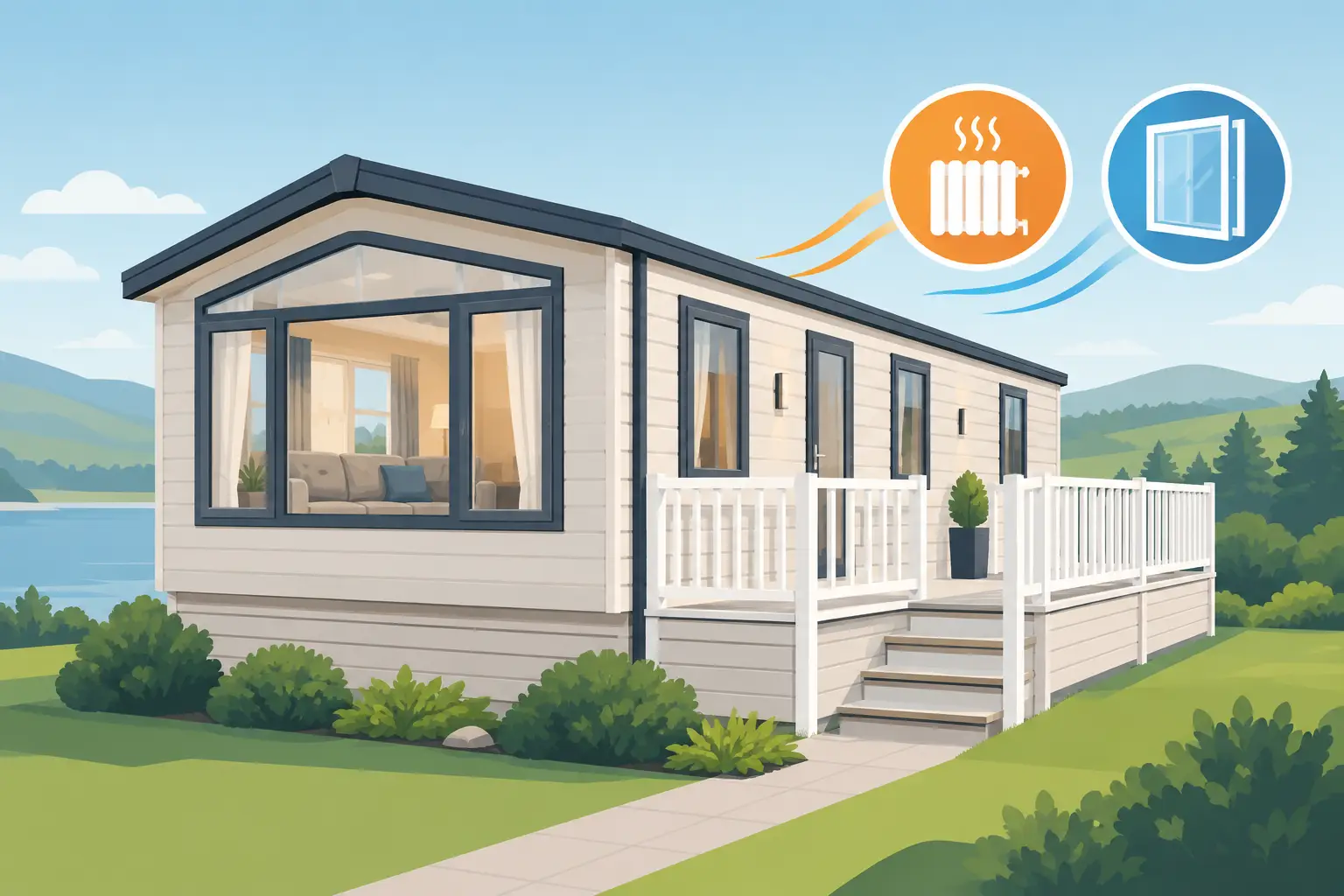
A static caravan can look right on a sales listing and still be wrong for the way you intend to use it. If you will visit outside the peak summer months, central heated double glazed static caravans deserve serious consideration. They are designed to hold warmth more effectively, reduce cold spots around windows and make spring, autumn and winter stays far more comfortable.
For buyers choosing an off-site caravan for a holiday park or private land, heating and glazing are not just desirable extras. They affect running costs, the condition of the interior, the type of park that may accept the unit and how often you can realistically use it. The right specification depends on the caravan’s age, construction, intended location and whether it is for occasional holidays or more regular use.
What central heating and double glazing provide
A fully central-heated static caravan normally has a gas boiler feeding radiators throughout the accommodation, with hot water supplied through the same system or a separate arrangement. This differs from a caravan with only electric panel heaters, convector heaters or a gas fire in the lounge. Radiators provide more even heat in bedrooms, hallways and bathrooms, rather than concentrating warmth in one room.
Double glazing uses two panes of glass with a sealed gap between them. It reduces heat loss through windows and doors, helps limit condensation and cuts some outside noise. On a windy coastal park or exposed rural plot, that makes a noticeable difference. It also makes the caravan more pleasant in the mornings, when single-glazed windows and cold frames can make bedrooms feel particularly chilly.
Together, these features make a caravan more usable across a longer season. They do not turn every unit into a residential lodge, however. A holiday-home specification caravan with central heating and double glazing is not automatically suitable for permanent living. Construction standard, insulation, floor thickness, pipework protection and the rules of the receiving park or local authority must all be checked separately.
When central heated double glazed static caravans make sense
This specification is often the sensible choice for families who use their caravan in school holidays and at weekends from early spring into late autumn. It suits couples who prefer quieter, off-season breaks, as well as buyers replacing an older unit that has become expensive to heat or uncomfortable during cooler weather.
It is also worth considering if the caravan will be sited in North Wales, the coast, higher ground or anywhere exposed to rain and wind. A well-heated, double-glazed model will not remove the need for sensible winter care, but it gives you a much better starting point than a basic summer-use caravan.
There is a price difference. A newer caravan with full central heating and double glazing generally costs more than a similar-sized single-glazed model with basic heating. The additional outlay can be justified where comfort, condition and resale appeal matter. For a caravan used only for a few summer weekends, a lower-priced unit may still be the better value purchase. The key is to buy for actual use, not a specification you may never need.
Check the wording on the individual listing
Heating descriptions can sound similar while meaning different things. “Central heated and double glazed” should indicate a boiler and radiators, plus double-glazed windows, but buyers should still review the individual specification carefully. Ask what heating system is fitted, whether the boiler has been tested, how many radiators are installed and whether there is an electric fire or additional heating in the lounge.
With used static caravans, condition matters as much as the feature itself. Check the boiler age where known, visible radiator condition, controls, window seals and door alignment. Mist between double-glazed panes, stiff window handles or water staining around frames may point to repairs that should be allowed for in your budget.
It is equally useful to look at the practical layout. A 36ft x 12ft two-bedroom caravan may offer a spacious lounge and kitchen but have less wardrobe space than a 38ft x 12ft three-bedroom model. If you will be heating the caravan regularly, consider the number of bedrooms, ceiling height and open-plan areas. Larger units can be very comfortable, but naturally require more energy to keep warm.
Do not confuse this with residential specification
Residential-specification lodges and caravans are built to a higher standard intended for year-round use, commonly with enhanced insulation and more substantial construction. They are often described as meeting BS 3632 residential standard. That is different from a standard holiday caravan that has central heating and double glazing.
If you are buying for a park with a long season, central heating and double glazing may be exactly what is required. If the unit is intended as accommodation on private land or for continuous occupation, obtain clear advice on planning, licensing and the specification needed before committing to a purchase. The landowner’s permission alone does not settle these points.
Match the caravan to the site before buying
An off-site purchase gives you more choice than buying solely from a park’s available stock, but it also means the receiving site must approve the caravan. Contact the park before purchase and confirm its rules on age, manufacturer, size, external finish and delivery access. Some parks have an age limit for incoming caravans, while others only accept units bought through their own sales office.
Private land brings a different set of checks. Establish whether a static caravan can be sited there, what it can be used for and whether planning permission or a site licence is relevant. Check access from the road, turning space for the delivery lorry and whether gates, trees, overhead cables or tight bends could prevent delivery.
Measure the pitch or prepared base as well. The published dimensions are important, but the delivery team also needs enough space to manoeuvre, position and level the unit. Allow for exterior access, steps, gas bottles, drainage connections and any decking you plan to add. A caravan that fits on paper can become costly to site if access has not been assessed properly.
Budget beyond the sale price
The advertised price is the starting point, not the whole cost of ownership. Delivery, siting, levelling, connections, gas certification, insurance and park charges need to be accounted for. Depending on the unit and destination, you may also need steps, skirting, a water connection, electric hook-up work or drainage arrangements.
Heating running costs will vary by location, use and tariff. A caravan left heated all winter will cost more than one warmed up for weekend visits. Setting sensible temperatures, using a timer where appropriate and keeping ventilation unobstructed can help control bills and reduce condensation. In very cold weather, follow the manufacturer’s and park’s guidance on frost protection and draining down if the caravan will be empty.
A transparent, itemised approach is useful here. You should know what is included with the caravan, what is subject to inspection, and which transport and siting services are priced separately. That prevents a low headline price from becoming less competitive once essential work is added.
Choosing between used and new models
A pre-owned central-heated, double-glazed caravan can offer excellent value, particularly for buyers who want a larger model, more bedrooms or a recognised manufacturer within a fixed budget. Focus on condition, service history where available and the suitability of the specification for your site. A well-kept used unit can be a practical purchase when it has been accurately described and inspected in person.
A brand-new caravan offers current styling, unused appliances and manufacturer warranty cover, with modern layouts from makers such as ABI, Delta, Victory and Willerby. It can be the right route where park rules are strict or where you want the reassurance of a new boiler, windows and fittings. The trade-off is a higher purchase price and, in some cases, a longer lead time than buying stock already available for delivery.
At Premier Caravans Ltd, appointment-led viewing allows buyers to inspect available off-site stock, compare layouts and discuss transport to their chosen location before making a decision. This is particularly useful when dimensions, access or park acceptance need confirming before delivery is booked.
View with a practical checklist in mind
When viewing, turn the heating on if possible and check how the caravan feels away from the lounge. Look inside cupboards near external walls, around windows and beneath sinks for signs of moisture. Open and close windows and exterior doors, test taps and flush toilets where services permit, and inspect the underside and chassis as part of a full condition assessment.
Ask about what remains with the caravan. Loose furniture, inventory, gas bottles, steps and appliances are not always included. Confirm the exact model, year, dimensions and bedroom count, rather than relying solely on photographs. These details affect both transport planning and whether the caravan meets your park’s conditions.
A central-heated, double-glazed static caravan is a sensible purchase when it matches your intended season of use, your site rules and your total budget. Get those three points right before arranging delivery, and you will be choosing a holiday home that is comfortable when you want to use it, not only when the weather happens to cooperate.