


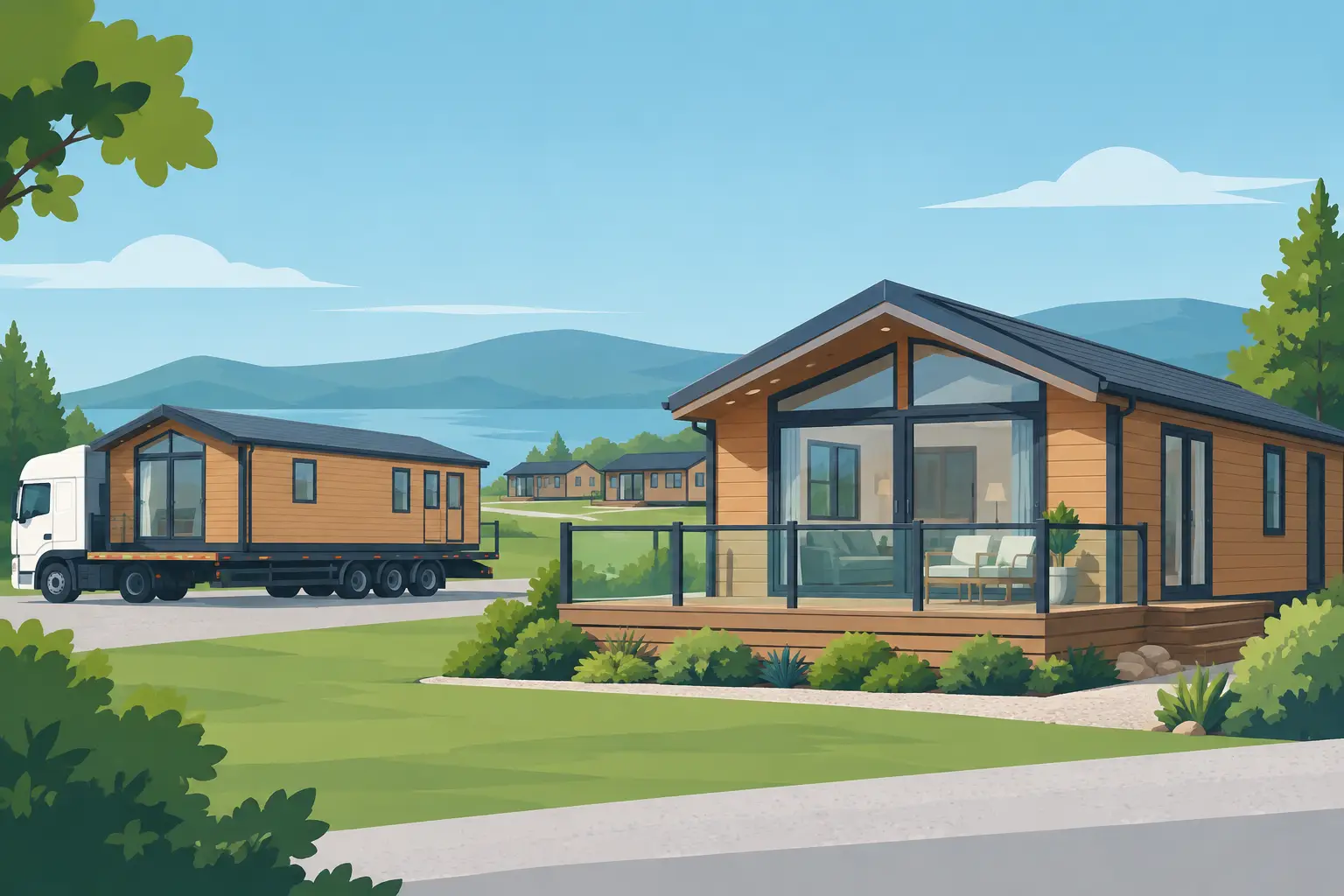
Buying a lodge away from a park operator gives you more control over the unit, the location and the budget. Residential spec lodges for sale off site are purchased separately from their final pitch, so the practical work starts before delivery: choosing the right specification, confirming where it can go and arranging transport and siting properly.
For some buyers, that means replacing an older unit on an established holiday park. For others, it means providing accommodation on private land or selecting a lodge for a plot on a park that permits independently sourced homes. The lodge itself may be high-specification, but suitability always depends on the site as much as the model.
What residential specification means in practice
A residential-specification lodge is designed for more demanding, year-round use than a basic seasonal holiday caravan. The term is often used for models built to BS 3632, the British Standard for residential park homes. This normally brings improved insulation, stronger construction, better glazing and a heating system intended to maintain comfortable internal temperatures through colder months.
That does not mean every lodge described as residential specification is identical. Construction methods, wall and roof insulation, floor insulation, boiler type, radiator layout, windows and external finishes all vary by manufacturer and model year. Ask for the precise specification of the unit rather than relying on a headline alone.
Fully central heated and double glazed models are particularly popular with buyers who plan to use a lodge regularly outside the main summer season. A proper central-heating system, good thermal performance and practical storage make a material difference when the weather changes. However, a lodge with residential-grade construction still needs a suitable, correctly prepared base and compliant service connections to perform as intended.
Why buy a lodge off site?
An off-site purchase lets you select the lodge before committing to a particular park’s stock or package. It can also be a sensible route if you already own a pitch, have private land with the necessary permissions, or want to replace an existing caravan without being limited to one operator’s range.
Price is another reason. Buying through an independent specialist can give access to new and pre-owned stock at trade-focused prices, across a wider spread of makes, sizes and layouts. A two-bedroom lodge may be right for a couple, while a three-bedroom arrangement with an en-suite and a separate family bathroom can work better for a family or visiting guests. There is no advantage in paying for extra length or bedrooms that will not be used, particularly when transport, access and pitch dimensions also need to be considered.
The trade-off is that the buyer is responsible for checking the full project cost. The advertised lodge price may not include transport, crane work, siting, commissioning, decking, utility connections or park fees. A clear itemised quotation is more useful than an attractive starting figure with important costs left until later.
Check the location before choosing the lodge
The first question is not simply, “Which lodge do we like?” It is, “What can our site accept?” This applies whether the intended destination is a holiday park, residential park or privately owned land.
A park will usually have rules covering age, make, width, exterior finish, roof style and the standard required for incoming units. It may also have a maximum size, set pitch dimensions and restrictions on delivery dates. Ask the park for written approval before placing an order. Confirm whether it accepts lodges bought from an outside supplier and whether it requires a particular transport or siting contractor.
For private land, planning and licensing must be dealt with before a lodge is delivered. Owning land does not automatically permit a static caravan or lodge to be used as a separate dwelling. Rules differ according to the land, intended use and local authority. A residential-specification lodge does not remove the need for the correct permissions.
Access is equally important. Measure gateways, internal roads, tight corners, overhanging trees and overhead cables. A lodge that looks suitable on paper may be too wide or too long for a difficult approach. Its transport route, turning space and final position all need checking in advance. This is where early discussion with an experienced transport team can prevent a costly aborted delivery.
Choosing the right size and layout
Dimensions should be treated as a buying decision, not a technical detail. A 40ft x 20ft lodge provides a very different living arrangement from a 42ft x 14ft unit, even when both have two bedrooms. Wider models can offer larger lounges, better kitchen space and more generous bedrooms, but they can be harder to deliver and may not suit every pitch.
Start with how the lodge will actually be used. Regular weekend use may place more value on an open-plan living area and low-maintenance finishes. Longer stays can make utility space, wardrobe storage, a dishwasher, a bath or an en-suite more worthwhile. If children or guests will use the lodge, check bed sizes and bedroom circulation rather than counting bedrooms alone.
Also inspect the practical items that are easy to overlook in photographs: the condition of the boiler, radiators, double-glazed units, roof, gutters, flooring, kitchen appliances and shower seals. In a pre-owned lodge, condition and history can matter more than the badge on the front. In a new lodge, the exact factory specification and warranty terms should be confirmed before purchase.
Residential spec lodges for sale off site: costs to plan for
The lodge price is the starting point, not the finished cost on your plot. Delivery is priced according to the unit’s size, collection point, destination and route. A straightforward delivery to an accessible park is different from moving a wide lodge through narrow rural lanes or over uneven ground.
Siting can include positioning the lodge, supporting and levelling it on the prepared base, joining sections where applicable and fitting external items. Services may include electricity, water, drainage, gas or LPG connection, testing and commissioning. Depending on the site, you may also need steps, handrails, skirting, decking and landscaping.
Request costs in stages so you can compare like with like. It is sensible to separate the purchase price, delivery, siting, connection work and optional extras. That approach helps avoid a low headline price being compared with a package that includes considerably more work.
Viewing and asking the right questions
Viewing in person remains the best way to assess a lodge. Photographs can show décor and layout, but they cannot tell you how a floor feels underfoot, whether the bedroom is practical, how much natural light reaches the lounge or whether the furniture arrangement suits you.
At an appointment, take the dimensions of your proposed pitch and a list of questions about heating, glazing, year of manufacture, overall condition and what is included in the sale. Ask whether the unit is available immediately, whether any work is being completed before collection and what support is available with transport. A specialist supplier such as Premier Caravans can also advise on the practical route from purchase to delivery, rather than leaving the buyer to arrange every stage alone.
Do not rush a decision because a layout is attractive. A well-bought lodge is one that suits the site, arrives safely, can be properly connected and remains comfortable for the way you plan to use it. Start with the plot and access, then choose the residential specification, dimensions and layout that make sense for the long term.