


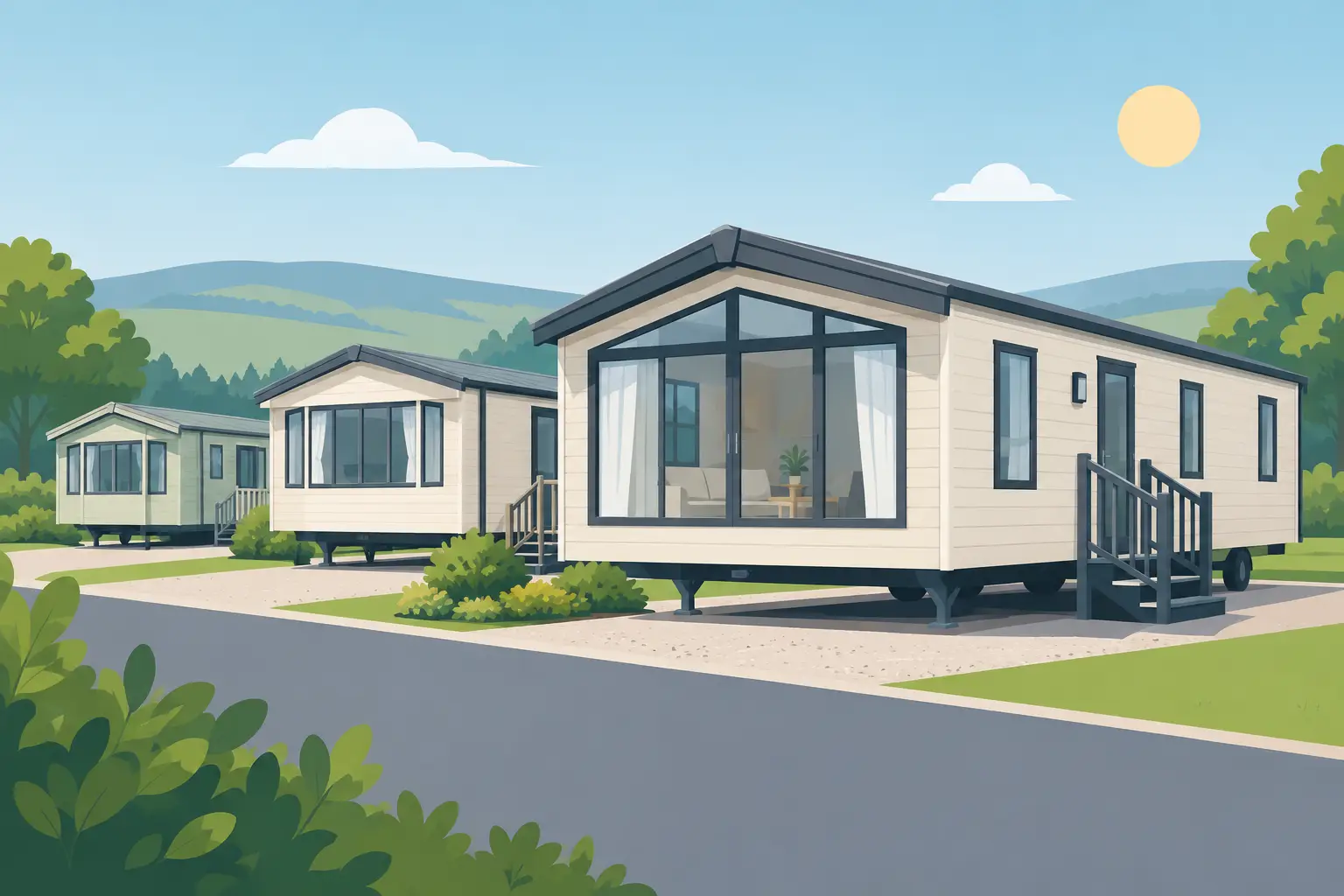
Buying through a holiday park is not the only route to a new holiday home. New static caravans for sale off-site in the UK give you the freedom to choose the unit first, then arrange delivery to an approved holiday park or suitable private land. That can mean better choice on layout, specification and budget, particularly when the caravan is priced for off-site sale rather than tied to one park’s stock.
For many buyers, the caravan itself is only half the decision. The other half is whether it can be transported, sited and connected correctly at its destination. Getting those points clear before placing an order avoids expensive surprises and helps make sure the model you choose is right for the pitch, the family and the way you intend to use it.
Why buy a new static caravan off site?
An off-site purchase separates the caravan purchase from the pitch purchase. Instead of selecting only from the models a particular park has available, you can compare manufacturers, sizes, bedroom numbers and levels of insulation across the wider market. This is particularly useful for buyers replacing an older caravan on an existing pitch, or those who have already secured a park location and simply need the right replacement unit.
It also gives you a clearer view of the price of the caravan itself. A good listing should state the manufacturer, model, dimensions, bedroom and bathroom count, year, heating and glazing provision, and whether the unit is available for immediate sale. These details matter more than glossy photographs. A 38ft x 12ft two-bedroom model and a 40ft x 13ft three-bedroom model may look similar at first glance, but they have very different transport, siting and living-space implications.
Buying off site does not remove the need to work with the park. Most holiday parks have rules on maximum caravan age, permitted dimensions, exterior appearance, access routes and approved installers. Ask for these requirements in writing before committing to a model. If the park has a replacement policy, check whether it applies to the age of the caravan at the point of siting and whether there are restrictions on the manufacturer or specification.
New static caravans for sale off site UK: choosing the right specification
The best caravan is not always the largest or the highest-priced model. It is the one that suits the intended use, fits the pitch and meets the park or landowner’s requirements.
Start with dimensions and layout
Length and width should be confirmed early. Standard-width caravans are often 12ft wide, while larger models may be 13ft wide. The extra foot can make a noticeable difference in the lounge, kitchen and bedrooms, but it can also affect whether the caravan can be delivered through the park entrance or along internal roads.
Bedroom count needs a practical assessment too. A two-bedroom caravan usually provides a main bedroom and one twin room, making it suitable for couples, smaller families or buyers who value a larger lounge. Three-bedroom layouts provide more sleeping capacity but may have smaller bedrooms and less cupboard space. Consider who will use the caravan most often rather than buying solely for occasional peak-season guests.
Look closely at the lounge arrangement. Fixed seating, free-standing furniture, pull-out beds and dining layouts all affect day-to-day use. If the caravan will be used for longer stays, kitchen storage, worktop space and a full-size integrated fridge freezer can matter as much as the number of berths.
Heating, glazing and insulation are not optional details
A new static caravan with full central heating and double glazing is generally the sensible choice for owners who expect to use it in spring, autumn and cooler periods. It improves comfort, reduces condensation risk and gives more flexibility when the weather changes. It does not make every caravan suitable for permanent residential use, however.
Residential-specification models are built to a higher standard and may include upgraded insulation, construction and heating arrangements. They are often a strong option for private land where lawful use and planning permission are already in place, or for parks that operate for much of the year. But the specification must match the intended location. A residential-specification caravan is not permission to live on land permanently, and a holiday park licence will still govern how the unit may be used.
Ask exactly what is included: boiler or combi boiler, radiators, double glazing, external doors, integrated appliances, freestanding furniture and connection points. Brand-new does not always mean identical specification across every model. Manufacturers such as ABI, Delta, Victory and Willerby offer ranges at different price points, from straightforward holiday caravans to high-specification lodges.
Know the difference between a caravan and a lodge
A lodge can offer more space, a more substantial build and a higher level of finish. It may be better suited to a larger private plot or a premium holiday development. It will also usually involve higher purchase, transport and siting costs. Access is especially important, as wider or heavier units can require more planning and specialist handling.
For buyers replacing an existing caravan, a new static caravan may be the more direct option. It can provide modern heating, improved glazing and an updated interior without changing the footprint or creating access problems on an established pitch.
Delivery, siting and connections
Transport is a planned operation, not an afterthought. The delivery team needs the caravan dimensions, collection and delivery postcodes, site access details, entrance width, overhead obstructions, road conditions and final pitch position. A caravan may physically fit on a pitch but still be difficult to move into place if there are tight bends, trees, parked vehicles or soft ground.
Before delivery, check that the pitch base is suitable and level. The caravan must be properly supported and sited to allow doors and windows to operate correctly, water to drain away and services to be connected safely. The park or landowner may arrange some of this work, but the responsibilities should be clear before the lorry is booked.
You should also establish who is handling gas, electricity, water and drainage connections. These are separate from transporting the caravan. Qualified engineers should complete the relevant work, and any park-specific connection rules must be followed. If decking, steps or skirting are required, confirm whether they are included in the quote or will be arranged locally after siting.
A proper delivery quotation reflects the actual job. The lowest initial transport figure is not always the best value if it excludes escorts, difficult access, crane work, siting equipment or return visits. Supplying accurate information at the outset helps produce a realistic price and reduces the risk of delays on delivery day.
Buying for a holiday park or private land
Holiday park buyers should first check the park’s written rules. Confirm the maximum permitted size, acceptable age, required safety documentation, delivery arrangements and whether the park charges siting or connection fees. Some parks may also require the sale to be handled through their own office, even where an owner is permitted to source a replacement caravan independently.
For private land, planning and lawful use are the starting point. A static caravan cannot simply be placed on land and used as a separate dwelling without considering planning rules. The position may differ where it is ancillary accommodation connected to an existing home, temporary accommodation during building work or a unit used within an established holiday business. Each case depends on the site and local authority position.
The practical point is straightforward: establish permission before delivery. A new caravan is a significant purchase, and it is far easier to select the correct model once you know what the land can lawfully accommodate. Access, foundations, drainage and utilities should be considered alongside planning, not afterwards.
What should be included in the price?
When comparing new caravans, compare like for like. The advertised price may be for the caravan only, or it may include selected furniture and appliances. Delivery, siting, commissioning, utility connections, steps, decking, skirting and park fees are commonly separate costs.
A transparent seller will set out what is included and identify the additional work that needs a site-specific quotation. This allows you to budget properly rather than assuming that a caravan is ready to use the moment it arrives. It is also worth asking about lead times, availability status and whether the displayed unit is the actual caravan for sale or a representative model.
If you have an existing caravan to sell, its removal or part-exchange value can influence the overall changeover cost. Age, condition, dimensions, site location and whether it can be moved again all affect what it may be worth. Providing clear photographs and full details makes that conversation more productive.
Viewing before you decide
Photographs and floorplans are useful, but they cannot show how a caravan feels to walk through. Viewing allows you to check ceiling height, bedroom access, seating comfort, cupboard space, finish quality and the real scale of the kitchen. It is also the opportunity to ask direct questions about delivery, siting and what happens after purchase.
At Premier Caravans, appointment-based viewings at the Kinmel Bay storage yard allow buyers to inspect available stock properly and discuss nationwide transport requirements before proceeding. After 24 years in the trade, the focus remains practical: matching the caravan to the destination and making sure the plan works before it is on the road.
Choose the unit that fits the pitch, the permission and the people using it. Once those three points are settled, a brand-new caravan becomes a straightforward purchase rather than a costly compromise.