


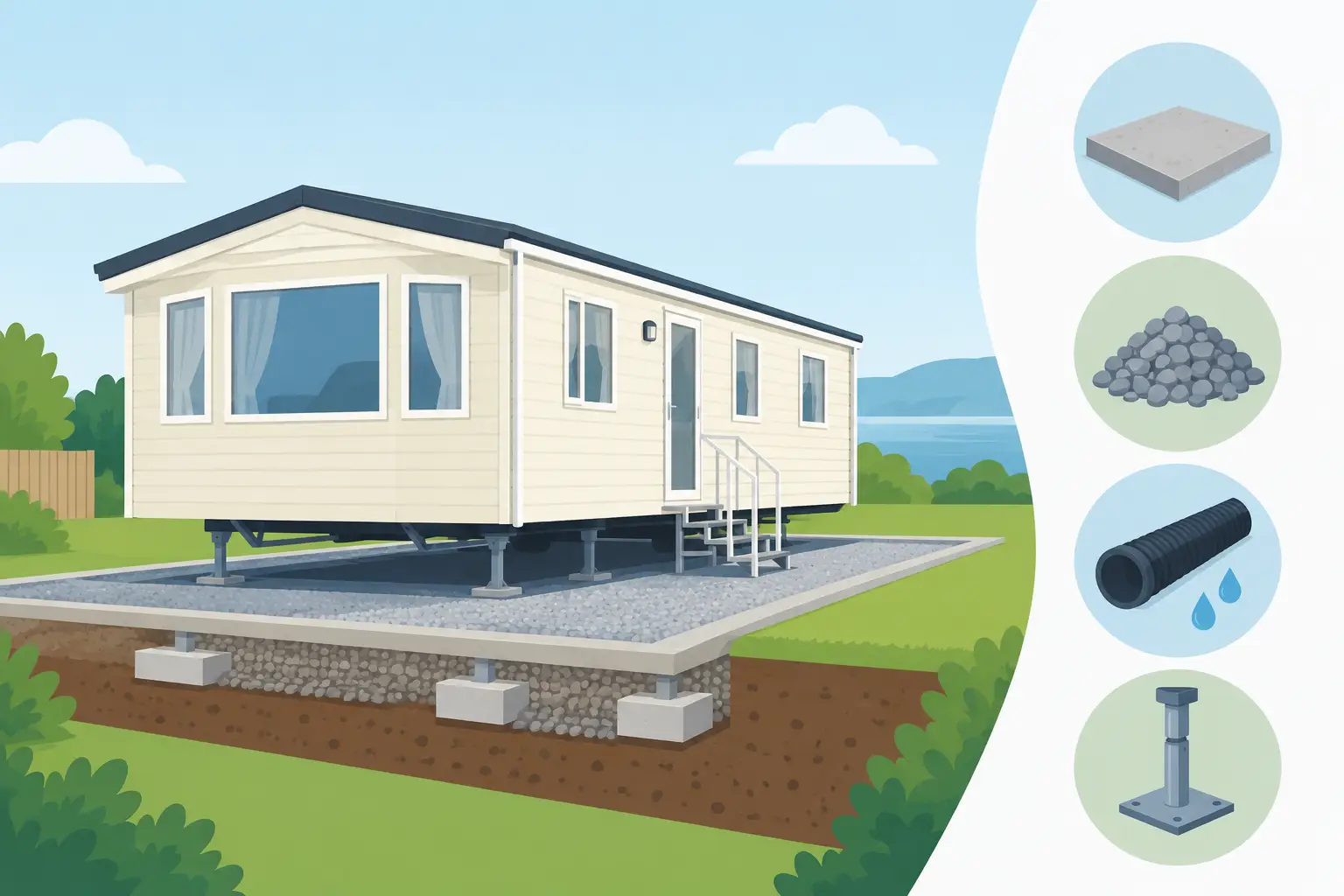
A static caravan can be excellent value when bought off site, but the purchase price is only one part of the job. Getting the base right before transport is booked avoids the most expensive problems: a unit that cannot be levelled, a lorry that cannot gain access, or a caravan positioned where water gathers beneath it. These static caravan base requirements are the practical checks to complete before your new or pre-owned holiday home arrives.
What a Static Caravan Base Must Do
A caravan base is not simply a flat patch of ground. It must carry the weight of the unit evenly, allow the caravan to be levelled accurately and keep the underside clear of standing water. It also needs enough surrounding space for siting equipment, connections, future maintenance and, where applicable, park compliance.
The exact requirement depends on the caravan dimensions, chassis layout, ground conditions and whether it is being placed on a holiday park or private land. A 28ft x 10ft used static caravan has different practical demands from a 40ft x 20ft residential-specification lodge. Wider and longer models have more support points and are generally less forgiving of uneven ground.
Do not assume an existing hardstanding is suitable because another caravan has stood there previously. Check its condition, its dimensions and whether it matches the support arrangement of the incoming unit. Older bases can settle, crack or drain poorly, particularly if they have not been used for several seasons.
Common Static Caravan Base Requirements
For most off-site static caravans, a prepared concrete base or properly designed concrete pad system is the preferred option. The surface should be firm, level and capable of supporting the unit through its specified chassis support points. The caravan is normally set on substantial concrete blocks, pads or purpose-made supports, then levelled using the chassis and axle arrangement. The wheels are not intended to carry the caravan permanently.
A full concrete slab is often a sensible choice for private land because it provides a clean, stable working area beneath the caravan. It can also make it easier to manage drainage and access around the unit. However, it needs to be accurately formed and sized to suit the caravan, rather than being poured to a rough estimate.
Concrete pads may be appropriate where the ground is sound and the support positions have been planned carefully. This can reduce the amount of concrete required, but the pads must sit on properly prepared sub-base and correspond with the chassis bearers. A poor pad layout can place uneven loading on the chassis and lead to doors or windows binding as the caravan settles.
Compacted stone can work as part of the groundwork or beneath a purpose-designed support system, but loose gravel alone is not normally a satisfactory permanent base. It can move under load, hold water and make accurate levelling difficult. Timber sleepers, loose blocks, paving slabs laid directly on soil and improvised supports may look acceptable on delivery day, but are rarely a sound long-term solution.
Level does not mean perfectly flat ground
The ground around a caravan should fall away enough to shed surface water, while the caravan itself must be level once sited. These are separate matters. A level concrete platform in a low spot may leave water sitting around or beneath the chassis after heavy rain.
A small fall across the finished surrounding ground is useful, directing water away from the base and towards suitable drainage. On sloping land, the site may need retaining work, engineered foundations or a different location altogether. It is better to establish this before ordering a larger caravan than to find that substantial groundworks are required after delivery.
Measure the Caravan, the Base and the Working Space
Use the advertised external dimensions of the caravan as a starting point, then allow room around it. The stated size, such as 36ft x 12ft, describes the main body of the caravan, not necessarily every projection, step, external flue or future deck.
The base should accommodate all required chassis supports and leave safe access for installation and maintenance. There should also be enough clear ground for siting crews to work without having to place equipment on soft verges, flower beds or unstable ground. If the caravan is going onto a holiday park, the park operator will usually specify pitch dimensions, spacing and orientation.
Think ahead before finalising the position. Allow for entrance steps, gas bottle storage, boiler servicing, external drainage connections and access to doors and windows. If decking is planned later, establish where it will sit and whether it could obstruct under-caravan ventilation or access panels.
Drainage and Ground Conditions Matter More Than Appearance
A neat hardstanding can still fail if rainwater has nowhere to go. Standing water beneath a static caravan increases damp risk, encourages corrosion and makes routine inspections unpleasant. It can also soften the ground around the base, affecting steps, decking supports and access routes.
Before siting, look at the land after prolonged rain. Identify where water naturally runs, whether there are low areas, and whether existing drains are clear. Depending on the site, suitable drainage may involve a perimeter channel, land drain, soakaway or connection designed by a qualified contractor. The right option depends on soil type, gradients and local restrictions.
Ground conditions deserve the same attention. Made-up ground, soft clay, peat, former ponds and recently disturbed soil can all require more than a standard concrete pour. Where the ground is questionable, obtain advice from a competent groundwork contractor or structural engineer. Spending money on assessment is usually cheaper than correcting settlement after the caravan has been delivered and connected.
Services Should Be Planned Before Delivery
A caravan base is easier to complete when water, electricity, drainage and gas arrangements have been considered at the same time. Running services afterwards can mean lifting sections of a new base, digging around the caravan or leaving exposed pipework where it is vulnerable to frost and accidental damage.
Electrical work should be completed by a suitably qualified electrician and designed for the caravan’s intended load. A modern fully central heated and double glazed caravan may require more consideration than an older, simpler holiday unit, especially where electric heating, appliances or a lodge-style specification are involved. The supply, consumer unit, earthing and isolation arrangements must be suitable for the installation.
Water pipes need frost protection and a sensible route to the caravan connection. Waste water should drain correctly without relying on unsuitable flexible pipe runs across the ground. Gas installations must be carried out and tested by an appropriately qualified professional. If bottles are used, they need a safe, accessible location away from doors, vents and ignition sources.
For park pitches, the park will commonly identify the service points and connection standards. On private land, establish what is legally and practically available before selecting the caravan. A low purchase price does not compensate for an expensive or impractical service connection.
Delivery Access Is Part of the Base Preparation
The best base in the world will not help if the transport vehicle cannot reach it. A static caravan is delivered on a specialist trailer, and siting may involve a towing vehicle, winch, skates or lifting equipment. The access route needs to be checked from the public road to the final position.
Measure gates, track widths, tight bends, overhead cables, low branches and changes in gradient. Soft ground at the entrance or beside the base can prevent a lorry from manoeuvring even when the route appears wide enough. Consider parked vehicles, street furniture, stone walls and neighbouring access as well.
Before confirming transport, be ready to provide clear information on:
- caravan make, model, length and width;
- photographs of the approach, entrance and prepared base;
- gate widths, narrow points and overhead obstructions;
- the surface and gradient of tracks or driveways; and
- whether a crane, towing vehicle or other siting equipment may be required.
This is particularly relevant with 12ft-wide caravans and larger lodges. A route that suits a touring caravan or small delivery van may be unsuitable for a 40ft holiday home. Early checks allow the transport plan to be priced properly and reduce the risk of aborted delivery.
Park Rules, Private Land and Permissions
If the caravan is going to a holiday park, speak to the park before buying. Many parks have rules on approved manufacturers, maximum age, size, external finish, siting method and transport arrangements. They may also require their own team to carry out the final connection or positioning.
Private land involves a different set of questions. Whether planning permission, a caravan site licence, building regulations input or other approval is needed depends on the intended use, location and circumstances. A caravan used incidentally to a main dwelling is not the same as a unit used as separate permanent accommodation or for commercial letting. Do not rely on what a neighbour has done or on verbal assumptions. Check with the relevant local planning authority and take professional advice where needed.
Residential-specification construction, central heating and double glazing make a caravan more comfortable for extended use, but they do not by themselves determine what use is permitted on the land. Permission and site compliance should be resolved before delivery, not after the unit is on the base.
A Practical Check Before You Buy
The right caravan and the right base should be planned together. Confirm the model dimensions, inspect or photograph the proposed site, establish access and obtain an informed view of the groundwork before committing to transport. This is especially worthwhile when comparing a cheaper used caravan against a newer, larger model that needs more preparation.
Premier Caravans can help buyers discuss the practical delivery and siting points alongside the available off-site stock. A clear plan for the base, access and services means your caravan can be delivered, positioned and enjoyed without the avoidable cost of putting the groundwork right afterwards.