


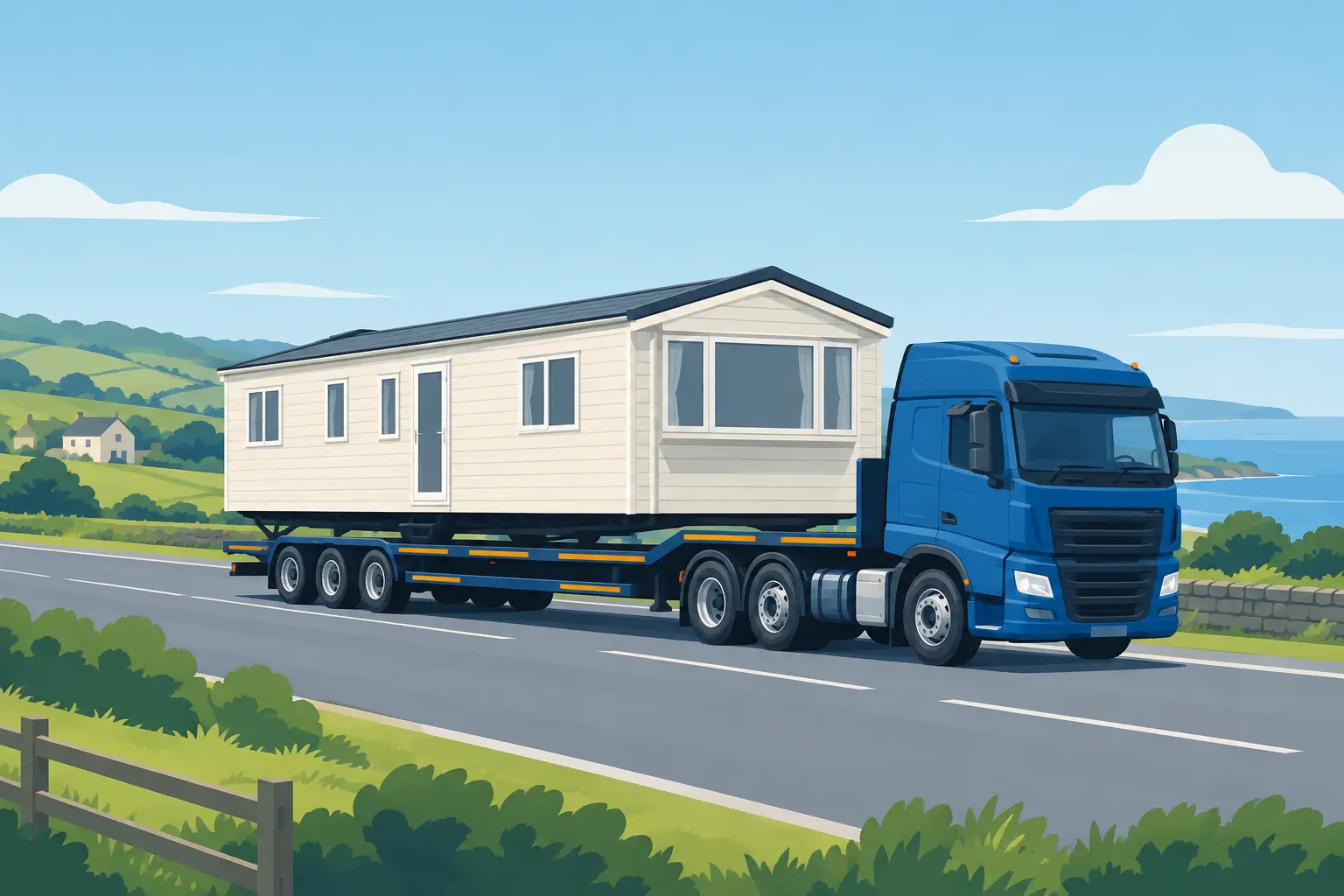
A static caravan may be sold as an off-site unit, but it is not simply a matter of booking a lorry and choosing a delivery date. Width, overall length, route access, park rules and the condition of the destination pitch all affect the job. Arranging static caravan transport UK properly at the buying stage avoids avoidable delays, extra costs and the risk of a unit arriving before the site is ready.
For a used caravan moving from one park to another, or a new holiday home going onto private land, the most useful approach is to treat transport and siting as part of the purchase. Confirm the dimensions of the caravan, establish exactly where it is going and check who is responsible for each part of the move before a deposit is paid.
Static caravan transport UK starts with accurate dimensions
Static caravans are moved on their own chassis by specialist transport operators. The actual size of the unit matters far more than an approximate description such as “a 3-bedroom caravan”. A 35ft x 12ft model, for example, presents a very different access requirement from a 42ft x 14ft holiday home or a larger residential-specification lodge.
The transporter will need the full external dimensions, including the length, width and height where available. They will also need to know whether the caravan has an A-frame and wheels in usable condition, whether it is a single unit or a twin section, and whether there are any additions attached to it. Decking, steps, skirting, satellite dishes and loose exterior fittings normally need to be removed before collection.
Do not rely solely on the nominal model size. Roof profiles, chimney flues, air-conditioning units and raised ground can all affect clearance. A professional transport quote should be based on the specific caravan and the actual collection and delivery addresses, not just a broad mileage estimate.
Access can decide whether a move is possible
The most common transport problem is not the distance between sites. It is the final approach. Tight park roads, sharp bends, narrow gateways, overhanging trees, low cables and soft verges can stop a caravan from reaching the intended pitch.
Before booking, check the route from the main road through to the final location. Photographs and measurements are useful, particularly at entrances, bends and points where the road narrows. If the caravan is going onto a holiday park, ask the park office whether there are delivery restrictions, designated arrival times or a preferred route for abnormal loads.
Private land needs the same level of attention. A field entrance that is sufficient for a car or agricultural vehicle may not allow a wide caravan to turn in. Ground conditions also matter. A loaded transporter and caravan need firm access, particularly after prolonged rain. If work is required to improve access, it is better completed before the transport date is fixed.
What affects the cost of caravan transport?
There is no single nationwide rate for static caravan transport. Mileage is one part of the cost, but it is not the only one. The size and weight of the caravan, collection and delivery access, required route planning, escort arrangements where applicable, and the need for siting equipment can all affect the price.
A straightforward move between accessible locations is usually simpler to price than a collection from a tightly packed holiday park or delivery onto undeveloped private land. If a crane, specialist lifting equipment or additional labour is needed to position the caravan, this should be agreed separately rather than assumed to be included in the haulage figure.
Ask for a clear breakdown of what the quotation covers. It should establish collection, transport, delivery, basic positioning where offered, and any charges for escorts, waiting time, difficult access or aborted delivery. The lowest initial figure is not always the best value if key elements have been left out.
Timing can make a difference too. Parks can be busy during changeover periods and may restrict large deliveries in peak holiday weeks. A buyer who confirms the pitch, access and site availability early has more choice over transport dates.
Get park approval and permissions in writing
If the caravan is being delivered to a holiday park, approval from the park is essential before arranging collection. Many parks have rules on caravan age, manufacturer, external appearance, size, siting standards and approved suppliers. A caravan can be the right layout and price for the buyer but still be unsuitable for the chosen park.
Confirm that the park has accepted the exact make, model, year and dimensions of the unit. Ask whether it needs to be inspected before delivery and whether the park will carry out the final connection work. Water, drainage, electricity and gas arrangements vary between sites, and they are not automatically part of caravan transport.
For private land, buyers should establish that they are permitted to site and use a caravan as intended. Transporting a caravan onto land does not create planning consent, a residential licence or utility connections. This is particularly relevant for residential-specification lodges, where the intended use may be different from occasional holiday accommodation.
Prepare the caravan before collection
A caravan should be empty, secure and ready to travel before the transporter arrives. Internal furniture is generally designed to remain in place, but personal belongings, crockery, televisions, freestanding appliances and any loose items should be removed or properly secured. Cupboards, internal doors and windows need to be closed and fastened.
Disconnecting services is also a separate task that must be completed safely. Gas bottles should be removed or dealt with by an appropriate professional. Water, electric and drainage connections must be disconnected before the caravan is moved, while any external pipes, cables, steps and awnings should be cleared from the pitch.
The unit should be checked for obvious damage before it leaves. Take dated photographs of the exterior, roofline where practical, windows and chassis, as well as the interior. This provides a useful record of condition, particularly when purchasing a pre-owned caravan that has been standing on another site.
If the caravan has been unoccupied for some time, check tyres, brakes, towing equipment and the general condition of the chassis. The transport operator will advise on anything that needs attention before the move. It is better to identify a problem in advance than on the day of collection.
Delivery, positioning and final siting
Arrival at the destination is only one stage of the work. The caravan must be positioned accurately on a prepared pitch or base, then levelled and supported correctly. Access for the transporter must be maintained until positioning is complete, so avoid placing vehicles, materials or landscaping features in the route.
The final orientation should be agreed before the caravan arrives. Consider the location of doors, views, parking space, service points and decking. Moving a caravan a short distance after it has been levelled and connected can mean additional expense, so it pays to mark out the intended position beforehand.
Once in place, the caravan will normally require proper supports and levelling before services and skirting are installed. A park may have its own siting team and requirements. On private land, use suitably qualified trades for utility connections and ensure the work suits the manufacturer’s guidance and the site conditions.
Buying off-site without losing control of the process
Off-site purchase gives buyers a wider choice than buying only from stock already sited on one park. It can also offer better value, particularly when comparing clearly specified used caravans, brand-new holiday homes and residential-specification lodges. The trade-off is that the buyer needs to establish delivery, acceptance and siting arrangements early.
That is where experience makes a practical difference. Premier Caravans can support customers purchasing a caravan for delivery anywhere in Great Britain, helping to coordinate the move around the unit’s dimensions, destination and siting requirements. For anyone replacing an existing caravan, arranging the sale or removal of the outgoing unit should be considered at the same time, especially where pitch space is limited.
A well-planned move protects the caravan, the delivery schedule and the budget. Before committing to a unit, make sure the destination can receive it, the site has approved it and the transport quotation reflects the real work involved. That preparation gives you the best chance of seeing your caravan arrive where it belongs, ready for the next stage of siting and connection.