


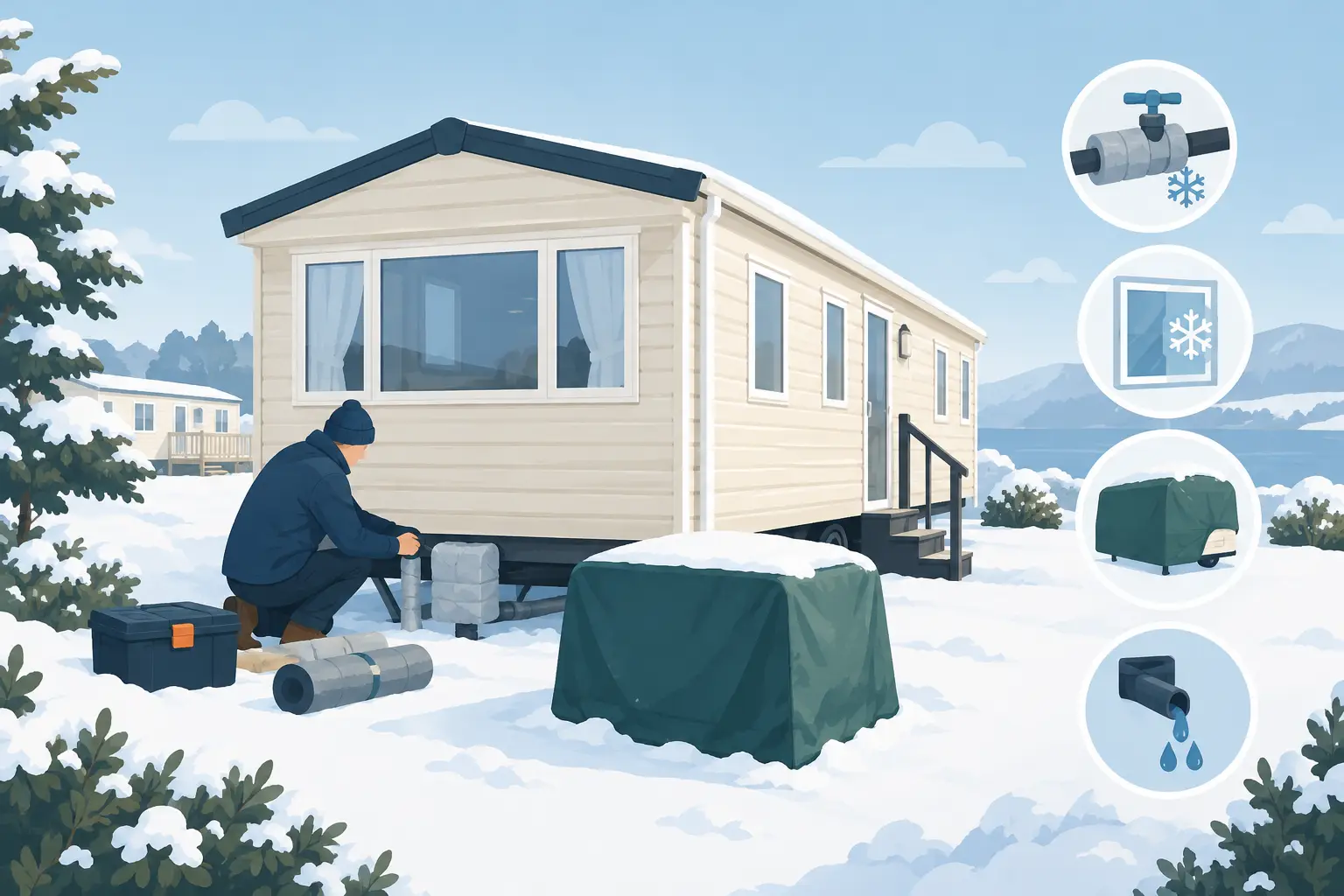
A burst pipe can cause far more trouble than a few hours of preparation in autumn. Knowing how to winterise a static caravan properly protects the water system, interior and external fittings through freezing temperatures, driving rain and periods when the caravan is left empty. The exact work depends on whether your caravan remains in use over winter, but any unit that may be unoccupied in a cold spell needs a clear plan.
For an older holiday home without central heating, draining down is usually the sensible option. A newer, fully central heated and double glazed static caravan may be kept on a low frost setting where the supply is reliable and the park permits winter occupation. Do not assume that heating alone removes every risk. A power cut, empty gas bottle or boiler fault can quickly leave pipework exposed.
Start with the caravan park, warranty and insurance
Before switching anything off, check the terms set by your caravan park, insurer and manufacturer. Some parks require caravans to be drained down by a set date, particularly if they close for the season. Insurers may also expect reasonable frost precautions and may ask for evidence that the caravan was checked periodically.
If your caravan is on private land, the same principle applies. Confirm who is responsible for the external water supply, stopcock and any pipework below ground. It is easy to drain the caravan itself while leaving an exposed supply pipe or outside tap full of water.
Keep a note of what you have done, take photographs if useful, and make a date to inspect the caravan after a severe freeze or storm. This is particularly worthwhile for an off-site static caravan where you may not be close enough to call in at short notice.
How to winterise a static caravan water system
Water left in pipework is the main winter risk. When it freezes it expands, potentially splitting pipes, fittings, taps, shower valves, toilet components and the water heater. A proper drain-down is more than turning off the incoming water.
First, turn off the water at the caravan’s internal stopcock or external isolation valve. If there is a separate supply valve on the pitch, close that too. Open all hot and cold taps, including the kitchen tap, basin taps and shower, and leave them open while the system drains. Flush the toilet until the cistern no longer refills.
Most static caravans have drain-down valves at low points in the plumbing system. Open these in line with the manufacturer’s instructions. You may need to open taps in sequence to release trapped water and allow air into the system. Do not forget any outdoor tap, washing machine connection or dishwasher connection if fitted.
The boiler or water heater needs particular care. Switch off its power or gas supply before draining it and follow the appliance manual. Modern combi boilers, older instantaneous water heaters and separate hot-water cylinders all drain differently. For a central-heated caravan, ask a Gas Safe registered engineer if you are uncertain. Draining the domestic water system is not the same as draining the sealed central-heating circuit.
Once drained, leave the taps in the open position. This gives any remaining water room to expand rather than forcing pressure against a closed fitting. A short blast of air through the system can help remove residual water, but it must be done at a controlled pressure by someone who understands the plumbing arrangement. Excess pressure can damage fittings.
Pour a suitable non-toxic plumbing antifreeze into sink, shower and bath traps, and into the toilet bowl where appropriate. This protects the water held in the traps, which can freeze even after the main pipes have been drained. Do not use ordinary car antifreeze, and do not put any antifreeze into drinking-water pipes unless it is specifically approved for that use.
If you plan to keep the heating on
Some owners of residential-specification lodges and winter-use caravans choose to maintain a low internal temperature rather than drain down. This can work well if the unit is fully central heated, properly insulated, occupied or checked regularly, and connected to a dependable electricity and gas supply.
Set the heating to a low frost-protection level rather than relying on a timer alone. Keep internal doors open so warmth can circulate around kitchens, bathrooms and pipe runs. Cupboards containing pipework may also need their doors left slightly ajar.
There is still a trade-off. Leaving heating on costs money and offers no guarantee during a power outage or equipment failure. If the caravan will be empty for extended periods, a full drain-down remains the lower-risk option for many owners.
Prepare gas, electricity and appliances
Turn off the gas at the cylinder or external isolation point if the caravan is being closed down. Check that the cylinder is secure and that flexible hoses show no signs of cracking or damage. Do not store spare cylinders inside the caravan or beneath it.
Unplug non-essential electrical items. A fridge-freezer should be emptied, defrosted, cleaned and dried, then left with its door slightly open to prevent mould and unpleasant smells. Empty cupboards of food that could attract rodents or perish in changing temperatures.
If your caravan has a boiler, carbon monoxide alarm or smoke alarms, test them before leaving. Replace batteries where needed. A working carbon monoxide alarm is especially important if the heating or gas supply will remain in use at any point over winter.
Protect the interior without sealing it up
A static caravan needs ventilation in winter. Condensation builds up quickly in a closed holiday home, particularly where temperatures rise and fall between day and night. Shutting every vent to keep cold air out can create damp, mould and a stale interior.
Leave purpose-made fixed vents clear and avoid blocking air bricks beneath the caravan. Open curtains and blinds enough to allow air around windows, but close them where privacy or direct sun fading is a concern. Remove or lift loose rugs if they tend to hold moisture, and make sure mattresses and soft furnishings are dry before locking up.
Moisture absorbers can be useful in smaller spaces, but they are not a substitute for ventilation or fixing a leak. If you have had condensation around windows, inspect seals and roof vents before winter rather than hoping a dehumidifier tub will solve it.
Check the roof, gutters and outside fittings
Winter weather finds small maintenance issues quickly. Clear leaves, moss and debris from gutters and downpipes so water can run freely away from the caravan. Check for damaged gutter brackets, loose flashing, split sealant and signs of water staining inside near ceilings or window frames.
Inspect the roof only from a safe position. Static caravan roofs are not designed to be walked on unless the manufacturer confirms otherwise and suitable access equipment is used. If you can see loose edging, storm damage or pooling water, arrange for a competent caravan maintenance professional to inspect it.
Secure any outdoor furniture, steps and loose items. Drain and disconnect hoses. If your caravan has external pipe lagging, check that it is intact and dry, as wet or damaged insulation gives limited frost protection. Skirting can reduce draughts beneath the caravan, but ventilation must remain adequate to avoid damp under the floor.
Look underneath for signs of animal activity, loose insulation or damaged waste pipes. Rodents often seek warmth in quiet caravans over winter, so remove food, seal obvious gaps around services where practical and use appropriate pest control if there is evidence of activity.
Carry out a final shut-down check
Before leaving, walk through the caravan in a set order. Check that the water is off, drain valves are open, taps are open and the toilet has been dealt with. Confirm the gas position, heating setting or boiler status, electrical items, fridge door, windows, rooflights and external doors.
Lock windows securely, but do not force catches that are already misaligned. A damaged window lock is both a security issue and a route for wind-driven rain. Make sure the caravan is level and that steps, handrails and decking gates are secure, especially if the site is exposed.
Premier Caravans regularly sees the difference that straightforward seasonal care makes when owners come to sell, move or upgrade a unit. A dry, well-maintained caravan is easier to inspect, simpler to transport and more likely to retain its value.
If you are unsure about the plumbing, boiler or gas arrangement in your particular model, arrange help before the first hard frost rather than after it. A planned visit from the right engineer is usually far less costly than repairing a frozen water system in January.