


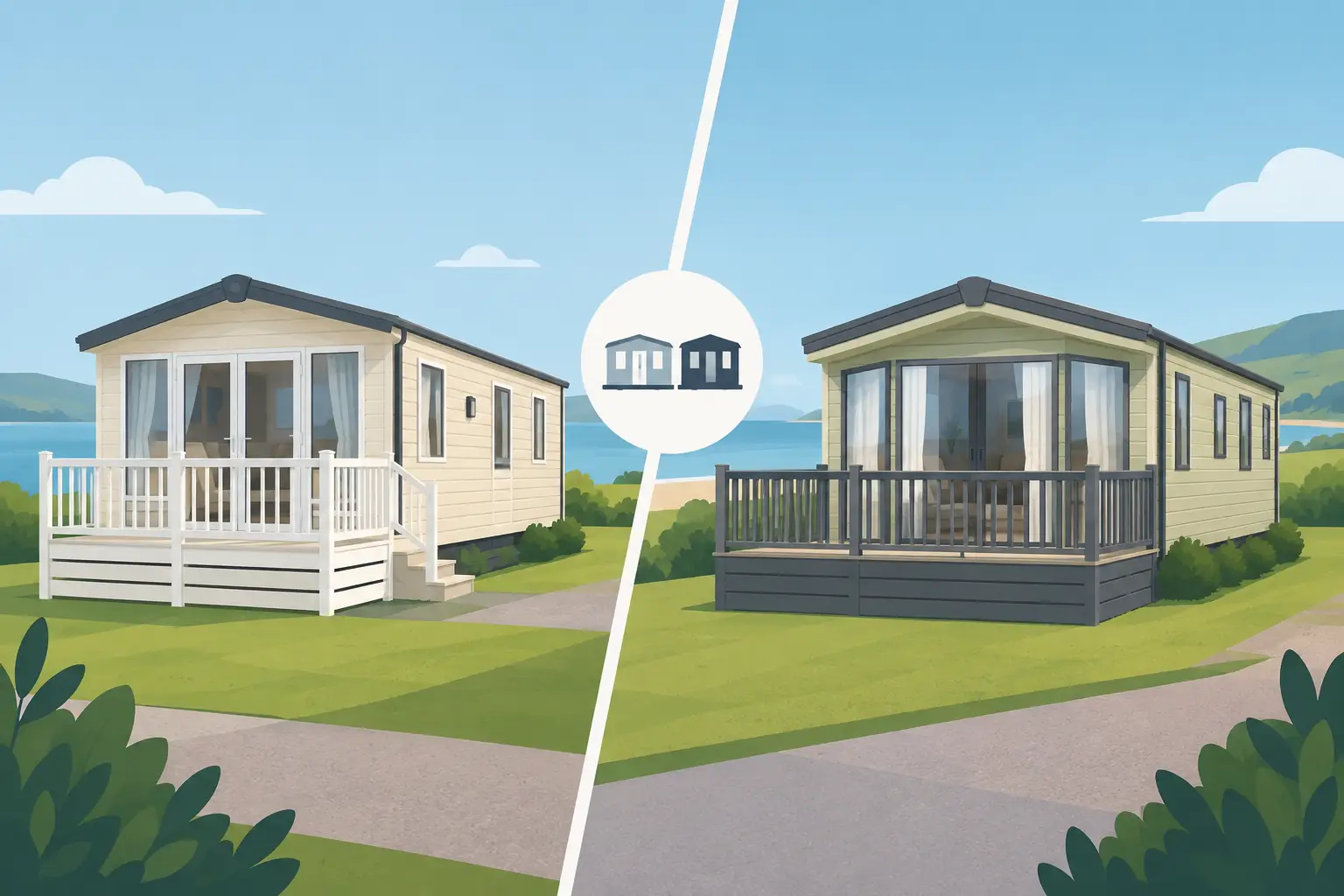
A static caravan can look excellent on a sales listing, yet still be wrong for the way you plan to use it. When comparing ABI vs Willerby static caravans, the practical differences are usually found in the layout, age, heating system, insulation level and the condition of the particular unit – not simply the badge on the front.
Both manufacturers have long-standing reputations in the UK holiday-home market. Both build models across a wide range of sizes, specifications and price points. A well-maintained used ABI may be a better buy than a tired Willerby of a similar age, while a higher-specification Willerby may be the sensible choice for regular use on a longer-season park or private land.
The right comparison starts with your intended siting location, budget and must-have features.
ABI vs Willerby static caravans: the main differences
ABI and Willerby both produce entry-level holiday caravans, family models and more premium holiday homes. Across either range, you will find two- and three-bedroom layouts, occasional larger models, different lounge arrangements, separate dining areas and varying levels of heating and glazing.
ABI is often recognised for practical, family-friendly layouts. Many models make good use of the available floor space, with open-plan living areas and straightforward bedroom arrangements. Depending on the model and year, this can make an ABI a strong option for buyers who want a usable holiday caravan without paying for finishes or features they do not need.
Willerby has a similarly broad range, with many models aimed at buyers looking for a more refined interior feel or a higher level of standard specification. That does not mean every Willerby is automatically more upmarket than every ABI. Older or entry-level models can be very different from newer, premium examples. The individual caravan always matters more than the manufacturer name alone.
For off-site buyers, dimensions are particularly important. Check the full external size, including width and length, before committing to a model. A 12ft-wide caravan may provide noticeably more lounge and kitchen room than a 10ft-wide unit, but it can also affect transport costs, access requirements and whether it is acceptable on your chosen park or plot.
Layout matters more than the brochure
A good layout should work on an ordinary wet weekend, not just during a viewing. Think about where coats, shoes and bags will go, how many people will use the lounge, and whether the bedrooms offer enough storage for regular stays.
ABI layouts often suit buyers who prioritise clear, unfussy living space. A front lounge with fixed seating can be ideal for families, while a side dining area can make mealtimes easier when the caravan is occupied by several people. In older examples, look carefully at seating wear, flooring, cupboard hinges and the condition of the shower room, as these areas reveal how the caravan has been used.
Willerby models frequently offer layouts with stronger separation between kitchen, dining and lounge areas, particularly in larger units. Some buyers prefer this because the caravan feels less crowded during longer stays. Others would rather have the most open-plan layout possible, especially where the caravan will mainly be used in summer.
Bedroom configuration is another point where assumptions can lead to disappointment. A three-bedroom caravan gives more sleeping space, but the smaller bedrooms may have limited room around the beds and less wardrobe storage. A two-bedroom model can be a better fit for couples, small families or buyers who want a larger main bedroom and more generous living space.
Heating, glazing and year-round use
If you expect to use your caravan early and late in the season, specification should take priority over decorative finish. The key question is whether the unit is suitable for the months you actually intend to use it.
Many newer ABI and Willerby static caravans are available fully centrally heated and double-glazed. This is generally the most practical specification for owners who want more comfortable use in cooler weather. Central heating provides more consistent warmth across the bedrooms and living area than a single gas fire, while double glazing helps reduce heat loss and condensation.
However, not every caravan has the same standard. Older units may have single glazing, electric heaters or a gas fire only. These can still be suitable for summer holidays, occasional guest accommodation or a lower-cost purchase, but buyers should be realistic about cold-weather comfort and ongoing heating costs.
Residential specification is a separate consideration. A residential-specification lodge or caravan is built to a higher standard of insulation and construction than a typical holiday caravan. It may be the right choice for a private plot where permitted, or for a park with an extended season, but it is not necessary for every buyer. Planning permission, site licence conditions and park rules must always be checked before purchase and siting.
Build quality and condition on used caravans
Neither ABI nor Willerby can be judged fairly without considering age and condition. A clean, dry caravan with sound flooring, a serviced boiler and working appliances is generally a more secure purchase than a newer-looking unit with signs of water ingress or neglected maintenance.
During a viewing, inspect the caravan methodically. Look around windows, roofline joints, ceiling panels, external cladding and wallboard for staining, softness, swelling or musty smells. Check that doors and windows open properly, cupboards are secure and floors feel firm underfoot. Test the heating, hot water, cooker, shower and electrical fittings where possible.
It is also worth checking the chassis and exterior condition, particularly on a caravan that will need transporting. Cosmetic marks can often be dealt with, but structural issues, significant damp or damaged cladding can affect both value and the cost of preparing the caravan for delivery.
A detailed listing should state the year, dimensions, bedroom and bathroom count, heating and glazing provision, and whether the caravan is available for sale off-site. These details let you compare like for like rather than making a decision from photographs alone.
Which offers better value?
There is no fixed answer to whether ABI or Willerby offers better value. Value comes from matching the caravan to the job it needs to do, without paying for unsuitable specification or facing avoidable transport and siting costs later.
An entry-level used ABI can represent excellent value for a family wanting a straightforward holiday base, especially where the park has a shorter season and a modest pitch size. A well-specified Willerby may justify a higher price where you want central heating, double glazing, a wider footprint or a more premium interior for frequent use.
For buyers replacing an existing caravan, check your park’s rules before selecting a model. Parks can set limits on caravan age, size, appearance and permitted manufacturers. They may also require their own siting approval, even if you purchase the caravan independently. Private-land buyers need the same practical checks on access, ground preparation, services and the permissions required for their intended use.
The delivered price matters as much as the purchase price. A caravan sold off-site may need transport, crane or siting arrangements, connection to services and potentially decking or steps. A lower-priced caravan can stop being the cheaper option if it is difficult to move to your chosen location.
Choosing between an ABI and a Willerby
Start by choosing the specification, then compare available ABI and Willerby models in that bracket. Decide your maximum budget, the dimensions your site can accept, the number of bedrooms you genuinely need and whether central heating and double glazing are essential.
For a first-time buyer, a clean used model with clear specifications and manageable delivery arrangements is often a better decision than stretching for a larger or newer caravan. For regular users, paying more for double glazing, central heating and a layout that works for your household can make ownership more enjoyable over several seasons.
At Premier Caravans, appointment-based viewings allow buyers to assess the actual space, condition and specification before arranging transport to a park or private land. That is particularly useful when comparing two caravans that appear similar online but feel very different once you are inside.
Before placing a deposit, have the site details ready: access width, delivery route, plot dimensions, park approval requirements and the services available. With those practical points confirmed, the best ABI or Willerby is simply the caravan that arrives ready to suit your site, your budget and the way you plan to use it.